

The Ultimate Guide To Eating Oysters: From Shucking To Grilling
We may receive a commission on purchases made from links.
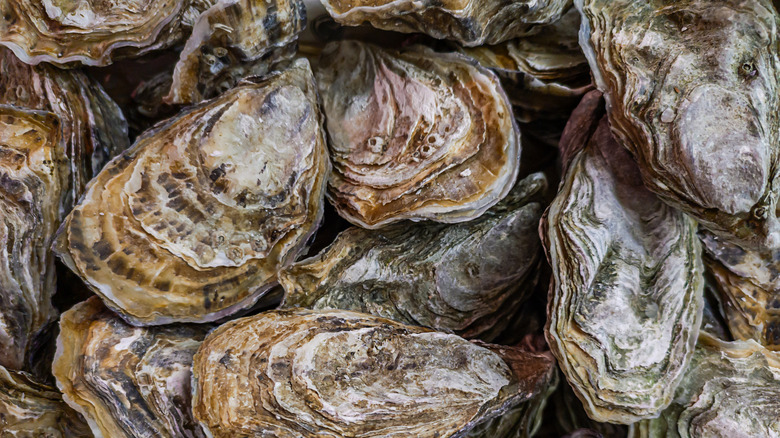
Oysters are a popular delicacy from the sea that tend to elicit pretty strong feelings on either end of the appreciation spectrum. People who love them can't get enough of them, and people who aren't so fond compare them disparagingly to a number of lesser foods. Then, there are plenty more people who have simply never tasted them and are hesitant to dive in. With their rough exterior masking a plump, briny interior, it can be hard to know where to start if you want to buy oysters and prepare them at home. We reached out to mollusk experts to help guide the way for beginners or diners who want to move their oyster-eating experience from the restaurant to their home.
If anyone can share tips on oysters, it's Dan Martino, author of "The Oyster Book," a detailed introduction to everything about oysters. We also spoke to Rae Robertson, chef de cuisine at The Darling Oyster Bar in Savannah, Georgia. Lauren Kiino, executive culinary director at Hog Island Oyster Co., shared excellent insights to guide newbies and tentative folks toward easy and delicious oyster experiences at home. Finally, Matthew Gaudet, culinary director of Saltie Girl in Boston, provides solid recommendations to ensure your oyster consumption is smooth and delicious. From advice about shopping for oysters to tips about shucking and serving them, you're in good hands.
You can buy oysters every month
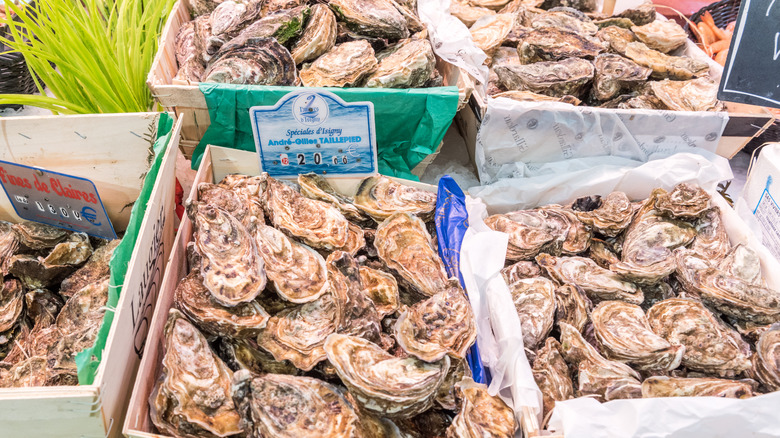
There are many recommendations when it comes to buying oysters, but one that all of our experts refute is the notion that oysters can only be eaten in months with an "r." The reasoning is that the remaining months of the calendar are warmer, and consequently, the waters the oysters live in are warmer too. During this period, oyster spawning occurs among wild populations, so harvesting them could be detrimental to their successful reproduction. Additionally, spawning oysters are smaller and have a distinct and unappealing taste, making it even less worthwhile to harvest them in the summer months. Not to mention, keeping oysters chilled and food safe with elevated ambient temperatures can pose more risks.
"That may have been true in the [1800s] but we have come a long way in terms of refrigeration [and] packaging," chef Rae Robertson says, adding that oyster education is much greater now too. Author Dan Martino agrees and also notes that modern technology for hatchery breeding guarantees fresh oyster offspring throughout the year. This way, harvesting oysters doesn't have to interfere with the natural cycle of wild populations.
Aside from the advances in refrigeration and handling practices that permit consumers to safely eat oysters whenever they please, executive culinary director Lauren Kiino points out that there's a great reason to eat oysters every month: "Each season brings its own distinct texture and flavor notes to oysters!"
Choose your oysters carefully
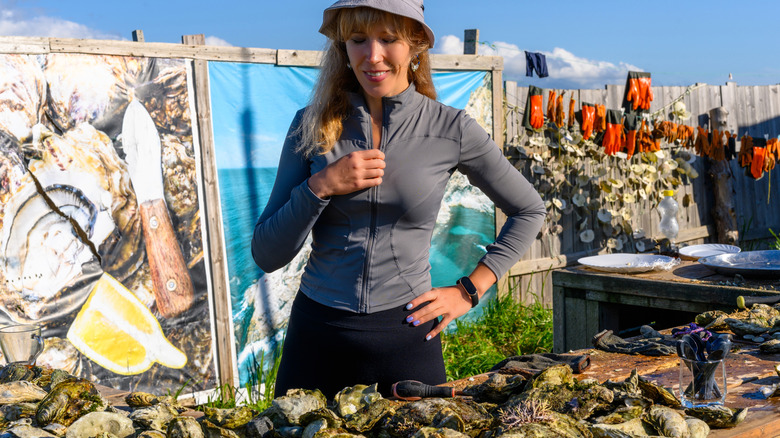
When it comes to raw seafood, finding a reputable source is extremely important. While you can ensure your oysters are properly stored and consumed quickly once you bring them home, it's important to know that you can rely on that same care and attention from processing to selling. According to Dan Martino, the best option is to buy them directly from an oyster farm if you have access to one. This avoids issues related to transport, which, depending on the distance from the farm to the store, can be significant if the seafood is not kept appropriately chilled.
If you don't live close to a farm, Martino says, "get the freshest oysters available by checking the harvest tag and harvest date." Lauren Kiino notes that any quality fishmonger should be able to provide you with this information, as well as how they were stored. For maximum safety, you'll want to consume them within 14 days of the harvest date, though if storage conditions are maintained, you could eat them up to a month after harvest.
Finally, Martino notes that you can tell a lot about the quality of oysters based on their appearance. "They should be clean. They should have thick, hard shells. No boring sponge damage," he says, adding, "Look for [farm-raised] oysters that have nearly identical size and shape." Importantly, the shells should also be closed, meaning the oysters are still alive.
Keep them chilled
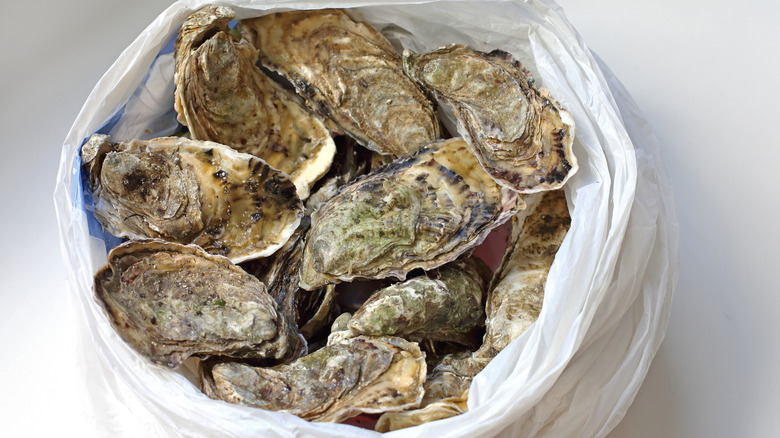
After ensuring reliable sourcing and storing the mollusks correctly, you'll want to make sure to follow through once you bring them home. Keep in mind that oysters are still very much alive when you buy them. For this reason, they need to be stored in a chilled environment and out of the water. Keeping them in fresh water will cause them to die.
Culinary director Matthew Gaudet suggests storing them "in a container, over ice with wet towels over them in a refrigerated space." While you might think it's safer to err on the side of too much ice, he advises against placing them in direct contact with it. Unless the ice is made with salt water, once it starts to melt, the oysters will be in contact with fresh water, which will cause them to spoil faster. As for the specific temperature, the FDA recommends storing unshucked oysters at around 40 degrees Fahrenheit, which is the standard temperature for refrigerators.
Try a few different species
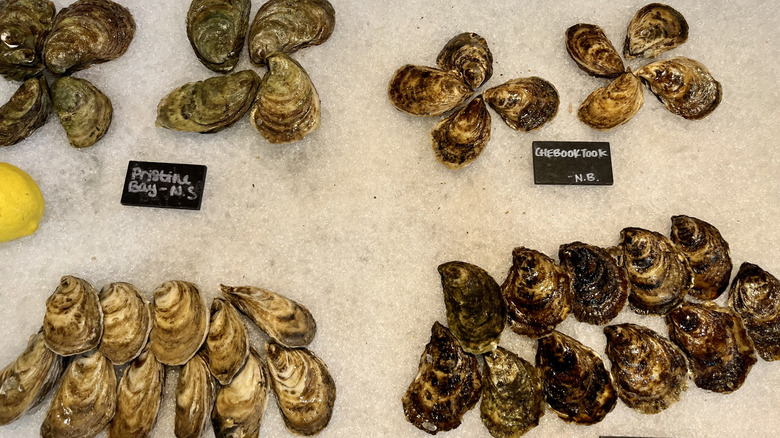
"I used to be one to say that an oyster is an oyster, but boy is that far from the truth!" chef Rae Robertson says. In fact, an oyster's origin is incredibly important in determining its characteristics and flavors. "This is due to the oysters' incredible ability to filter the water around them and consolidate the flavors over a period of time, a process called 'merroir,' like the [much-celebrated] 'terroir' concept in the wine world," Dan Martino says. Merroir includes factors like the salinity of the water, whether it's from the open ocean, temperature, currents, or mineral content of the floor. Additionally, Lauren Kiino notes that growing methods, the food in the water, and the species also come together to have a notable effect on the flavor.
The flavor and qualities can be so distinct that Martino points out that some oysters are more suitable for cooking, whereas others are better for consuming raw. For this reason, both Matthew Gaudet and Kiino highly recommend tasting a variety of species. Kiino suggests doing a side-by-side tasting of a range like Atlantics, Kumamotos, and Pacifics to see how they vary. "If you can only get one species of oyster, then try to get a few varieties from different growers or growing regions," she says. Gaudet agrees and points out that even a few miles can make a big difference in taste.
Study up on tips for shucking safely
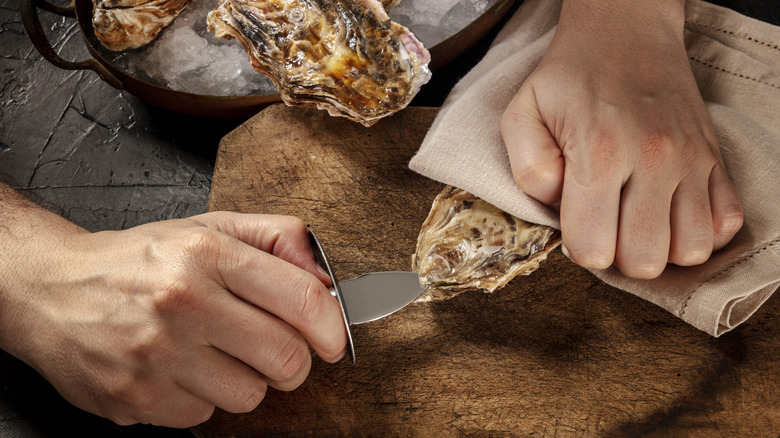
For a true oyster-eating experience, you'll want to buy oysters in their shells, meaning you'll be the one in charge of shucking them. While a professional shucker makes the process look easy, it does require a bit of practice to get it right. Dan Martino suggests looking up a few videos online to get real-time advice on the right method, which is important to pinpoint for success. You'll likely see a few different shucking methods. Matthew Gaudet says, "While there are some that prefer the side entry, popping the hinge is likely the best place to start." This can help reduce the chances of slippage as well.
Martino says that one of the biggest issues is that people tend to force too hard. "It's more about technique, finding the right angle to enter the oyster, and the right pressure to pop the oyster open." Gaudet agrees that using too much force can cause the knife to slip, and says that "finesse is often a better method than muscle."
Don't think you can use any ordinary kitchen tool and get the same results, either. Rae Robertson highlights the importance of using a quality oyster knife. Aside from a solid surface, you'll also want to keep your hands safe. Robertson recommends using a towel to hold the oysters. "The towel helps save your hands from the blade and helps keep the oyster still," she explains.
Don't go overboard with toppings
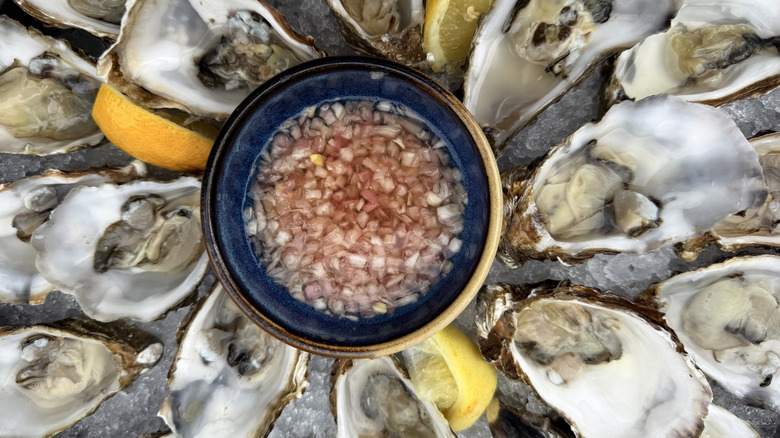
If you're new to eating oysters on the half shell, you might be inclined to try to mask some of the flavor with toppings. And while there's a place for mignonette, starting simply is the best way to develop your taste for oysters and detect flavor nuances. Dan Martino is a fan of toppings that pair harmoniously with oysters, but starting with a plain oyster is his go-to advice for beginners. "This gives you the greatest ability to taste the merroir and to appreciate the natural flavor profile of the oyster," he says. All of the experts we spoke to agree with this take, recommending having the first mollusk naked (or with a squeeze of lemon if you're too hesitant) and then trying other options from there. This is a great opportunity to sample a few varieties side by side, too, as Matthew Gaudet recommends.
Once you're ready for your next oyster, Rae Robertson suggests a basic mignonette or salt for simple yet complementary flavors. A classic shallot mignonette is a great choice, consisting of nothing but white wine vinegar, minced shallots, ground black peppercorns, salt, and tarragon if desired. Hot sauce, horseradish, and cocktail sauce are common accouterments served with oysters, but it's a fine line. "I'm personally not a fan of cocktail sauce because I think it really covers up the oyster's flavor," Lauren Kiino says, noting the importance of not drowning the oysters with garnishes.
Think outside the box for flavor pairings
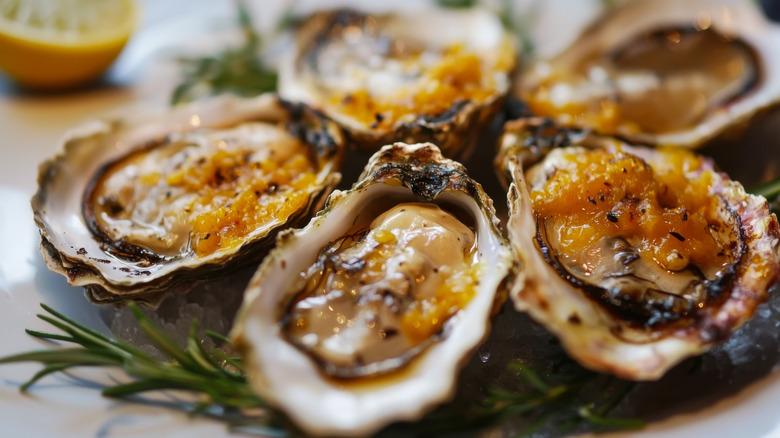
****Although you should definitely start your oyster sampling with a plain mollusk to savor its true flavor, your culinary experimentation doesn't need to stop there. Rae Robertson suggests using lemon oil, urfa (a smoky chili flake), and Maldon salt for a creative twist on the classic squeeze of lemon and splash of hot sauce. "Notes of citrus and [smoke] come through and really accentuate the natural flavors of the oyster," she says. Riffing on the smoke pairing, she suggests trying oysters paired with a Mezcal drink. "Smokey notes from the mezcal paired with the salty, sea flavor of the oyster just works," she explains. And although chorizo isn't always smoked, she also recommends pairing the sausage with oysters for a bold combination of flavors.
When it comes to baking oysters, Lauren Kiino likes incorporating a creamy cheese, which adds richness to complement the briny mollusk. There are also plenty of ways to include oysters as an ingredient in a more complex dish. For example, Matthew Gaudet loves adding them to bacon-braised cabbage, and Kiino notes they can add a little pizzazz to beef. Gaudet lists several other ingredient combinations that work with oysters, like maple, whiskey, sherry, cooked apples, bone marrow, mushrooms, miso, black garlic, and lychee, noting, "but likely the most surprising is Heston Blumenthal's passionfruit and horseradish."
Really, when it comes to pairings, the world is your oyster. "Oysters are one of the most versatile foods and are used around the world for breakfast, lunch, and dinner recipes," Dan Martino says.
Try steamed or baked oysters if you're wary about the texture
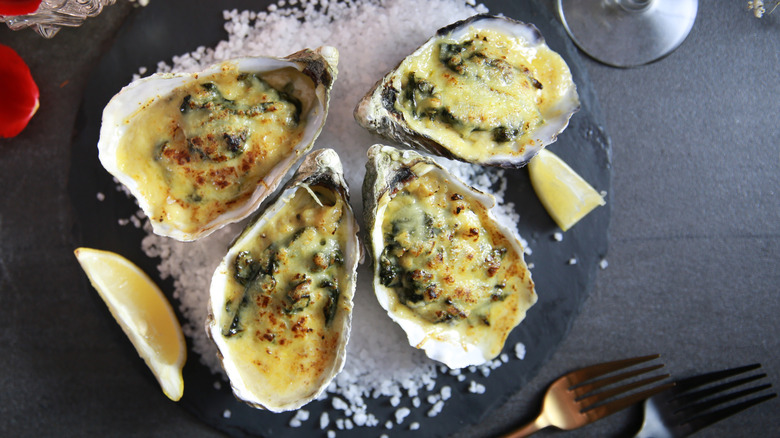
If the idea of a raw oyster has you feeling squeamish, you don't have to give up on trying the delicacy. "Raw isn't for everyone, and for some, it takes some working up to," Rae Robertson says. She recommends trying them steamed or baked initially. "They are still able to keep the juice of the fresh oyster, but it changes the texture — which is often a struggle for non-raw lovers," she says. Not to mention, if raw seafood in general isn't your thing, then you can feel more comfortable experimenting with cooked oysters.
Not sure where to start? Lauren Kiino recommends beginning with something simple, such as an oyster stew with vermouth, cream, and lemon, or enhancing grilled mollusks with compound butter. Mornay sauce is a winner to pair with baked oysters, consisting of roux and cheese (often Gruyère, Parmesan, or Emmental). Meanwhile, another classic is oysters Rockefeller, which entails baking oysters on the half shell, topping them with a green sauce made with herbs or spinach and sometimes cheese, and sprinkling them with a breadcrumb mixture. Find ways to incorporate ingredients you already love, and you'll forget all about your qualms about the texture.
Grill unshucked oysters for an easy bite
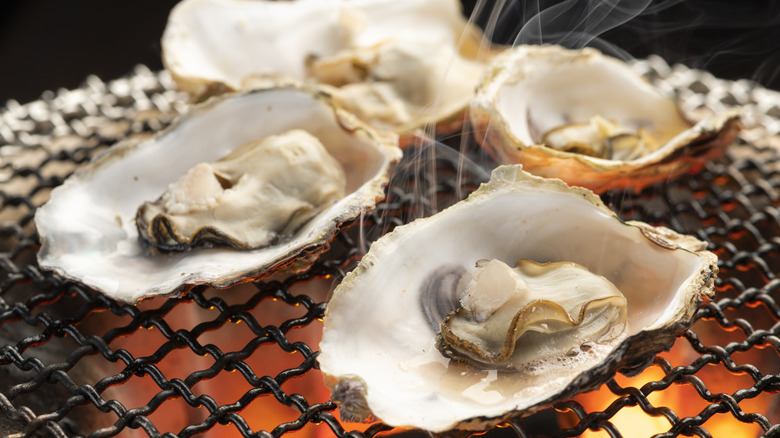
Matthew Gaudet is a big fan of grilling oysters. "I love open wood fire cooking, and popping some oysters on the grill while guests are over and having some chimichurri or a very herbaceous garlic butter to melt on them straight off the grill is a fantastic way to start a meal with friends," he says. Indeed, grilling oysters is one of the simpler fuss-free ways to cook the mollusks and infuse them with a pleasant, smoky aroma.
You'll want to set up your grill with two zones so that you have direct and indirect heat. Both can be used to cook oysters, but you need to adjust the process depending on which you choose. The former offers high heat for a quick sear and is ready within three to six minutes. The latter is a gentler heat that preserves more of the natural juices, and takes a couple more minutes. Place the oysters with the rounded area down on the grill and keep the lid shut for consistent heat. You can also grill oysters on the half shell, adding compound butter or other garnishes when they're almost ready.
Avoid overcooking oysters
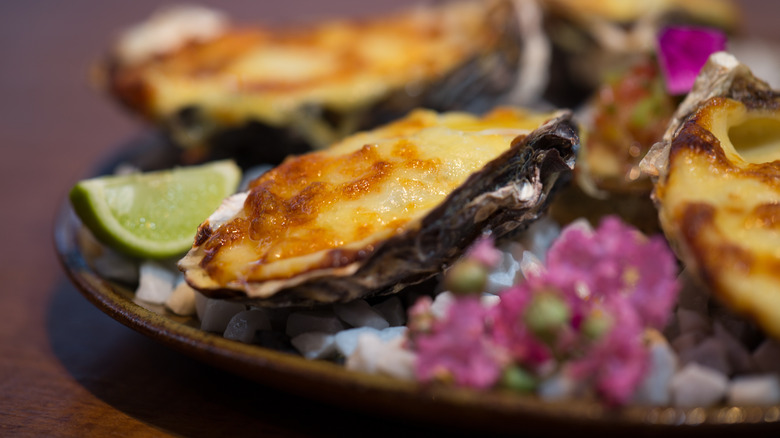
Unless you want to find yourself chewing through unpalatably rubbery oysters, it's important not to overcook them. Although cooking oysters can make the raw texture easier for some to handle, too much time under the heat is a recipe for failure. For this reason, you'll want to follow a recipe carefully instead of trying to eyeball the process the first time. Use freshly shucked oysters rather than pre-shucked even if you're planning to cook the mollusks, as they will have a better texture from the start. The cooking method will dictate the duration, but ideally you want to cook the oysters gently and remove them from heat immediately when they're done.
Steaming shucked oysters takes about four to five minutes, whereas whole ones are ready in seven to ten minutes. Meanwhile, roast oysters on the half shell at 450 degrees Fahrenheit for eight to 12 minutes. You can tell when oysters are done cooking once the natural liquids are released and start to bubble. If you're working with closed oysters, the shell will open once they are cooked. Meanwhile, if the oysters are on the half shell, look for the edges to curl slightly, and you'll know they're ready to eat. Since slightly underdone oysters are guaranteed to have a better texture than overdone oysters, it's better to err on a shorter cook time to avoid a tough consistency.