

How Thomas Keller Keeps Butter From Burning While Searing Steak
Perfectly searing a steak is really about coaxing a pan into a very specific temperature window. You need it to be hot enough to form a deep brown crust, but not so hot that it scorches and fills the kitchen with smoke. You need some kind of fat in the pan to begin with or the proteins in the meat will bond directly to the hot metal and stick like glue.
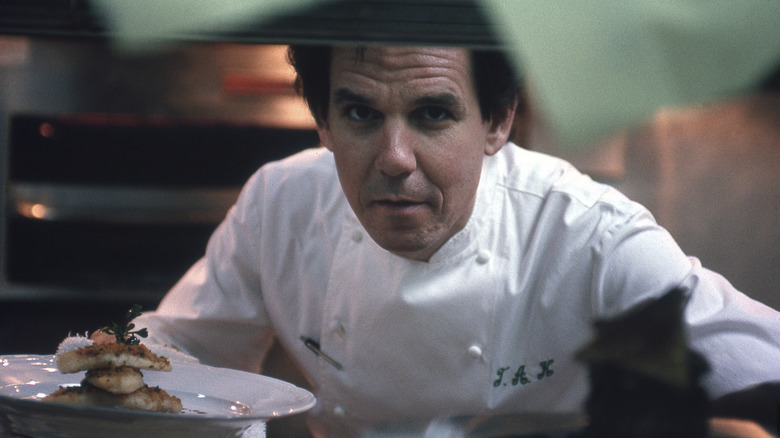
Steak cooked in butter is one of life's great pleasures, but butter has a smoke point of 350 degrees Fahrenheit, so butter alone can't handle the high heat of a steak-cooking pan for very long before it blackens and once that happens, it tastes, looks, and smells nasty. This is why Chef Thomas Keller adds a little oil to the pan first. In a short MasterClass excerpt, he explains that if the pan is super hot and butter goes in too early, it will move "past the browned stage and into the burnt stage". Adding a splash of oil first, he says, helps "calm it down," by creating a thin layer of oil that the butter can melt into, instead of directly meeting the hot pan.
The problem with butter in this high-heat cooking context comes down to what it's made of. It's fat, but it's also water and milk solids. When butter melts, water evaporates, and the milk solids sink to the pan surface, where they begin to caramelize. Browned butter is delicious and nutty, but if the heat is too high for too long, the milk solids will burn and turn bitter and acrid. So, essentially, the challenge when cooking a steak is finding a way to impart the flavor of browned butter without letting it burn before the steak is cooked to your preference.
The sweet spot between browned and burned
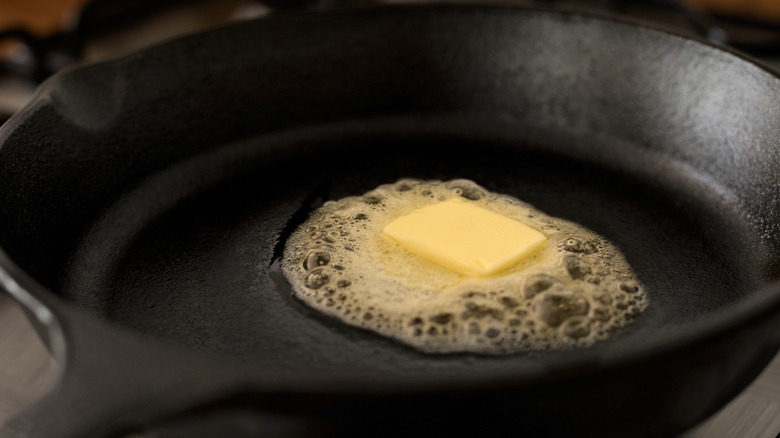
Adding oil before butter works because the right kind of oil can tolerate heat better than butter on a chemical level. Unlike butter, oil is almost entirely fat, so there are none of those pesky milk solids to sink, and burn, and smoke. Oil laid down in the pan first is a gentle buffer. A lot of high-heat cooking, like Chinese wok-style recipes, starts with neutral oil, and searing steak is one of the most wok-like methods Western cooking engages in, with a super hot pan just meant to kiss the outside of the meat, accomplishing the Maillard reaction without overworking the inside.
In cooking, "neutral" doesn't mean chemically neutral, but that the oil doesn't taste like much and can provide lubrication without imparting flavor. It means oils like peanut, grape seed, canola, sunflower, avocado, or even algae oil. None of those will overpower the steak or the butter, and they all have relatively high smoke points. You can use certain types of olive oil — its smoke point varies depending on whether it's extra virgin or more refined — but that strong, distinctive olive-y flavor isn't always what you want mingling with, and likely dominating, the more delicate aromas of the beef fat, aka tallow, that melts out of the steak.
If you really want butter flavor without worrying about fussy milk solids, you can also use clarified butter, or ghee, which is butter that has had the milk solids and water slowly cooked out and removed. It's often used in Indian cooking, and can handle a much higher heat than regular butter. When you add oil to butter in a hot pan, you're basically improvising a kind of clarified margarine in real time — same buttery flavor, now with 100% less scorched milk solids.
Butter belongs basted at the end
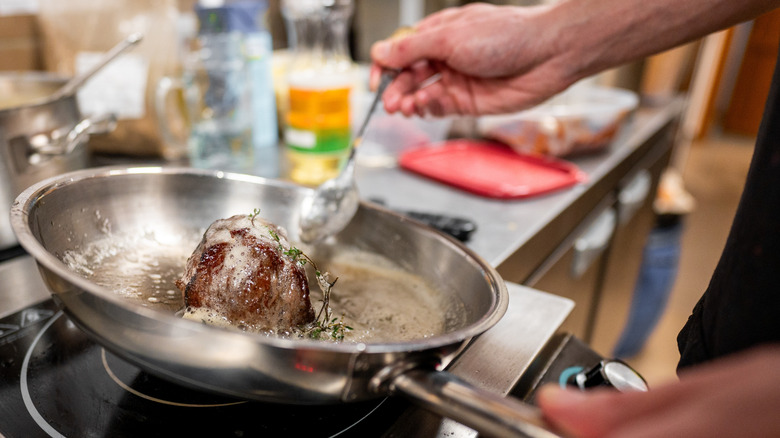
In restaurant kitchens, steaks are not usually cooked in butter from beginning to end. Instead, the salt-seasoned meat is first seared in a hot pan to develop a crust. Once the steak has been browned on one side and then flipped, butter is added along with aromatics like garlic, thyme or rosemary. At this point, the butter melts and foams, and the cook tilts the pan and repeatedly spoons the hot butter over the steak, bathing it with a rhythmic technique known as basting. It's cool and fancy to get it perfect the first time and do it in one flip, but, you can flip it over a few times, depending on how well-done you like your steak.
The basting step adds flavor at the end of cooking, avoiding exposing the butter to high heat for the entire time. The foaming butter picks up browned bits from the pan, known as the fond, and as its spooned over the steak, it coats the surface with fat and flavor, essentially deep-frying the developed crust, while also distributing heat over the side that isn't in contact with the pan.
So, Keller's tip fits into a larger steak-cooking strategy where you use oil to laminate the pan and handle the heat, then add butter at the right time so it foams without burning. If you pull it off, you're rewarded with a deep crust and a buttery finish. All sweet, no bitter.