

Swap Out Ramen Noodles For This Lighter Option Without Losing Any Flavor
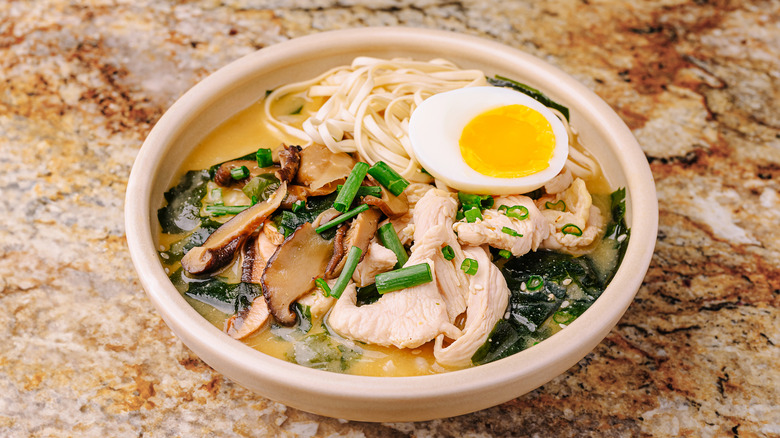
As delicious and versatile as traditional ramen noodles are, sometimes you need to change things up. Maybe you're out of ramen, or you crave a new texture and taste experience. By turning rice paper sheets into noodles, you can create a chewy, fun new dish that's great for a gluten-free diet and gives you control over how your noodles look and feel.
To start, you need sheets of rice paper, the kind you'd use to make fresh spring rolls or Vietnamese summer rolls. These don't require cooking, just rehydration in warm water. A single sheet is very thin for noodles and may tear too easily, so it's best to stack several sheets together. Three sheets will make a reasonably thick noodle, but five sheets are ideal if you want more chew and a substantial texture that still feels lighter than traditional ramen.
Rice paper can be hard to work with if it is oversoaked, so only soak the stacked sheets for 10 seconds. Once rehydrated, smooth out any air bubbles on a cutting board and use a sharp knife to cut your noodles. You can make thin strips like fettuccine, or cut wider strips for a chewier texture. The paper may be too sticky or tear easily, so lightly grease the cutting board first to prevent that. Soak the noodles in cold water afterward so they don't stick to one another. The noodles you cut will have a good bounce that is very different in texture from wheat noodles. All of that sticky surface area is ideal for holding sauce and flavor, too.
Paper made of rice is really nice
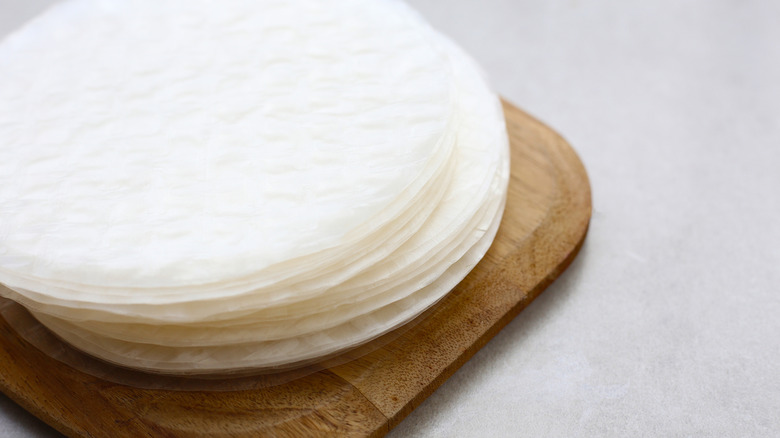
Rice paper sheets are made almost entirely out of rice that is ground with water into a paste and mixed with salt. Commercial brands also include tapioca starch. All that starch is what makes rice so sticky and allows the rice paper to become gummy when rehydrated. The reason rice paper is ideal for summer rolls is that it sticks to itself, which makes sealing the roll easy. That property is essential to building noodles of your desired thickness.
The taste of rice paper noodles is very neutral, even less prominent than wheat noodles. That's one reason there are so many creative ways to use rice paper. The noodles allow whatever seasoning you use to take center stage. They also bring more texture. The bounce and chew of a rice paper noodle is much more pronounced than what wheat noodles provide.
How you flavor your noodles is what allows them to shine. Their neutral taste lets them hold up to anything from a rich, spicy chili oil to being served soup style with chunks of chicken, beef, or pork and fresh scallion. You could easily use sauce or soup packets from instant ramen or whip up something stir-fry style with soy sauce, ginger, and sesame oil. With some chicken, vegetables, and sauce, you could make a Vietnamese-style noodle bowl. These noodles could easily hold up to our spicy peanut sauce recipe, packing a ton of flavor and kick that makes for a satisfying meal.