

What Is Gochujang? A Guide To The Sweet And Spicy Korean Paste
We may receive a commission on purchases made from links.
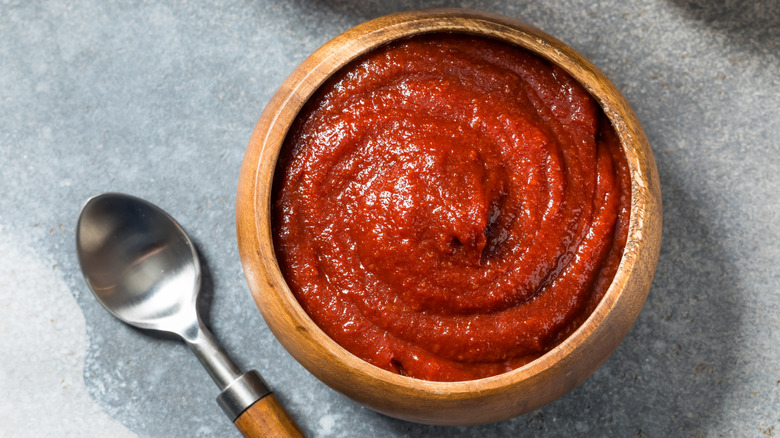
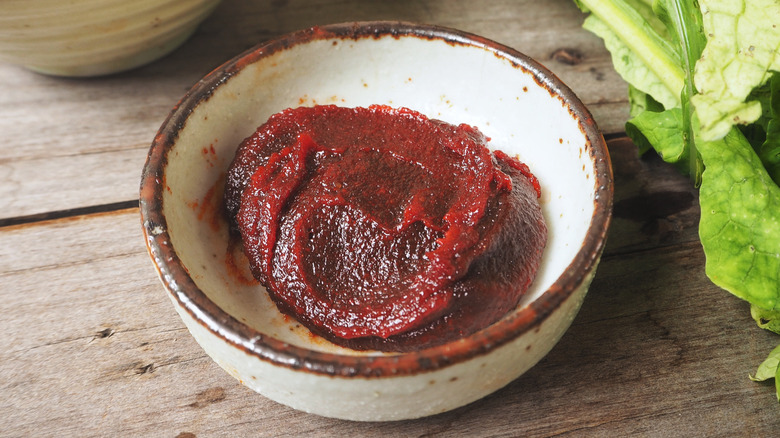
If you've perused any Korean recipes or eaten at a Korean restaurant, you may have seen gochujang listed among the ingredients. However, unless you're familiar with the Korean language, you likely can't easily guess what to expect from this sweet, spicy, and umami-laden condiment from context. A "jang" is a fermented paste or sauce, while the "gochu" part of the word tells you that the paste or sauce is made with chile peppers.
However, knowing what the name means is only the beginning of understanding what to expect from the sauce. With it popping up on menus, recipes, and all over the internet these days, it's certainly good to know what this Korean condiment is all about. Even if gochujang is new to you, this condiment has an ancient history, with many people in Korea still making it using traditional methods.
We'll explore how it's made, its nutritional content, as well as what it tastes like. Once you get to know it better, we'll tell you where to find it and guide you into a better understanding of which kind to get, how to use it, and how to store it. Hopefully, armed with this info, you won't just buy it and let it sit in your refrigerator unused; rather, you can feel confident knowing how to use it in both Korean and fusion dishes. If you're ready, keep reading to learn more about gochujang.
What is gochujang?
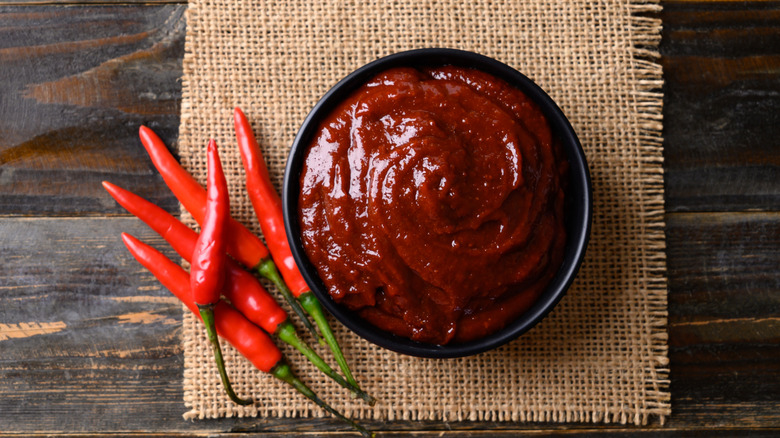
Gochujang is a fermented red chile pepper paste that originated in Korea. While many of us have only started to hear about the condiment more recently, gochujang is an ancient paste with origins in the Joseon Dynasty in Korea. Koreans in Sunchang-gun County first started making gochujang when chile peppers made their way from the New World to Asia via ancient trade routes in the 1500s.
Plenty of people have seemingly discovered the paste when visiting Korea throughout the centuries. One of the earliest printed recipes dates back to 1740, but it wasn't until after the Olympic Expressway was built in 1988 that gochujang started becoming more popular, even throughout Korea. And the growing popularity of South Korean culture in everything from K-dramas to K-pop has pushed Korean food and ingredients like gochujang into the limelight.
Gochujang rose in popularity throughout the 2010s; some people were declaring it the "next Sriracha" on social media as early as 2012. Sales of gochujang have risen in the 2020s and appears likely to continue growing. Consequently, don't be surprised if you start seeing gochujang listed more in recipes, showing up on restaurant menus, and even being a featured ingredient in grocery store items. For example, Shake Shack has begun including it in everything from chicken sandwiches and chicken bites to spicy caramel shakes as of this writing, and Spam has a gochujang-flavored product, as well.
How is gochujang made?
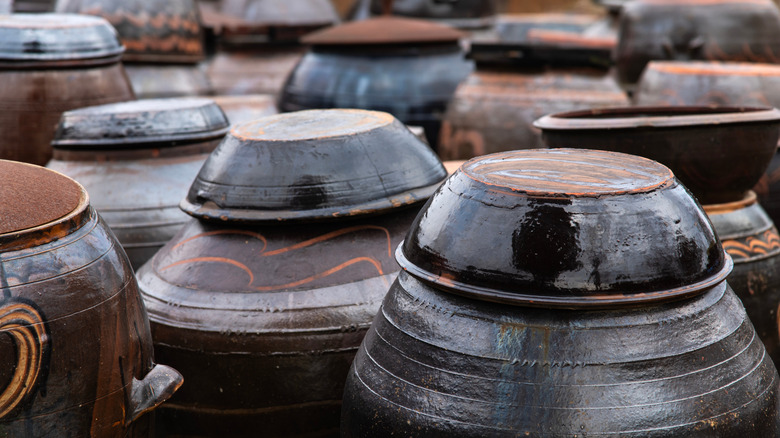
Gochujang is often still made via methods passed down over the centuries. Traditional gochujang takes a long time to make and ferment to ensure the best-tasting product, and it's made in different regions of South Korea at different times of the year depending on when the weather is best for fermenting it in pots outdoors. For example, Sunchang County producers start making it during the eighth and ninth months of the lunar calendar and allow it to ferment through the winter, when the region has a lot of humid foggy weather.
The process of making gochujang is a little different depending on the maker. However, the traditional process starts with mashing boiled soybeans and forming them into cakes called meju; these need to dry and ferment for 40 days. Once the meju is ready to turn into powder, the rest of the process can begin. The main process of making the gochujang starts with steaming glutinous rice. Barley broth is then added to the steamed rice and cooked until it turns light brown.
Next, it's time to add fermented soybeans and sun-dried red chile pepper powder (gochugaru), along with seasonings like vegetable stock and salt. Some producers also add fruit enzymes to help the fermentation process. It's finally fermented in a large, porous clay pot (onggi) outdoors for up to two years in some cases. Of course, if you buy commercially-made gochujang, it's likely only been fermented for a couple of days, making it less pungent and probiotic as its long-fermented counterparts.
What does gochujang taste like?
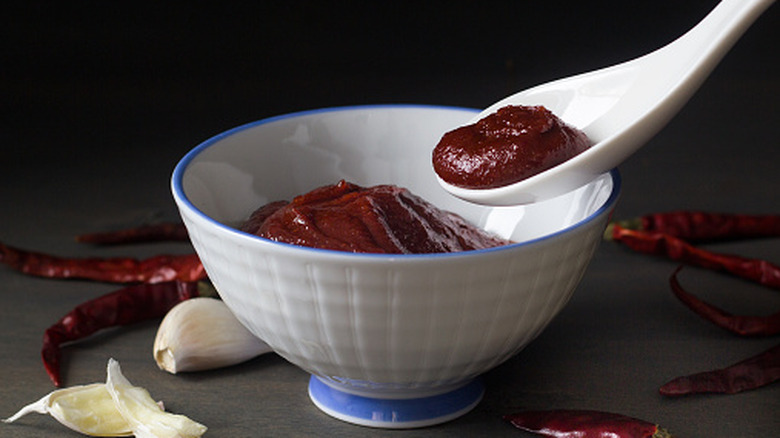
Even if you see the ingredients, that doesn't give you a good idea of what gochujang will taste like. After it undergoes fermentation, it becomes something very different than its original ingredients. It reminds us a lot of miso paste (here's everything you need to know about it), especially since both are made with fermented soybeans. It has a bit of a deep, rich, umami funk to it, though it goes in a different direction, with the barley and even the glutinous rice adding sweetness.
The dried chile pepper powder adds heat, but it's not going to be intensely hot in general, like straight up chile sauce. After all, it has other ingredients to temper the heat (more about the heat level later). Some versions might also include a smoky flavor, which you might experience from versions made the traditional way with wood fires rather than a mass-produced in a factory.
Given its rich and salty flavor profile and its sticky paste-like nature, it's likely too bold and intense to want to eat straight up, or to use for dunking food into. Instead, like bullion, gochujang paste is concentrated, and thus better suited for mixing into foods as a flavoring component where it can become more diluted in strength. Definitely start with a little of it, then, and add more as needed so that you don't overwhelm the dish with funk, tang, saltiness, sweetness, and heat.
How hot is gochujang?
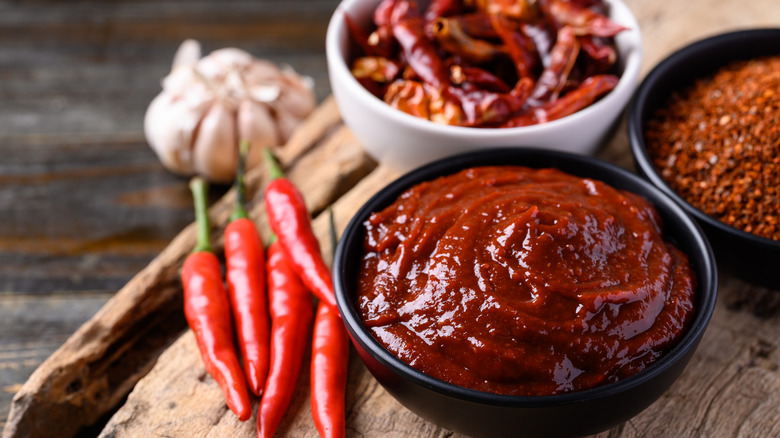
When you hear that gochujang is a fermented chile pepper paste, you might envision it being super hot. However, it really depends on which brand you get. The Gochujang Hot-Taste Unit (GHU) was developed to help buyers know whether they're getting a hot version of the condiment or a milder one, much like the Scoville scale gives you an idea of how hot different chile peppers are.
You'll often find the GHU rating on a container of gochujang, allowing you to make an informed choice before purchase. Anything below 30 GHU is considered mildly hot, gochujang ranging between 30 and 45 is slightly hot, and any between 45 and 75 is medium hot. In fact, medium hot tends to be the average hotness level. If you'd prefer very hot gochujang, though, look for products with 75 to 100 GHUs. You may even be able to find some extremely hot paste that's over 100 GHUs if you're a glutton for heat. Just keep in mind that the more you use in a recipe, the hotter it's going to get.
Something else to know about the heat of gochujang is that the chile peppers used to make it hit your tongue at a different place than some others do. You're likely going to feel it more at the back of your mouth than the front, which provides a more pleasant heat sensation for some people.
How to cook with gochujang
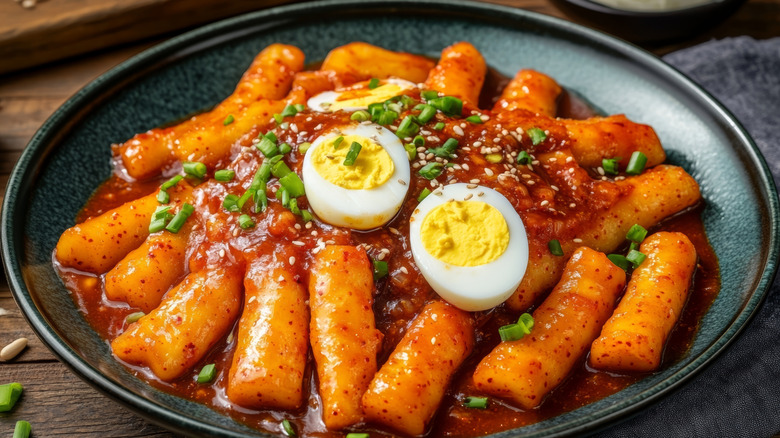
As you can imagine, being a Korean condiment, gochujang works well in a lot of Korean dishes. However, there are many fusion dishes where it shines as well as plenty of creative ways to use gochujang.
First of all, let's look at how gochujang is used in Korean cooking. There are several specific dishes where a spoonful (or more) gets mixed in, like bibimbap and teokbokki. You can use it when marinating fish or meat, and as a marinade ingredient for dishes like bulgogi, where it helps provide a robust and spicy flavor as well as tenderization. It also provides depth of flavor and umami notes in soups, stews, and sauces. Mixed with ingredients like rice vinegar, sesame oil, and possibly even sugar, it can help bolster the flavor of dipping sauces.
If you're looking for ways to incorporate it into everyday cooking, there are several places where it shines in fusion dishes. It especially tastes nice with sauteed vegetable dishes when you create a sauce from gochujang and soy sauce. However, once you start understanding its flavor profile, you might even slip it into everyday dishes like spaghetti, hamburgers, wings, brothy soups, or even tacos. You might even try mixing it with mayo to make a uniquely-flavored French Fry dipping sauce or use it to make a gochujang Texas sheet cake recipe. Just keep in mind that it's strong and needs dilution and that a little can go a long way.
Gochujang paste vs. squeeze gochujang
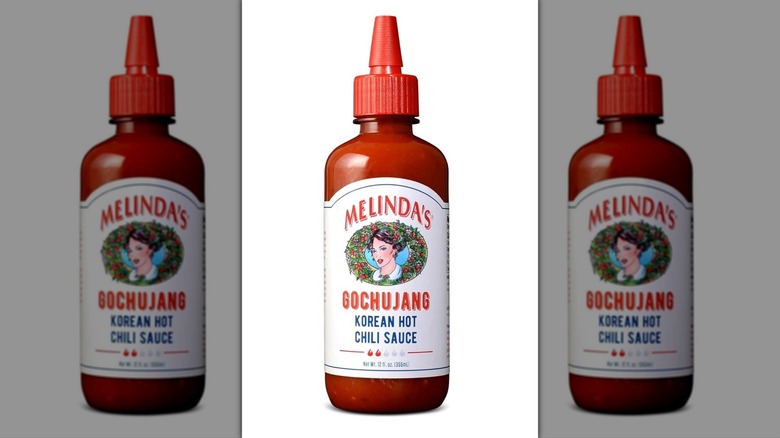
Traditional gochujang comes in a paste form. However, it's been possible to purchase squeeze gochujang in recent years, especially as the condiment has gone global. The type you want depends on how you plan to use your gochujang in the first place and what flavor profile you want.
Gochujang paste is a thick condiment that's best for traditional Korean dishes. Since it has all the classic ingredients, it's going to taste more like it should if you're making a recipe that calls for gochujang, like tteok-bokki or Korean fried chicken. It's also good for fusion dishes where you might want to add a sweet, spicy, and umami note. On the other hand, squeeze gochujang will include additional ingredients not found in traditional gochujang paste. To make it into more of a liquid so that it's squeezable, it will likely include liquid ingredients like soy sauce, vinegar, or sesame oil.
Squeeze options might also include other sauces like mayonnaise or even ketchup, turning it into more of a fusion sauce. So to ensure you know exactly what you're getting, you may want to check the ingredients on a bottle of squeeze gochujang. You can then use it as a dipping sauce, drizzle, or glaze in dishes where you think its distinctive flavor combination will work.
Where to buy gochujang
Even though gochujang has become more popular in recent years, that doesn't mean that your local grocery store is automatically going to sell it. With that in mind, you might need to get a bit strategic when it comes to locating gochujang near you.
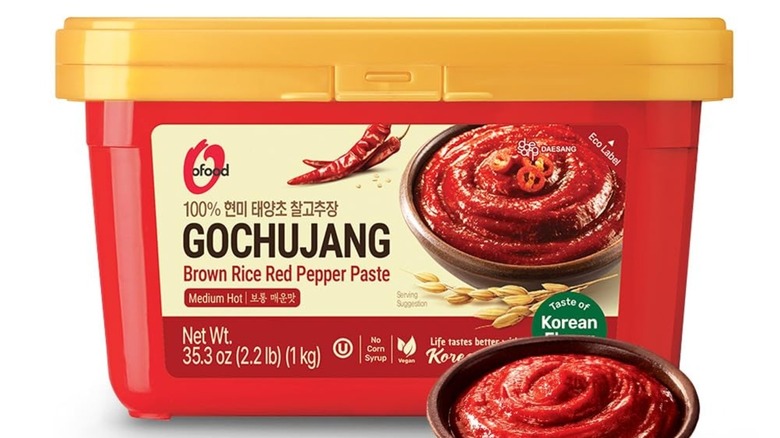
If your local grocery store does sell gochujang, it's more likely to be in the international or Asian food section of the store. While we weren't able to find it locally at Walmart, we could order O'Food Gochujang for next day delivery. We were able to find it at grocery stores with robust international food sections, like Reasor's, as well as the international food section of World Market. While finding it in some areas is more difficult, there are options. If your local grocery store doesn't have gochujang, your best bet is to shop for it at an Asian market, Korean grocery store, or buy it online. For example, H-Mart has 15 different kinds of gochujang from which to choose.
Our experience in smaller Asian markets includes finding one or two brands in the regular unrefrigerated shelves of the Korean section of the store. But if there aren't any Asian markets within easy driving or delivery distance, you might want to look online. Amazon has plenty to choose from, like Chung Jung One Gochujang. Plus, there are plenty of other online markets that sell it.
Nutritional information for gochujang
Gochujang is a low calorie condiment. Though preparations vary, it generally contains around 20 calories per tablespoon and no fat. Of course, a tablespoon will likely go a long way when diluted into a sauce, soup, or marinade. And while it has a sweet flavor profile, there isn't a lot of sugar.
Despite soybeans being among the main ingredients, it doesn't often contain a ton of protein, but it does give you some dietary fiber. The sodium content isn't generally too high, either, and you might be interested in learning it contains a number of essential vitamins and minerals, including Vitamin A, Vitamin B6, iron, potassium, and magnesium.
Some evidence even suggests fermented gochujang may provide benefits for gut health, as well as having positive effects against cancer, inflammation, cardiovascular disease, obesity, and diabetes. Part of these benefits come from it being a fermented food, but the capsaicin in the chile peppers also seemingly lessens stress. In other words, finding ways to add gochujang to your diet might provide more benefits than good flavor.
How to store gochujang
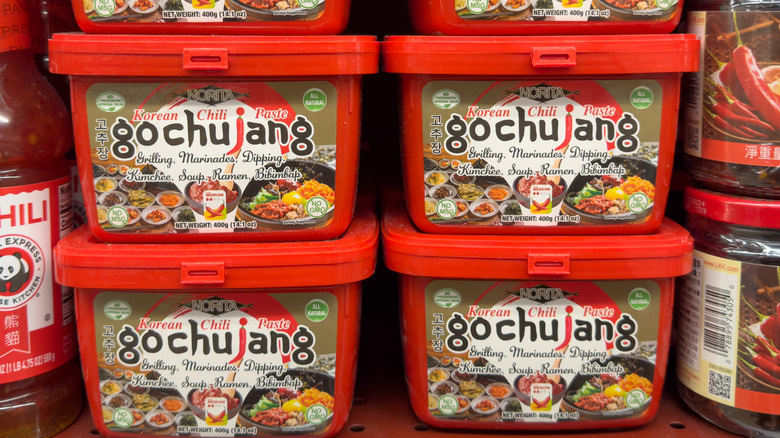
Gochujang tends to come in fairly large quantities, whether you're buying a tub of the paste, or the squeeze type. However, you don't have to worry about it spoiling quickly because it's a naturally preserved and fermented food item.
There are several attributes of gochujang that keeps it from going bad for a long time. First of all, the initial fermentation process takes months or years to accomplish. Additional ingredients like fermented soybeans and glutinous rice make the paste acidic, while 10% to 15% of the ingredient content is salt. Together, salt and acids are able to kill many (but not all) microbes. Where you store your gochujang, and whether it's open or not, also determines how long it should last. Unopened, it will last at room temperature for two or more years. It will also last up to two years in the freezer without being able to tell much difference in the quality.
However, once you've opened it, you'll want to refrigerate it. After that, it will stay at good quality for a year. The higher the quality of the paste (like ones made the traditional way rather than commercially) might last longer. To ensure it stays fresh and not moldy longer, gochujang needs to be stored in the dark and at a consistent temperature. Plus, you need to be sure to use very clean utensils to scoop some out for usage to avoid cross-contamination.
What to use instead of gochujang
If you find yourself in the middle of making a recipe that calls for this sauce and don't have any, or can't easily locate some, there are a few substitutions are possible for gochujang. They won't be exact duplicates of the paste, but they can work in a pinch. While some require several ingredients, others are store-bought sauces you can use if your grocery store doesn't carry gochujang.
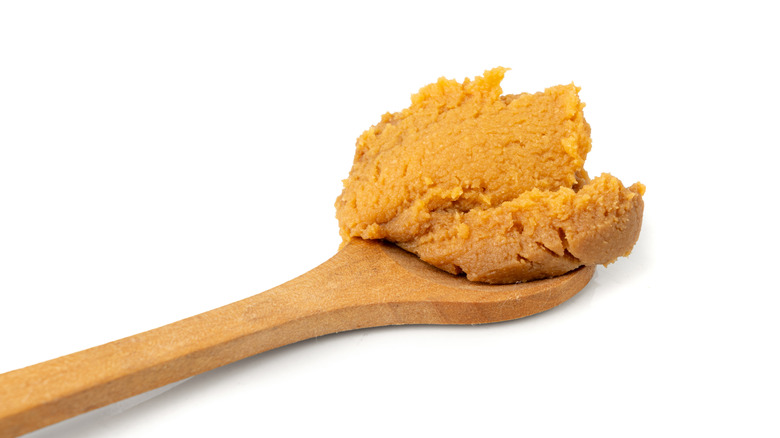
One of the closest substitutes for gochujang is more involved. It involves mixing together a sweet and mild miso paste, brown sugar, Korean chili flakes (or gochugaru), salt, and maybe even a smidge of sake and rice vinegar. In a pinch, you could make a substitute for gochugaru with a tablespoon of red pepper flakes with a dash of soy sauce and sugar, which would have some of the same main flavor notes.
Additionally, if you aren't trying to necessarily hit all the exact same notes, but want to stay in a similar neighborhood with a chile-pepper-based condiment, there are a couple of other alternatives. One option is Sriracha chile sauce, and the other is Thai chile paste. Sriracha provides a bit of garlic pungency, heat from chile peppers, and sweetness. Meanwhile, Thai chile paste gives you the right texture, heat from chili peppers, and other strong flavors like garlic. However, neither have the fermentation notes or sweetness you'd experience from gochujang. Granted, you could always add a splash of soy sauce and a pinch of brown sugar to somewhat mimic those notes if you'd like.