

Give Sprouted Onions A New Lease On Life And Regrow Them In Your Garden
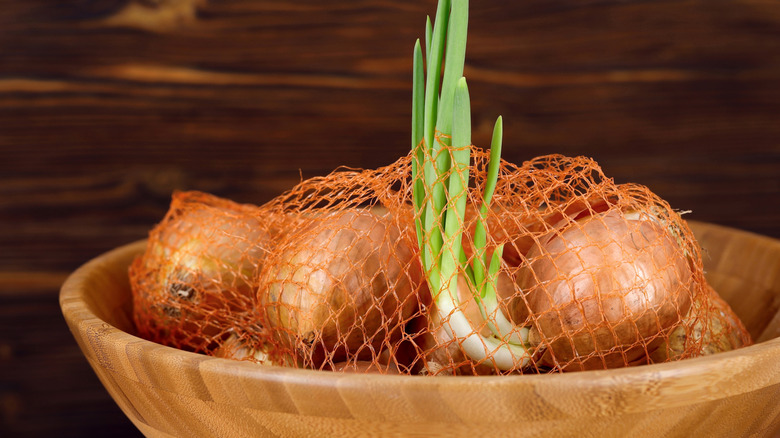
Despite all of the good intentions you might have when buying fresh produce, sometimes you just don't get to it before it goes bad — particularly for food stored out of sight in the pantry. The onions, once destined for French onion soup or onion rings, have now gone soft and have sprouted long green shoots.
Before you throw them all into the trash in shame, you should know that sprouted onions can be regrown. As a reward for your time and effort, you'll also end up with more onions than you started with. It will take a little prep, but it's easy enough for even the most inexperienced gardeners.
Start by peeling off the skin, then the layers of the onion itself. You want to continue stripping back the onion until you can see where the green sprouts reach the roots. Stop here, as it's vital that the roots stay connected.
Depending on how advanced the sprouts are, you'll see that they're comprised of two or three sets of shoots and roots. These need to be carefully separated, and then each of these can be planted to grow a new onion. You can plant directly in the soil, ensuring that there is around four inches of space between each plant, and that the plants will get full sun. If your onions have sprouted during winter, you'll need to grow them indoors, at least until the chance of frost has passed.
When to harvest your onions
To reap the rewards from your sprouted onions, you'll need a little patience. From going in the ground to developing full-sized bulbs, you can expect to wait around two to three months. During this time, they'll need watering every two to three days, and regular clearing of weeds — onions don't deal well with competition.
You'll know that the onions are ready to harvest when the top of the onion bulb emerges above the soil. By this time, the green leaves should be turning yellow or brown and becoming floppy. Harvesting is as simple as pulling the onions from the ground. You can brush off the dirt, but do not rinse with water, as this can lead to rotting.
Onions can be eaten as soon as they are harvested, but they will need to be cured if you want to store them long-term. Simply store them in a warm, dry place with plenty of airflow until a papery skin forms and the stems dry completely.
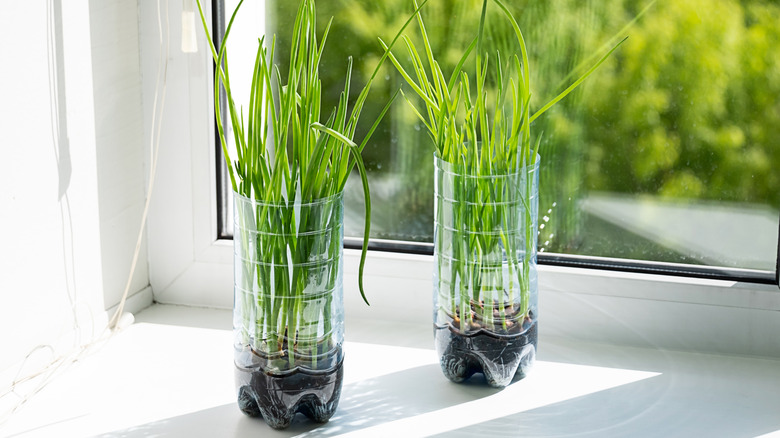
For home-grown allium without the wait, replanting green onions can be a much better choice. Once you've finished using all the green parts in your cooking, save the white stems and add them to a jar of water on a windowsill. There's no need to wait for a new bulb to grow.
As soon as you have new green shoots around four to five inches long, you can cut these off for use. They will continue to grow and can be cut again and again, but sitting in water, the plants will eventually run out of nutrients. For longer-lasting plants, transfer them to a pot or into the garden, and you'll have a continuous supply of green onions — just remember to avoid freezing extra green onions.