

For Better Prime Rib, Let The Meat Breathe (The Results Are In The Crust)
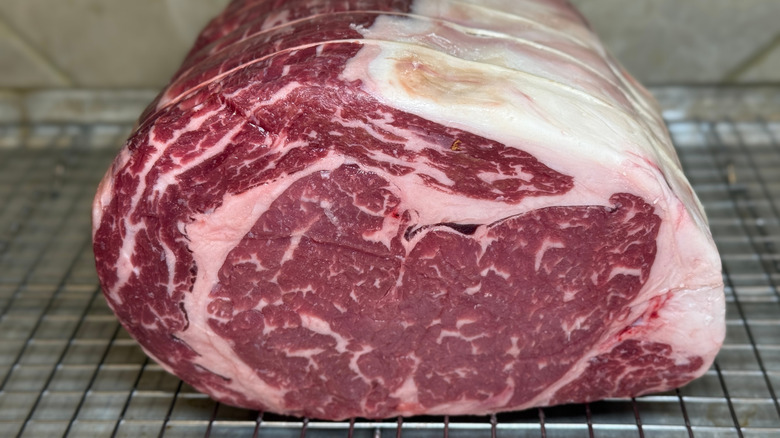
When you make prime rib, you want it to be perfect. To get there, one small step that goes a long way is letting your beef breathe. With beef prices higher than ever, prime rib is even more of a delicacy than normal, which means you don't want your money to go to waste on a result that leaves you wanting more. Every step in the process is essential, which is why we spoke to chef Brett Reichler to get his eight tips you need for perfect prime rib every time. And one of the first things he told us to do was to let the meat "breathe" by having it sit out in the fridge overnight.
"You're not dry-aging at this point, just getting air on it," Reichler adds. "Especially if it's been in the supermarket in Cryovac, in its own blood." This is important because getting the exterior of your prime rib as dry as possible will help it develop a better crust when you cook it. To get there, the chef recommends leaving your prime rib unwrapped and uncovered in the fridge for up to three days.
Then, on the day of cooking, the meat should go to the counter to get some fresh air before going into the oven. That's because bringing it up to a warmer temperature before going in the oven will help it cook more evenly. Reichler also recommends about an hour of rest at room temperature. Even though your prime rib will still be cold at this point, it should still make a difference.
Letting prime rib sit exposed to the air will help it develop a better crust
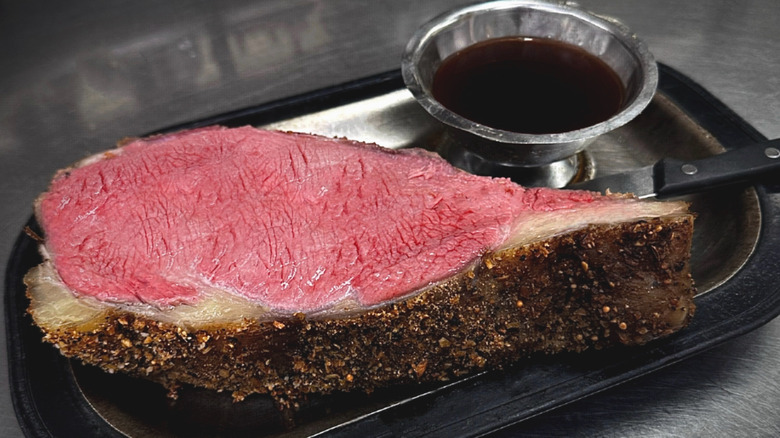
The reason letting prime rib breathe in the fridge is so important to the crust has to do with how meat browns. To get the strong browning from the Maillard reaction that creates a thick, flavorful crust, your meat needs to reach temperatures above 280 degrees Fahrenheit. However, moisture prevents this from happening. When the exterior of your prime rib is wet, the heat in your oven is being used to evaporate it first, which prevents the surface of the meat from rising above the boiling point of water. Because heat can be transferred through water, the interior of your prime rib is still heating up, but it will take much longer to start browning on the outside. And that means a less developed crust at the end.
Beyond airing out in the fridge, you should pat your prime rib dry with paper towels to get any last moisture off the surface. To really go all out, you should use the reverse sear method. By slowly cooking prime rib in the oven before searing it to brown, you further drive off moisture from the surface and raise the temperature of the exterior. That way, when the meat hits high heat to start browning, it instantly develops a perfectly brown crust without overcooking the inside. By starting with Reichler's advice and then working to eliminate surface moisture with every step, you'll get the flavorful, juicy prime rib of your dreams.