

Don't Toss Leftover Olive Brine — Use It In Meat Dishes Instead

It's easy to think that olives fall off the tree already possessing that superbly tangy, salty taste, but the fruits are actually extremely bitter in their natural state. A good quality brine makes olives a savory fixture in cocktails, sandwiches, and more, but it can also elevate your meat with its zesty taste.
Once you've made your way through a container of olives, you can recycle more than just the jar. Tossing away the brine is like trashing the secret to juicy, perfectly seasoned meat. A homemade brine of salt and water does wonders on the flavor and texture front, but the liquid that comes from an olive jar is leagues above a simple salt solution. The acidic vinegar in the fruit's brine helps to break down the connective tissues of the meat, leading to a tender finish. With these walls broken down, the taste of the earthy, olive-infused brine better permeates the flesh.
With the liquid having buttery, grassy olives sitting in it for ages, you don't need much other than the brine for flavorful results. Combine the brine with olive oil, lemon zest, thyme, minced garlic, and crushed red pepper. The brine is already quite salty, so hold off on adding more sodium until you see how the completed product tastes. This brine works for everything from chicken thighs to pork tenderloin, but remember to marinate it according to the protein you use — letting it sit too long can result in mushy meat.
Olive brine marinade is the key to easy, flavorful dinners
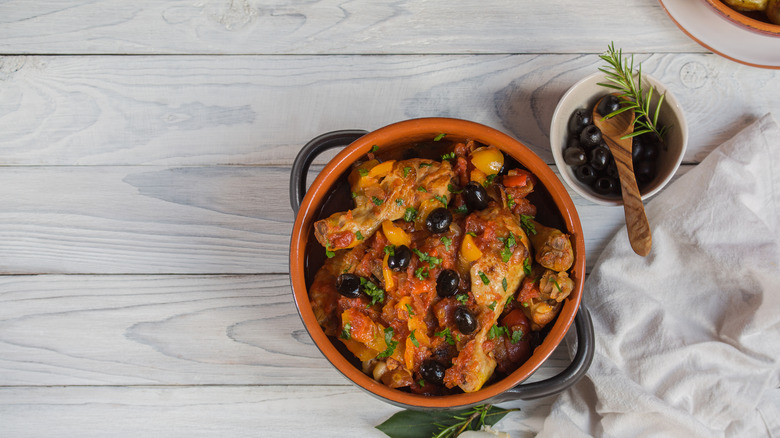
Depending on the type of olives used and the kind of vinegar it was brined in, you can impart smoky, grassy, and even vanilla notes into your protein. Kalamata olives are rich and meaty, and the red wine vinegar they're often stored in amplifies their fruity taste. The bold flavor works best with headier meats, like steak. Marinate ribeye in the brine and sear it to top off a three-ingredient heirloom tomato salad. With olive oil and feta flavoring the tomatoes, the Greek components are right at home with Kalamata brine-infused beef.
With chicken, you may want to opt for something lighter, like Castelvetrano olives. Like the Kalamata variety, they have a fruity taste, but with a much milder finish. The buttery green olives are preserved in salt water with citric acid, so they don't have the same puckery taste as their counterparts. A simple marinade of the Castelvetrano olive brine, oil, rosemary, parsley, and minced shallots makes for an incredible whole roast chicken.
Manzanilla olive's blend of smoky notes with bitter almond is fit for sweet pork. Mix the tangy brine with sage, lemon zest, olive oil, garlic, shallots, and basil, and marinate the pork tenderloin for about an hour. Roast the pork and serve it alongside Spanish-style potatoes and roasted asparagus.