

How To Order Healthier Pasta Dishes At Italian Restaurants, According To Dietitians
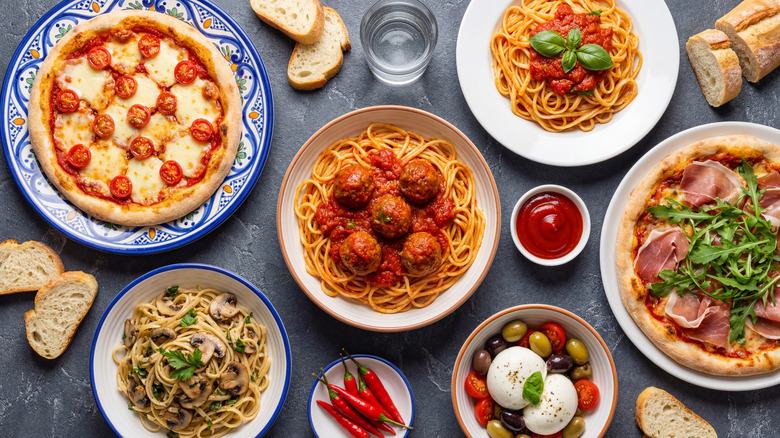
While some Italian dishes like béchamel-drenched, layered lasagna or deep-fried cotoletta alla Milanese are decadent and not something you'd necessarily eat daily, many authentic Italian dishes are full of simple and nutritious ingredients. Going out to an Italian restaurant doesn't have to be an internal struggle between you and your nutrition goals, as there are many ways to enjoy Italian food from a nutrition perspective. So, we spoke with two dietitians who gave us some insight on what types of pasta dishes to order when dining out.
Kat Benson, certified registered dietitian and board-certified specialist in sports dietetics at VNutrition, tells us to look for a pasta dish that has some balance to it. "That means carbohydrates from the pasta, a source of protein, some fiber, and a moderate amount of fat." When dining in a typical Italian restaurant, Benson notes that this "might be a pasta with a tomato-based sauce (like marinara), paired with a lean protein like chicken or seafood along with vegetables or a side salad."
Lena Bakovic, a certified nutrition support clinician and registered dietitian nutritionist at VNutrition, says to keep an eye out for "whole-grain, legume-based, or veggie-fortified pasta," as those ingredients have more fiber and protein than pasta made with traditional white flours. Although those types of alternative pastas are quite easy to find these days in grocery stores, you might have a difficult time finding any bean-based pasta noodles out in a typical Italian restaurant.
Focus on what food benefits you rather than what you shouldn't have
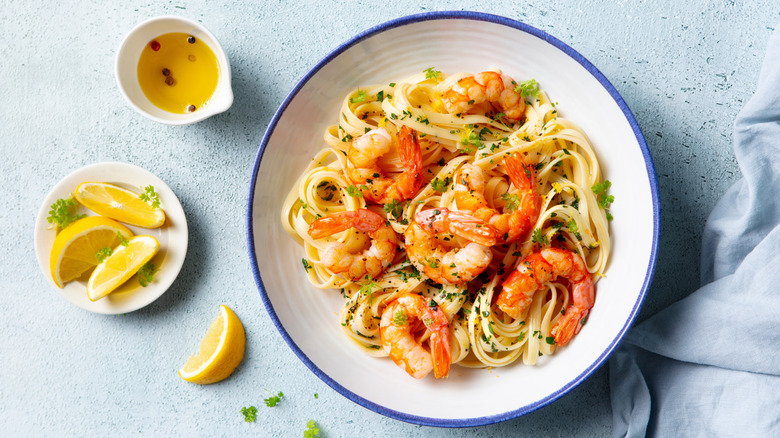
When it comes to nutrition, the sauce is what really matters. "Tomato-based sauces tend to be lighter than cream-based sauces," Benson explains, "and adding protein and vegetables can help balance the meal out so it's more satisfying." Bakovic also recommends seeking out a tomato sauce, as it's usually "lower in saturated fat, and full of lycopene (which is great for you)." She suggests incorporating as many vegetables as possible, as "they add fiber and vitamins and make your bowl more satisfying." Additionally, try to avoid "really rich, creamy sauces... lots of cheese or butter... [or] fried toppings, like breaded eggplant or anything swimming in oil."
In terms of the type of pasta, gluten-free isn't necessarily a "healthier" choice. "Unless you have celiac disease or a true gluten sensitivity," says Bakovic, "you're better off choosing whole-grain or legume-based pasta for that extra nutrition boost, rather than picking gluten-free just because it sounds healthier." Half of the fun of going out to a restaurant is to relieve yourself of the typical constraints of cooking a meal at home, which should include a bit of indulgence and the ability to relax and enjoy your meal without being incredibly strict in your diet. By using tips like these, you can still incorporate what's important to you nutrition-wise without the stress and fear that you've gone too far off track of your normal healthy routine.