

Why Timing Is Everything When It Comes To Pruning Blueberry Bushes
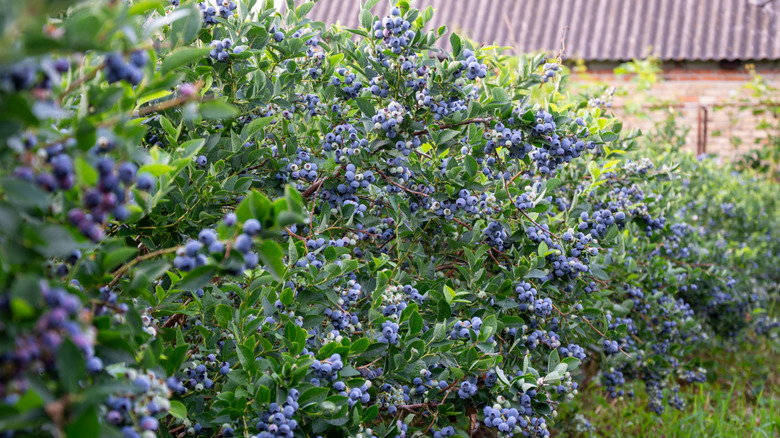
Growing a blueberry bush at home gives you access to fresh, organic blueberries –- a nutrient-dense fruit with high levels of antioxidants and numerous health benefits. To maximize fruit yield and maintain the health of the bush, it's important to prune it annually to remove dead wood. Timing is everything when it comes to pruning blueberry bushes. Proper pruning at the right time can boost air circulation, which reduces the risk of disease and improves plant health and structure. This can rejuvenate the bush, encouraging new growth and better-tasting blueberries that you can use in a number of ways.
If you prune the bush too early, such as in late fall or early winter, you can actually increase the bush's vulnerability to winter damage. The pruning process stimulates new growth, but if you live in an area that is still susceptible to overnight frosts or freezes, that new growth can immediately die off. Instead, it's best to prune blueberry bushes between late winter and early spring, or when they are dormant.
The ideal pruning time depends on your local climate. In warm or southern regions, you should prune the bushes in January or February. In colder northern regions, you should wait until late winter or early spring, pruning by March or once the coldest winter weather has passed. It may be harder to find wild blueberries in stores in 2026, so you'll be rewarded for taking care of the plant.
The best way to prune blueberry bushes
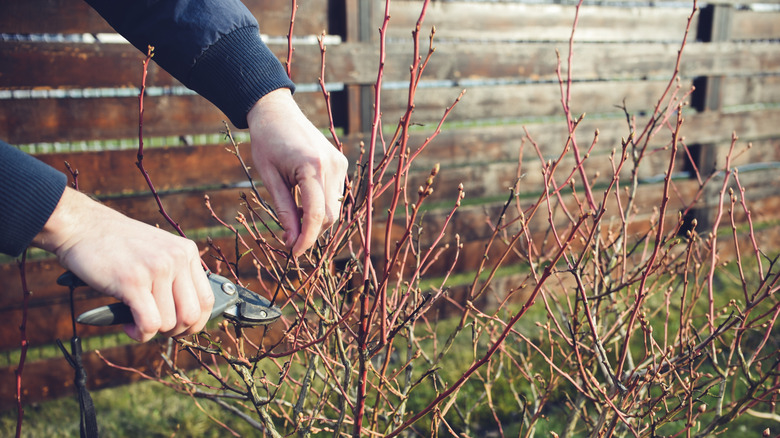
To prune your blueberry bushes, you will need sharp loppers as well as smaller hand pruners. Start by identifying strong branches with healthy flower buds. Remove any thin pieces of wood that are too weak to bear fruit, as well as older branches that are damaged or weak. Your goal is to prune one of every three branches, but don't touch thicker, healthier sections.
Your pruning technique should also be tailored to the age, size, and health of your bush as well as the variety of blueberries you're growing. For new bushes that are 2 years old or younger, focus on removing low branches and weak shoots, and retaining the healthiest branches that are growing straight up. Bushes that are 3 to 4 years old are healthier and more established. You should prioritize picking branches that contain the most buds to prune. Mature bushes that are over 4 years old should be thinned at the base. Then, remove any branches that are crossing over or rubbing against each other, as well as shorter, older, or weaker branches in the upper region of the bush.
After pruning, you will need to fertilize and mulch the bush. Wild blueberries thrive in nutrient-dense, acidic soil (which is why your raised garden bed is one of the worst places to grow berries). After fertilizing, add one or two inches of pine or straw mulch to the roots.