

For Cheaper Pot Roast With The Rich Flavor You Know And Love, Make This Meat Swap
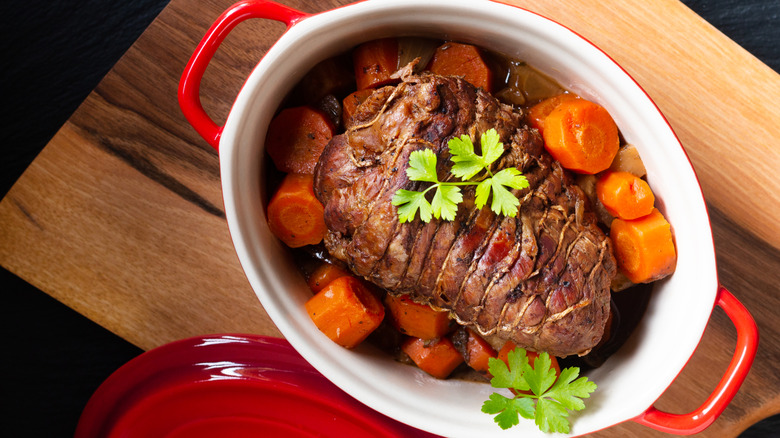
The average price for ground beef in the U.S. soared to $6.73 per pound in February 2026. Prices for all kinds of beef increased dramatically by the end of 2025, and there's no sign of relief as they continue to rise. That means if you want to enjoy a delicious pot roast, it will cost you more today than it did a year ago — unless you make a little tweak to your recipe by swapping your beef for pork.
Beef prices are expected to keep increasing in 2026, but pork prices are looking more affordable. If you compare chuck roast to a Boston butt pork roast, the difference is significant. Chuck roasts can be over $10 per pound, while the pork may be under $4. Keep in mind there are other cuts of pork you can roast, but our go-to choice is pork shoulder.
You will need to adjust how you cook and season it when swapping pork shoulder for chuck roast. Depending on how the meat is trimmed, pork shoulder can have about four times more fat than a chuck roast. A pork roast often has a large fat cap that you won't find on a chuck roast, so trimming that is important to make the final product less greasy. Beef may have more fat marbling throughout, which is why pork benefits from brining and keeping some fat on for extra moisture. If you have ever roasted a trimmed pork shoulder and it came out too dry, that's why.
Getting pork on the fork
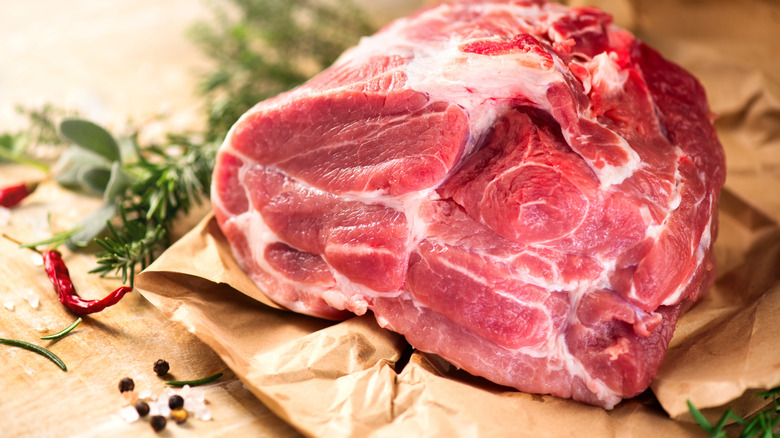
Pork tends to be sweeter than beef thanks to glycogen in the muscle tissue. You may need more salt and seasoning, including a brine, to bring out deeper and more savory flavors if you want to get closer to achieving the richer taste of beef, though it will never be exactly the same. Pork really benefits from aromatics, too. Onions and garlic enhance flavor as the meat roasts, along with spices like smoky paprika, earthy cumin, and warm black pepper. Different herbs like sage, thyme, and rosemary can also add some complexity and nuance to the dish.
Beef generally has denser muscle tissue than pork. So a pork roast will often be more tender when it's done, but it may require a longer cook time. That means you'll need to be careful if you are roasting vegetables alongside it. Potatoes, onions, carrots, and other root veggies will taste great if they share a pot with your roast pork, but keep an eye on them so they don't overcook. Alternatively, you can add them later in the cook so they finish alongside the meat if you have a firm idea of when you expect it to be done.
One of the greatest advantages of preparing a pork roast is that the fat and juices that render out make a great base for a gravy. Use the drippings from the pan and make a proper roux to thicken it up. A few additions can take your gravy to the next level, too. Try this Italian slow-roasted pork shoulder recipe and see how it stands up to traditional pot roast — you may just have an affordable new favorite.