

This Cocktail Staple Is The Secret To 'Amazing' Seafood Pasta, According To A Chef
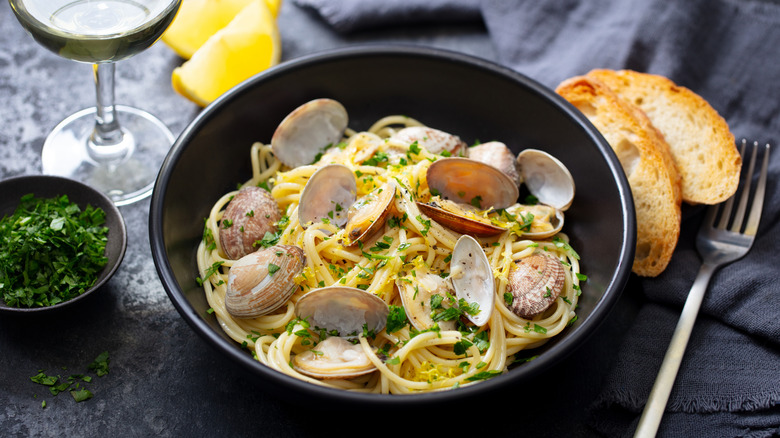
The Venn diagram of martini lovers and seafood pasta lovers just became a big ol' circle — all because of one crucial ingredient. We had the chance to chat with Michael White, a Michelin-starred chef and owner of Bianco Hospitality, at the Nassau Paradise Island Wine & Food Festival, and he shared with us the cooking substitution you should try instead of wine: vermouth.
If you're making a simple seafood pasta at home, your ingredient list can be short and sweet. Think quality pasta, garlic, fresh seafood like shrimp, lobster, or clams, lemon juice, white wine, and fresh herbs — all of which come together for a bright, delicious dish that doesn't need much improvement. However, according to Chef White, that bottle of vermouth that's been sitting pretty on your home bar this whole time is the ingredient that your seafood pasta has been missing. Herbaceous, citrus-forward notes that are built into a white vermouth can help to enhance the flavors of every element of the dish, from the briny clams to the sour lemon juice, while also adding more noticeable acidity, making for a more balanced, flavor-forward dish.
"I use a lot of vermouth actually. Obviously it's a fortified wine and so therefore it has a lot of flavor," notes Chef White. "When I'm doing pastas, for example, I'm using white vermouth sometimes. If I'm doing a seafood pasta with clams, it's amazing. People are like, 'What's that flavor in there?'"
Swap out red or white wine for vermouth in recipes for deeper, more complex flavor
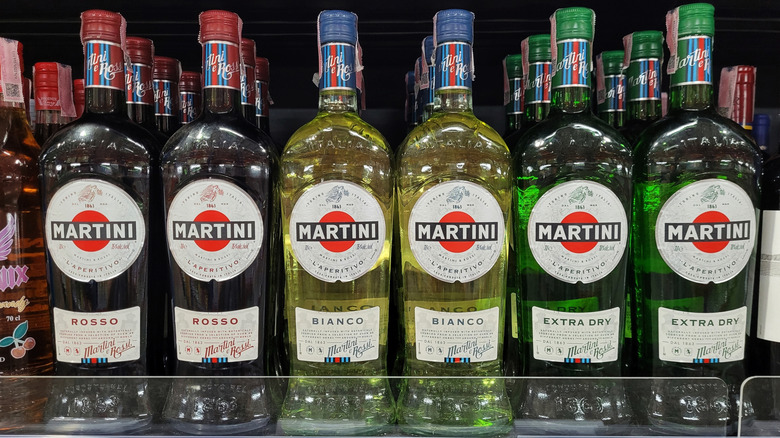
Now that you know that vermouth can do so much more than play a supporting role in many a cocktail, the possibilities for adding vermouth to your ingredient arsenal are seemingly endless. In addition to swapping out white wine for white vermouth in your next seafood pasta, there are a host of dishes where white vermouth can impart a more crisp, bright flavor profile than your standard white cooking wine. In a dish like parmesan risotto, where white wine is typically added to the arborio rice along with warm chicken stock, vermouth can impart a more herbaceous, crisper flavor profile to each bite, while also amplifying the nutty, salty flavors of the Parmesan cheese. Similarly, in a dish like butter-poached fish, where white wine provides acidity to cut through the richness in the sauce, white vermouth can have a similar impact, but with more complex, bright flavors that play well with herbs and citrus.
For the red vermouth fans who like the occasional Manhattan or Americano but aren't sure when to use it otherwise, you're in luck. In red wine-braised short ribs, where red wine is used to deglaze the pot, use red vermouth instead. Red vermouth is inherently sweeter than a red wine you may be using in this type of recipe, and it's that sweetness that will help to cut through the rich, fatty flavors in the braising liquid. The result? A deeply flavored, memorable dish that will have you looking up every possible recipe where red vermouth can be your secret flavor weapon.