

9 Tips You Need For Cooking With Sherry

If you've ever tried cooking with wine, you'll know that it can add a mouthwatering depth of flavor to a dish. Whether you're adding a splash of Bordeaux to a stew or a dash of Sauvignon Blanc to a creamy sauce, wine can enhance the recipe without overpowering the other ingredients. Sherry is no different. Hailing from Cádiz in southwestern Spain, this fortified wine dates back to ancient times when the Phoenicians brought grape vines to the region. Although it is largely known for its drinking qualities, sherry has many excellent qualities for cooking.
In order to understand why and how to cook with sherry, we spoke with Omar Allibhoy, otherwise known as The Spanish Chef. According to him, sherry isn't just your average bottle of wine. "It's shaped by the Andalusian climate, the solera system, and (in many styles) biological ageing under flor," he said, "which creates flavours you don't get elsewhere — savoury nuttiness, salinity, chamomile-like freshness, and a deep, rounded umami character." Check out our sherry cheat sheet if you'd like all of that broken down further. When it comes to cooking, Allibhoy noted, this means that sherry is a quick way to add layers of complexity to a dish. Before you get cooking, follow these tips so that you get the most out of this transformative ingredient.
Avoid cooking sherry
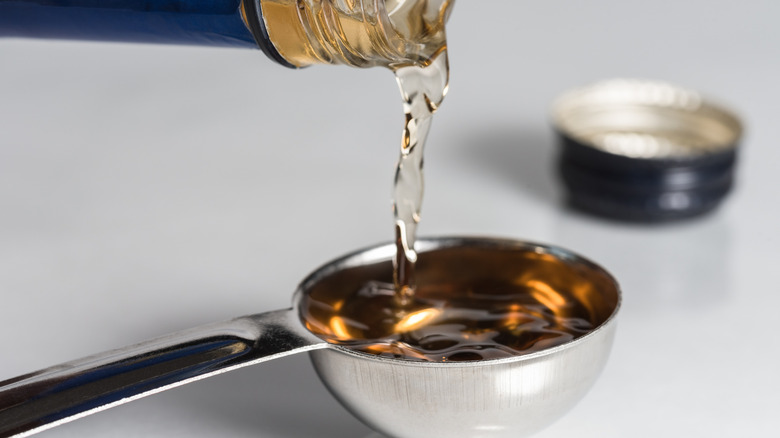
When you go to the grocery store to get sherry to add to a recipe, it would make sense to reach for the bottle of cooking sherry. After all, the name suggests that it's the type that should be used for this purpose. But in reality, you're much better off buying a drinking sherry. As Omar Allibhoy told us, cooking sherry is usually a lower-quality option that has been salted and stabilized to be kept in the pantry or on the counter. The results are typically harsher and less balanced than the type of sherry you'd find in the alcohol aisle. Sherry that is intended for drinking has much more depth and complexity, which is exactly what you want when you're cooking with it.
"Even an affordable Fino or Amontillado will give you a cleaner flavor and better aroma than 'cooking sherry,'" Allibhoy said. So, ignore the labels that tell you which sherries are made for cooking and simply find one that you'd happily sip while the recipe comes together.
Match the style of the sherry to the recipe
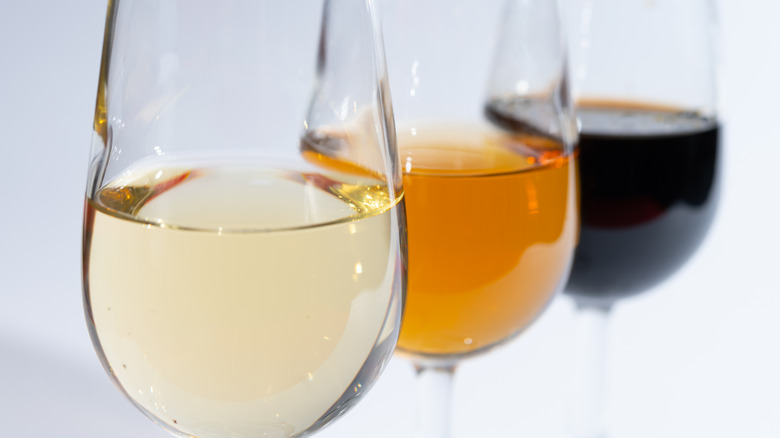
All sherry comes from a specific origin, but it encompasses a wide range of flavors. Omar Allibhoy told us that using the wrong style is one of the most common mistakes that cooks can make, so make sure you choose wisely when purchasing it. There are many different types of sherry, and if you aren't intimately familiar with Spanish wines, the range can become dizzying pretty quickly. Some of the most common are Manzanilla, which is very dry and lightly acidic; Fino, which is similarly dry and acidic; Amontillado, which is medium-bodied and has a nuttier flavor; Oloroso, which is dry, full-bodied, and rich; and Pedro Ximénez, which is dark, full-bodied, and sweet.
Allibhoy recommended using Manzanilla and Fino for lighter dishes, Oloroso for rich stews, and reserving Pedro Ximénez for desserts. Adding such a sweet style to anything savory is a common mistake, he explained, and it can completely alter the flavor profile of the dish. If you aren't sure where to start, here is a list of sherries, ranked, to make things easier.
Don't overcomplicate it
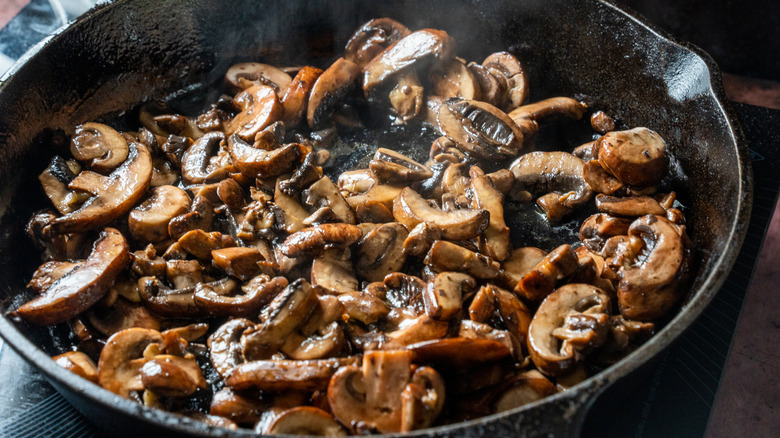
Any time a recipe calls for an expensive or specialized ingredient, like sherry, it can be tempting to get fussy with it. The stakes seem higher when you're cooking with something as sophisticated and specific as Andalusian wine, but as Allibhoy noted, the beauty of cooking with sherry is that it does most of the heavy lifting for you. The whole reason it works so well in cooking is because of its many flavor nuances, so you can actually get away with cooking a very simple recipe when you're using it.
"A simple mushroom dish — like sautéed mushrooms on toast, or mushrooms folded into a creamy sauce — becomes restaurant-level with a splash of Amontillado," Allibhoy said. All you have to do is brown the mushrooms, add the sherry, let it reduce for a little while, and then finish the dish off with herbs and a little butter or olive oil. The results will be deep and elegant rather than simply earthy, and it only takes a few minutes. Far from being complicated, cooking with sherry can make your life a lot easier. If you want to try this particular combination, look no further than this white wine sautéed mushroom recipe. You can simply use Amontillado in place of the white wine.
Be cautious when making delicately flavored dishes
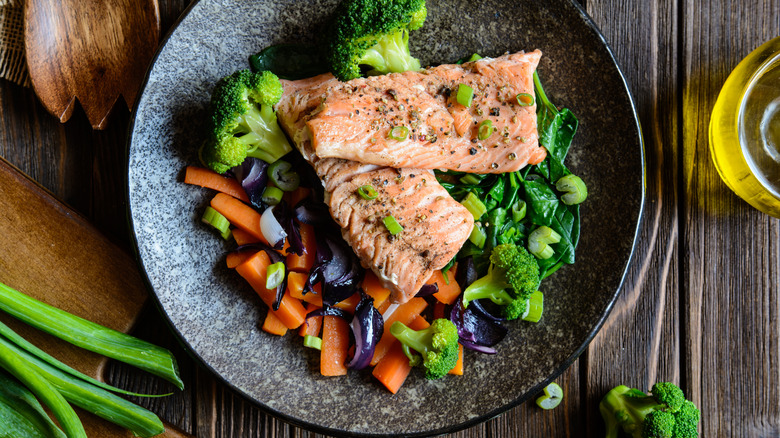
Although sherry can be a game-changer in the kitchen, it doesn't work in every recipe. Omar Allibhoy noted that, if you're making a recipe that hinges on delicate, clean flavors, sherry can quickly overwhelm it. For example, if you're making steamed vegetables or light, subtle broths, you might want to skip the wine entirely and just let the simplicity of the ingredients shine.
Recipes that are dominated by acidity are also less well-suited to the addition of sherry. If you're cooking something that already has a lot of citrus or vinegar, certain styles of the Spanish wine may clash rather than add nuance to the flavors. That said, Allibhoy stressed that there is usually a type of sherry that will work well with these types of flavors, so you don't have to omit it entirely. Simply avoid the most acidic styles when you're cooking acidic dishes and only add a small amount.
Get extra flavor by using it for deglazing
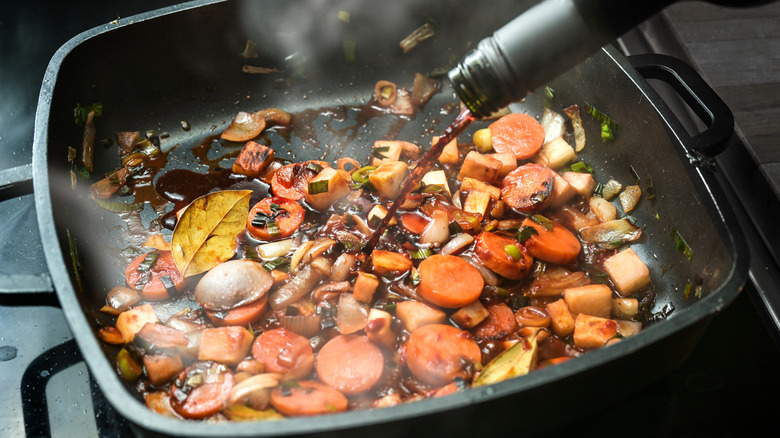
Deglazing is one of those techniques that hits multiple birds with one stone. Better yet, the process is simple. All you have to do is pour some liquid into your pan after you've seared or sautéed the ingredients. In doing so, you lift the caramelized brown bits off the bottom of the pan, which infuses the liquid with flavor. It also makes the pan easier to clean, which is always a plus. Stock and wine are popular options for deglazing, and plain water works well too, but as Omar Allibhoy told us, sherry adds a very specific combination of brightness and depth that other liquids do not.
"Because sherry is fortified and aged in a unique way," he explained, "it can cut through fat, amplify umami, and pull browned bits from the pan into a sauce without making it taste overly fruity or sweet (which some table wines can)." As is the case whenever you're cooking with sherry, the style matters. Fino and Manzanilla add a salty lift that makes the flavors sharper and more intense, while Oloroso and Amontillado add a nutty, caramelized taste.
Make sure to reduce it
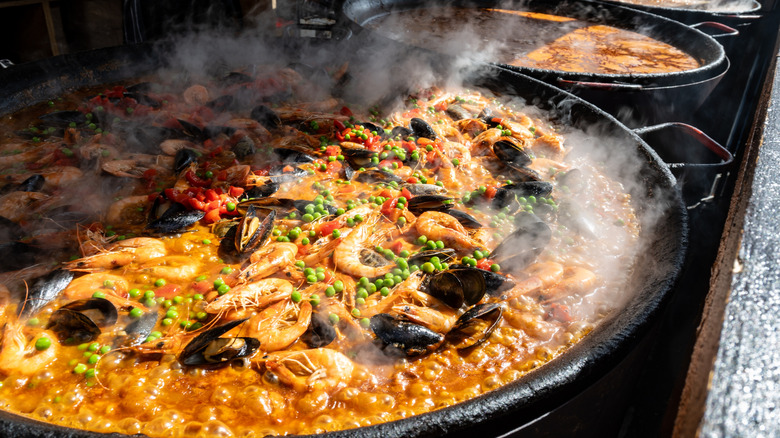
Cooking with wine is usually as straightforward as tipping the bottle into a pan, but there are certain rules of thumb that will maximize your results. When it comes to sherry, Omar Allibhoy told us that one of the most common mistakes people make is adding it at the end of the cooking process rather than giving it time to simmer and reduce. This isn't about burning off the alcohol, though that might also be a concern. It's about the flavor. According to Allibhoy, allowing the dish to simmer after adding the wine will concentrate the aroma and integrate the flavors.
How long you should let it reduce depends on the type of dish you're cooking. For most recipes, you should wait to add the sherry until you've developed flavors in the pan by browning or sautéing the main ingredients. Then, deglaze with the wine and simmer to cook off the raw alcohol. If you're making something delicate and cooking with a lighter style of sherry, such as Fino, you should add the wine a bit later to avoid burning off its fresh, saline notes.
Use Pedro Ximénez for dessert recipes
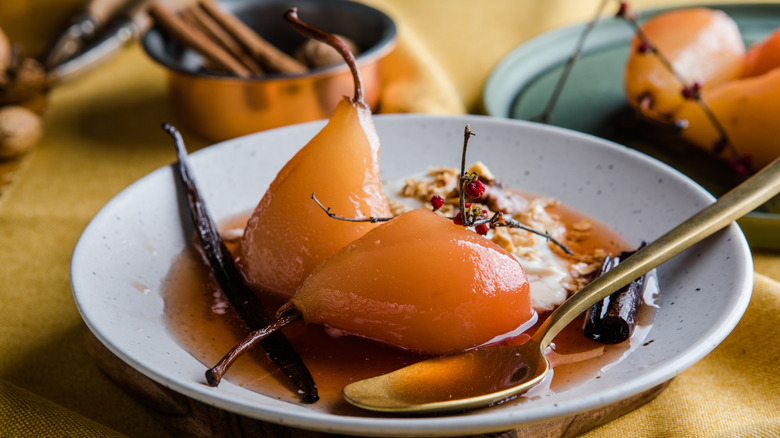
Recipes that include wine often fall into the savory category, whether it's pot roasts, stews, or seafood. But Omar Allibhoy provided plenty of ideas for using it in sweet recipes as well. According to him, the best type of sherry to use for desserts is almost always Pedro Ximénez. Not only is it naturally sweet, but it also has flavor notes like raisins, figs, coffee, and caramel that pair well with many dessert ingredients.
If you're in need of inspiration, Allibhoy suggested adding it to poached pears or quince, turning it into a syrup to drizzle over ice cream, panna cotta, or cheesecake, or turning it into a glaze for roasted stone fruit, such as pears and plums. There is no wrong place to start, of course, but our 3-ingredient salted caramel panna cotta recipe is tough to beat. In short, sherry is an excellent way to add depth and complexity to a dessert without drowning it in sugar, and you only need a small amount to make an impact.
Be mindful of its shelf life and optimal storage conditions
Sherry tends to be more shelf-stable after it's opened than other types of wine, but it's still important to store it correctly if you're using drinking sherry rather than cooking sherry. Fino and Manzanilla are more fussy than other varieties. To preserve their fresh, bright flavor, it's best to keep them in the fridge and use them within a week or two. Darker styles of sherry are more forgiving. Amontillado, Oloroso, and Pedro Ximénez undergo quite a bit of oxidation during their creation, so they can handle more contact with the air. That said, it's best to finish them within two months.
To get the most out of your bottle of sherry, make sure to store it in the right conditions. Unlike some other types of wine, sherry should be kept upright. Minimizing its surface area in this manner lessens the oxidation. It should also be kept tightly sealed and left in a dark place that doesn't experience large temperature fluctuations. Check out our comprehensive guide to storing wine for further information on why these conditions make such a difference.
Don't forget to serve it at the table, too
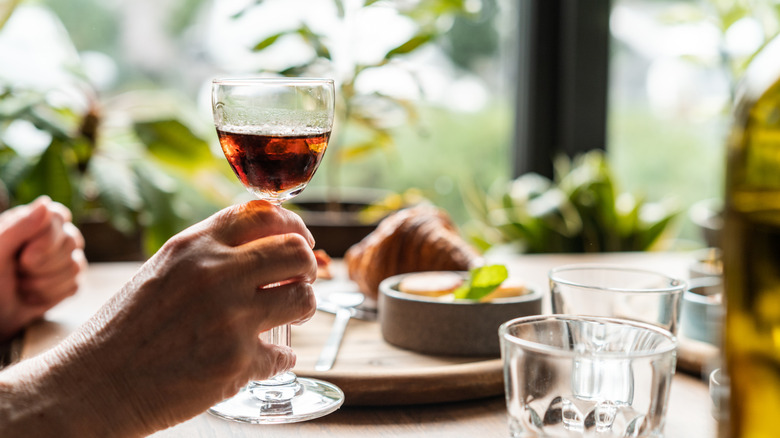
One of the benefits of using drinking sherry instead of cooking sherry is that you can actually drink it. Omar Allibhoy stressed the fact that sherry can be enjoyed in multiple ways in a single meal. Add it to your recipe but make sure to serve it as a drink alongside the food as well. You can use multiple styles, of course. Perhaps you're cooking with an Amontillado but have a bottle of Oloroso that you love drinking. If you aren't sure where to start, though, Allibhoy had a very specific suggestion. "One of my favourite pairings in Spanish culture is a cold glass of Fino or Manzanilla with thinly sliced Jamón Ibérico," he said. "The sherry's salty, dry freshness cleans the palate, while the ham's nutty fat makes the wine taste even more aromatic."
To turn this pairing into a dish, he suggested sautéing the ham with spring onions and garlic, deglazing the pan with Fino, and then steaming clams in the liquid for a couple of minutes. Serve it with sourdough and a glass of the Fino on the side, and you have a luxurious meal on the table in under 10 minutes. It's the perfect showcase for cooking with sherry, and it's about as simple as it gets.