

Why Restaurant Pork Chops Always Taste So Good, And How To Achieve That Flavor At Home
We may receive a commission on purchases made from links.
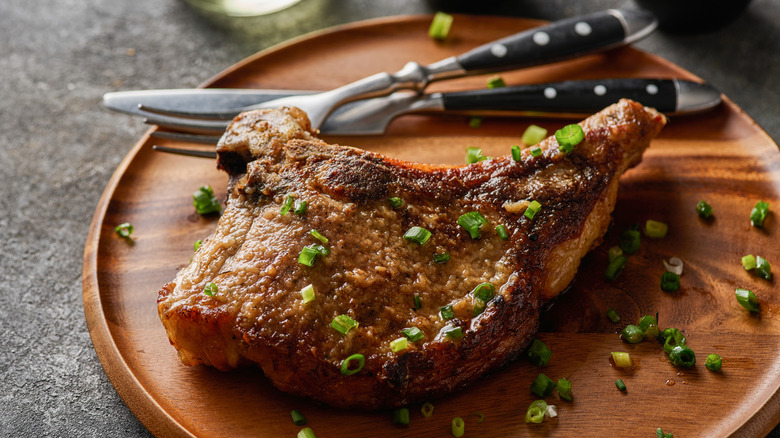
If you've ever had a restaurant-quality pork chop — one that's juicy, flavorful, and cooked to perfect doneness — you may be hesitant to attempt chops at home for fear of failure. Let's face it: preparing pork chops can be daunting. We recently spoke with Michael Symon — a chef, author, and restaurant owner who is also an expert host at this year's Nassau Paradise Wine & Food Festival — in hopes of getting some clear answers on how to get restaurant-quality pork chops at home. According to Symon, the top tips for a stellar pork chop include cooking in lard, not overcooking, and choosing high-quality pork.
"Cook them in the lard because they're going to bump up the pork flavor," Symon explains, adding that it keeps them juicer. Additionally, the expert notes that the cooking process itself is the key to the quality pork chops enjoyed in most restaurants. "A lot of times they're cooked over live fire, which helps a lot," he notes, adding that it's likely that "the pork is sometimes better than you could easily find in a grocery store. It's probably a heritage breed, which helps."
Symon is referring to original, farm-bred breeds of pig, including the better-known Berkshire breed, which typically hold more fat. While the biggest difference between Berkshire and regular pork chops is in flavor and texture, don't worry. If your budget doesn't allow for heritage-breed pork, grocery store pork chops can be just as tasty with the above cooking methods in mind.
Don't overcook chops, and other mistakes to avoid
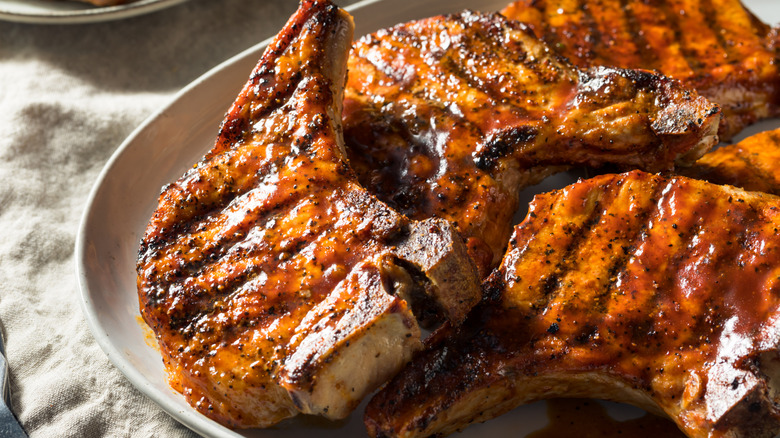
It can be tricky to achieve the perfect temperature with pork before it's either overcooked or not cooked through. However, flavorful pork chops that rival those found when dining out can absolutely be achieved in a home kitchen. Symon's advice for great chops, in addition to cooking them in lard (such as this Fatworks Certified Organic Pork Lard), regards cooking time. "Most importantly, do not overcook them," the chef explains. "There's no reason a pork chop should ever go over 150 [degrees Fahrenheit]. I cook mine up to about 140 to keep them nice and juicy."
This advice is most easily achieved with a good-quality, instant read, meat thermometer. A couple of other mistakes to avoid when cooking pork chops? Don't cook a thin pork chop the same way you would a thick one (be careful with temperature and timing) and make sure that the same goes for cooking an extra lean cut. Otherwise, you may end up with drier chops than you're hoping for.
Additionally, you don't need to get fussy with seasoning and serving ideas to make a pork chop "chef worthy." Symon makes a simple accompaniment using peppers, fresh herbs and a splash of vinegar. "I would sauté garlic, shallots, hot and sweet peppers, hit them with a little vinegar, finish them with butter, grill the pork chops, and serve it all over soft polenta," he says. To try these techniques out yourself, give these different pork chop recipes a try.