

What Happens To Chick-Fil-A's Leftover Chicken?
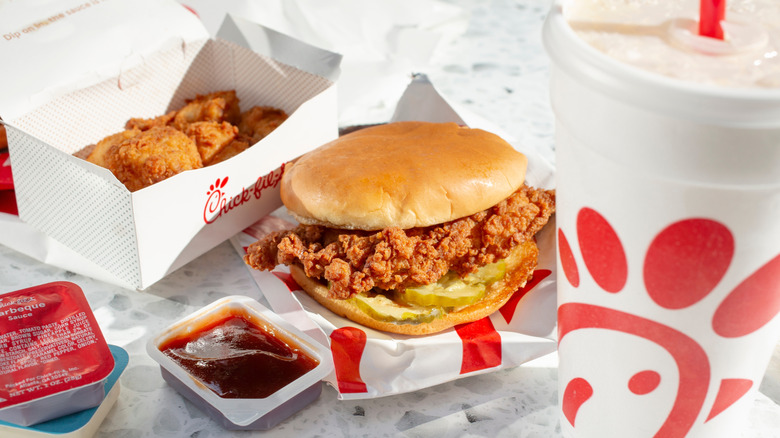
Whatever consumers think of Chick-fil-A as a company, there is pretty much universal consensus that the food is enticingly tasty, relatively affordable, and fills a nostalgia-based craving for old-fashioned comfort food. From its signature crunchy chicken to homestyle mac-and-cheese, and buttery biscuits, there are plenty of reasons to swing by this super-popular fast-fast chain. But it would be nice to know a bit about the company culture as well, particularly when it comes to important social issues, such as food waste.
Like thousands of fast-food kitchens across the country, Chick-fil-A faces the same question at the end of a long day: What happens to the food that didn't sell? With more than 3,000 store locations to date, the company collectively cooks and prepares countless chicken sandwiches and meal components every operating day, leading to inevitable leftovers. Fortunately, there also is an established Chick-fil-A procedure for dealing with that. It largely funnels through a program called Shared Table.
As part of a Tasting Table deep-dive into what happens to leftovers at 10 chain restaurants, a Chick-fil-A representative explained the innovative initiative. "The concept behind the Chick-fil-A Shared Table program is simple: restaurants package surplus food, such as biscuits, Chick-fil-A nuggets, and other prepared items. Nonprofits and organizations schedule a time to pick up the donated food, which they then transform into new meals." At least 2,500 store locations participate in Shared Table, which has collectively served more than 42 million meals. Here is a closer look at how that plays out, plus info on the company's proactive waste prevention efforts.
How Shared Table works for Chick-fil-A leftovers
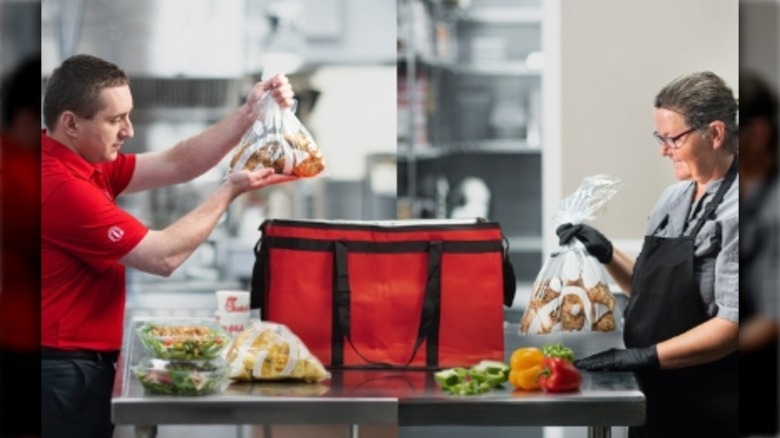
The Shared Table initiative by Chcik-fil-A got its inspiration from a local franchise owner-operator in Knoxville, Tennessee, who began donating leftover food to a nearby rescue mission. Over time, the idea spread to other locations, eventually becoming an official Chick-fil-A food program in 2012. As part of the outreach, participating restaurants can package any safe, unsold food at the end of the day, preparing it for pickup by community partners that include shelters, soup kitchens, food banks, and rescue ministries.
But the chain of events does not end there, with leftover nuggets, sides, sandwiches, and salads getting stale or unsightly within a few hours or less. The food actually get repurposed into nourishing, shareable portions of stir-fry dishes, casseroles, chicken and dumplings, chicken cacciatore, tacos, fruit smoothies, frittatas, and other creative incarnations. Chick-fil-A even released the digital "Extra Helpings" cookbook in 2023, featuring 26 of those recipes, plus inspiring stories from local nonprofit partners.
Chick-fil-A works with numerous nonprofits across America and Canada to facilitate the Shared Table outreach, including Food Donation Connection, which in turn links them to the local groups providing hunger relief. Food Donation Connection partners with many other restaurant chains as well, including McDonald's, KFC, Olive Garden, Longhorn Steakhouse, Cracker Barrel, and more.
Proactive waste prevention at Chick-fil-A
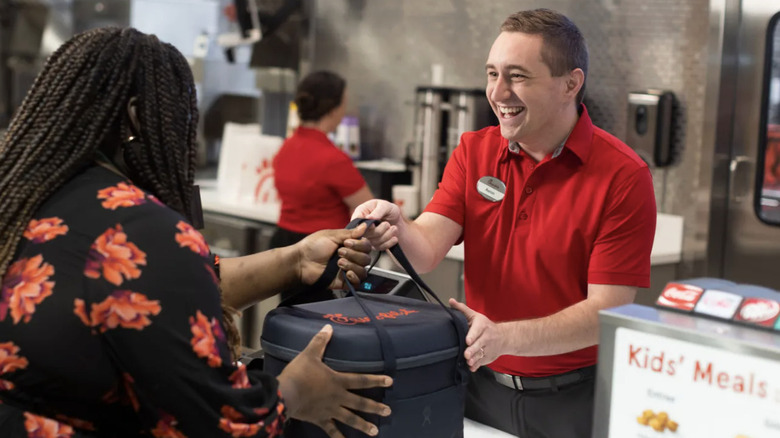
Chick-fil-A's approach to food-waste issues is multi-pronged, reaching beyond surplus-food donations. It combines those efforts with ones aiming to prevent waste from ever occurring, which reduces how much leftover chicken exists at the end of a day. Individual restaurants follow what the company calls a "cook less, more often" approach, meaning that chicken and menu items get prepared in smaller batches throughout the day instead of in large quantities all at once. It keeps the food fresh for daily customers while also removing the guesswork of how much food is actually needed on any given day.
Chick-fil-A notes that its efforts at reducing waste are not singularly for hunger relief. They also are tied to environmental commitments. Food donations, combined with things like composting and other waste-conscious practices, have kept a company-reported 61 million-plus pounds of restaurant food waste from rotting in landfills since 2020. That sounds like a lot of food — and it is. But considering that an estimated 38% of food produced in the United States goes either unsold or uneaten, per the nonprofit ReFED, there is lots more work to do among American restaurants, food suppliers, and consumers. For a deeper dive into the world of Chick-fil-A and its food, check out these 12 facts you didn't know about Chick-fil-A's chicken.