

What Makes Shallots Different From Green Onions
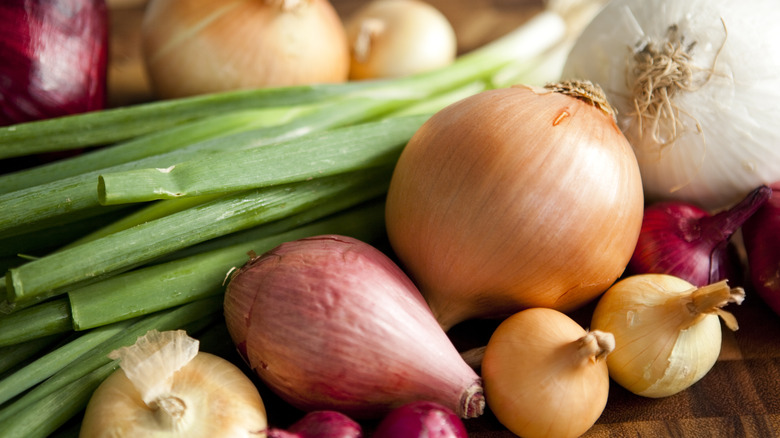
Onions are one of the cornerstones of cooking. Though they rarely take center stage themselves, many chefs regard onions as the foundation of flavor. This is why onions feature so heavily in mirepoix, for example. There are many kinds of onions at your disposal, and it's helpful to know the differences between them and what each is best for, including understanding the difference between shallots and green onions.
Often recipes will recommend using shallots or green onions, with recipes frequently referring to them side by side, and that word "or" does a lot of heavy lifting. Written like that, it makes it seem like shallots and green onions are interchangeable or the same thing. Shallots don't actually look like green onions, and although they are related, they do not taste all that similar.
Green onions, also called scallions, are long, thin, immature green stalks of the Allium fistulosum plant. In other words, they are young onions with a much milder taste than a mature onion bulb. Shallots, on the other hand, are closely related to onions, but not true onions. Shallots have a milder, sweeter flavor and taste more like a mix between garlic and onion. The flavor of a shallot deepens when it's cooked, while a green onion loses much of its flavor in cooking. If you are looking to cook and build flavor, shallots are a better choice. If you are looking to garnish and add brightness, try green onion.
You shall not call shallot a green onion
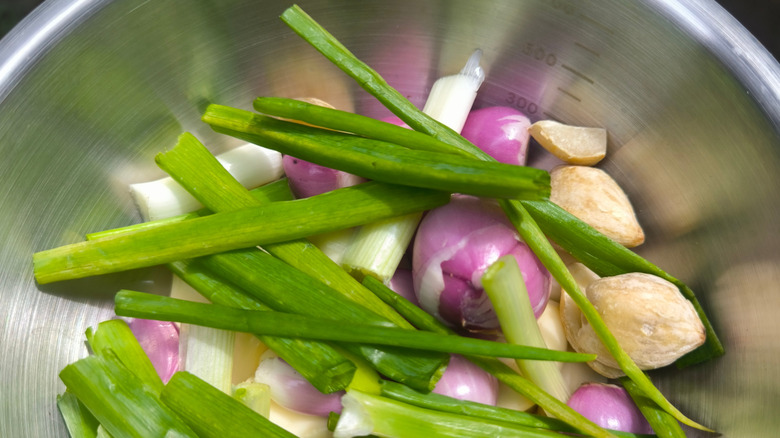
Green onions are bright green except for the white stem at the base. Shallots look more like slightly misshapen onions with a bronze, papery skin that needs to be peeled away. The edible part beneath can range from a light grayish-purple color to purple-red shade. Green onions are the stems of the onion plant, while shallots are the bulbs of a different plant. From a culinary perspective, you wouldn't often swap green onions for shallots in a dish. Think of it in the same way you could top your cereal with blueberries or strawberries — you're not going to get the same flavor, nor would you mistake one for the other, but both complement cereal.
With a milder, brighter, peppery taste than regular onions, green onions are best used fresh. They shine most if they are added at the very end of cooking, just enough to incorporate them. Scallion pancakes, one of the most famous green onion dishes, only need to be fried for a couple of minutes. That fresh, vegetal taste is what you want from a green onion and it's highlighted in this application. The sweet taste of shallots is central to a classic Béarnaise sauce. This tangy, smooth, rich, and buttery sauce, which pairs perfectly with steaks, starts with a shallot and vinegar reduction to achieve its hallmark flavor. Cooking with shallots often requires sautéing them and reducing them to concentrate the nuanced garlicky and oniony taste.
In the simplest terms, a green onion is a green stem with a mild, oniony flavor. A shallot is a papery-skinned bulb with an sweeter oniony flavor. Both might be delicious diced up and added to a fresh salad, but they are distinct ingredients.