

Florida Oranges Are On The Decline In 2026 — Why You Might Not See Them At The Grocery Store
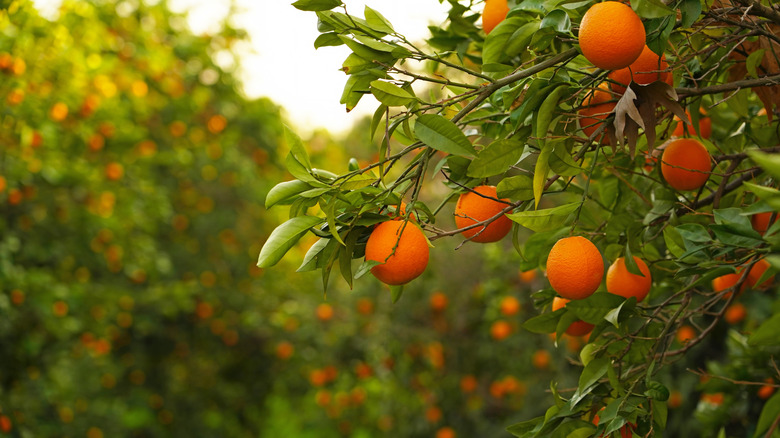
When reaching for vibrant fresh oranges or chilled cartons of OJ in your local supermarket, it's quite likely that citrusy goodness originated in California or Florida. Those two states produce the lion's share of citrus in the United States, though Arizona and Texas bring some action to the market as well. But statistics can vary, sometimes considerably, based on external circumstances. That's exactly why Florida oranges, once the reigning kingdom of citrus royalty in the U.S., are on the decline.
Orange groves are intrinsically tied to Florida's agricultural identity, with the state bringing about 70% of the nation's oranges to market prior to 2014. In recent years, however, a historic downturn has created disappearing groves and dramatically falling production, with some growers scaling back or even throwing in the towel, so to speak. It's not a total wipeout, with the U.S. Department of Agriculture still forecasting Florida production at about 12 million boxes of oranges for the 2025-2026 season — but it's still historically one of the lowest harvests in over a century.
Depending on where you live or how conditions develop, Florida oranges may be much harder to find in grocery stores this year, or you may not see them at all. Instead, your citrus cravings may be filled by California. The primary reasons for Florida's tumble from the citrus throne come down to three things: hurricanes, farmland reduction, and especially, an extremely insidious blight known as "citrus greening." Here's a deeper look into those issues, and how they may play out in grocery carts across America in 2026.
What's up with citrus greening in Florida oranges
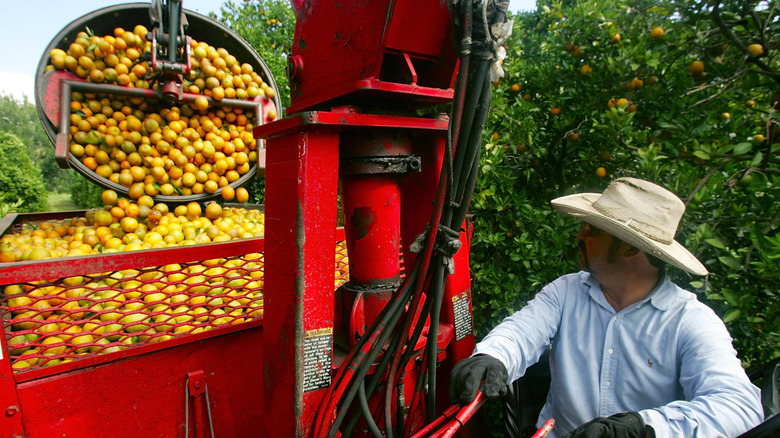
Multiple issues contribute to the ongoing crisis unfolding in Florida's orange industry, but one of the most significant is citrus greening. The bacteria-based infection is a disease that's pervasive, destructive, and persistent once it takes hold, attacking citrus trees with a vengeance. Scientifically, it's known as Huanglongbing (HLB), which spreads from tree to tree via the Asian citrus psyllid insect. Once infected, citrus trees typically die within a few years. In the meantime, that tree produces inferior fruits, suitable only for juicing.
Citrus greening began creeping into Florida orange trees and groves around 2005, eventually spreading to an estimated 80% of Florida citrus trees, according to a University of Florida report, and causing a vast reduction in oranges from the 244 million boxes reported in 1998. That trend is now portrayed in the mere 12 million projected boxes of oranges for 2026 — a striking statistic by all accounts.
It's worth noting that citrus greening isn't picky about what it attacks, hitting not just Florida oranges but all types of citrus, such as lemons, limes, and grapefruits, though to a slightly smaller degree than they wreak havoc on orange trees. There's currently no cure for citrus greening, and since it's been spreading in the state for a couple of decades, it's a substantial loss for growers and orange-lovers alike, who miss those bright, juicy fruits piled-high in grocery store and farmer's market bins.
Hurricanes and shrinking farmland acreage hit the orange industry
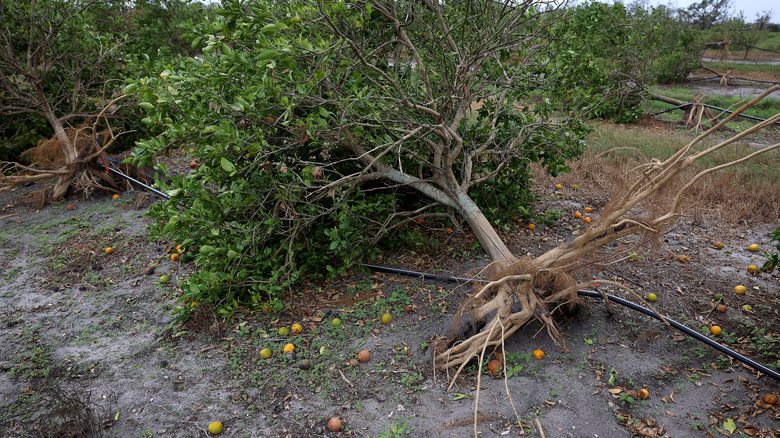
Additionally, Florida hurricanes exacerbate the ongoing struggles of Florida citrus production, including orange growers. Groves have been battered by powerful hurricanes in recent years, including hurricanes Ian, Nicole, Helene, and Milton between 2021 and 2024, knocking fruit from the branches, uprooting the trees, and flooding farmlands. No wonder they routinely grab America's attention each year.
As expected, crops are lost in a matter of hours, and trees already weakened by citrus greening may not stand a chance for full recovery. Hurricanes often cause heavy flooding, which can take needed oxygen from the soil and further weaken fragile orange tree roots. If a grove gets knocked out by a hurricane, it can take years for new trees to grow and fully produce new fruit. That's a big loss for all types of oranges growing in Florida, from Valencias to navels, Hamlins to pineapple oranges, and the elusive satsuma mandarins.
If citrus greening and hurricanes weren't destructive enough in their own rites, the evolving issue of disappearing farmlands is also changing the citrus industry in Florida, including orange growers. Over the past few decades, the state's population has grown rapidly, with development increasingly snatching beloved acreage once devoted to vibrant, verdant orange groves baking in the Florida sunshine. In 2000, citrus groves spread across at least 800,000 acres, but by the time 2024 rolled around, only 275,000 acres cradled those juicy, nutritious, citrus fruits.