

Give Honey A Break And Let This Glaze Give Ham A Tangier Flavor
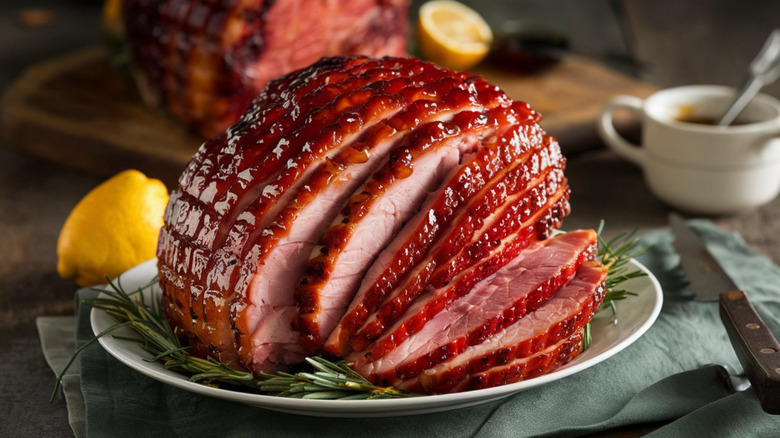
Ham and honey are such a traditional pairing that it might not even cross your mind to use any other kind of glaze for your holiday meals. Honey provides a sweet contrast to the salty meat, helps to retain moisture, and caramelizes nicely to form that shiny crust. Though it's one of the most popular options for a glaze, it's certainly not the only one. Next time you make a ham, consider using an apricot glaze.
The fruity tang creates a more complex flavor profile compared to honey, which can be a little one-note. By starting with apricot jam or preserves, you'll have the sugary stickiness that results in a good glaze. An apricot glaze can be as simple as combining apricot jam with brown sugar and mustard, but there are many other flavors that will pair well with the fruit to really elevate your ham. Apricot jam is a great vehicle for warm spices. Cinnamon and cloves will help give ham that extra festive feel, while ground ginger adds a spicy kick. The addition of orange juice will boost the fruity flavors, but if you want to cut through the sweetness, you can add a little apple cider vinegar.
Making apricot-glazed ham
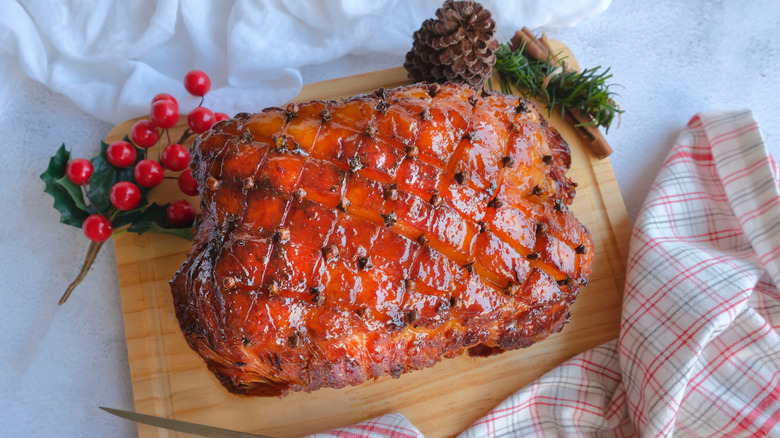
Making a ham with an apricot glaze is much the same as using a honey glaze, which means following a few basic guidelines to get a ham that's moist inside with a shiny outside. Working with a pre-cooked ham means you're really just reheating it rather than cooking it, but even then, adding your glaze too soon will result in a burnt glaze rather than a nicely caramelized one.
The best idea is to start the cooking process without the glaze, but covering the ham tightly with tin foil to lock in moisture. This is particularly important with spiral-cut ham, which can easily dry out.
With the ham in the oven, you have time to make the glaze. Add all of the ingredients to a small saucepan over medium heat and whisk well. Once the mixture comes to the boil, you can remove it from the heat. If you are using an apricot preserve that has large pieces of fruit, you'll need to blend it to a smoother texture before making the glaze.
The best time to glaze your ham is in the final 20-30 minutes of cooking. Remove the foil and brush on the glaze, ensuring that you get it right down into the score lines or slices. At this point, you can also bump up the heat to make sure the sugars in the glaze caramelize nicely, but if it needs a little help, try finishing off the ham under the broiler.