

Give Ham Glaze A Boozy Burst Of Flavor With This Liquor-Cabinet Staple
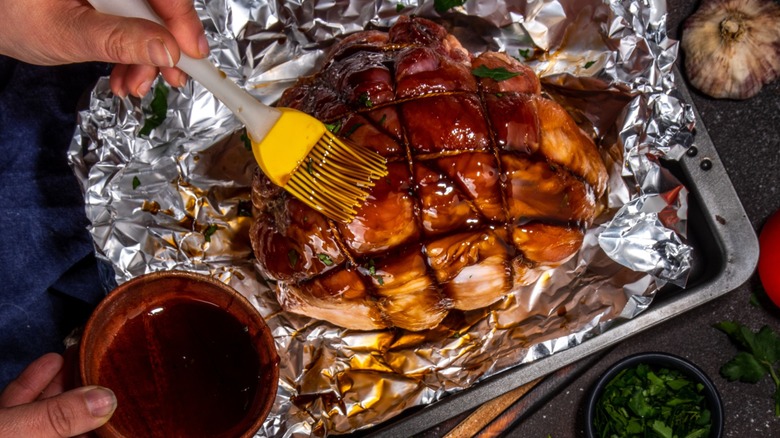
Glazing is the final step that takes what would be a delicious hunk of baked or barbecued ham and transforms it into something greater than the sum of its parts. The fun you can have with ham glazes is in exactly that — the sum of its parts, and being creative in their selection. One ingredient that adds a little extra something to a ham glaze is our old friend tequila, there for us in times of thirst as in times of hunger.
Adding tequila to a glaze is no complex science; it's basically as simple as portioning a small quantity into a saucepan along with the other ingredients and simmering until thickened and well-integrated. Note that you don't need a whole bottle's worth of the strong stuff in your glaze, anything from a couple of tablespoons to a cup is plenty to impart flavor and enhance a glaze. As with other recipes, the best time to add glaze is when the ham is nearly done. Slather some on and return it to the oven for ten minutes, and after another brush-down, give it another five minutes to caramelize. You can also thicken the glaze by using the broiler to avoid drying out the inside of the ham.
Consider what flavours compliment both the ham and the other ingredients when crafting your glaze. Ham and tequila both play well with sweet, sour, and salty flavour combos. So classic Mexican staples like lime, jalepeño, habanero, chipotle, and sweeteners like agave syrup, or even orange, mango, or pineapple juices work with tequila.
Tequila adds more than flavor and aroma
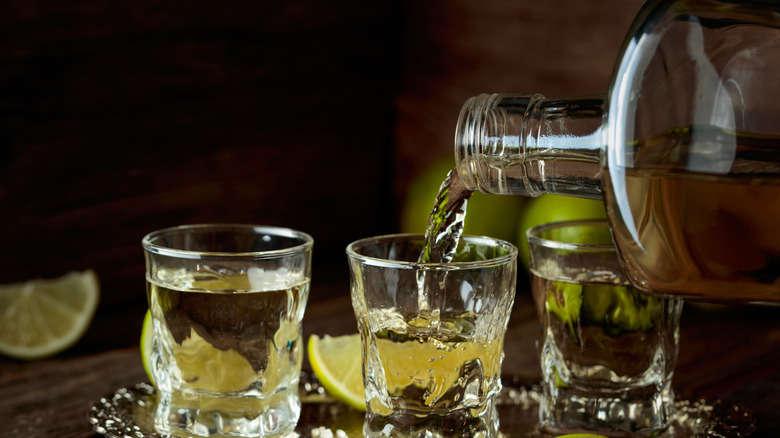
But why even use tequila in your cooking anyway? Aside from the obvious — because we love the stuff — a little booze can add some pop to the cooking process. Alcohol dissolves many soluble flavor compounds from ingredients like herbs and spices that are also soluble in the meat's fat, creating a flavor highway between the ham and the glaze. Alcohol also increases the volatility of compounds in the glaze. This means flavors go into the air and, subsequently, our noses to enhance the food's smell and taste, with much of how we taste food happening olfactorily.
Is there a best type of tequila to use? Not really, but it helps to consider the type of flavor profile you're going for and what might complement the other ingredients. Tequila blanco (white tequila) can give you a brighter, purer, straight-up-tequila flavor. Reposado or Añejo (aged tequila) offers a smoother flavor with a touch more oak-derived depth, offering notes like vanilla or spice. Joven (gold) tequilas are somewhere in the middle, with a touch less age. In the same family of agave spirits is mezcal, which brings a smokier, more complex array of flavors and aromas to the fiesta.
Aside from the obvious Mexican flavor combinations, you can also consider more classic ham glaze ingredients, as these can still benefit from the punch that tequila offers. Think along the lines of mustard seeds, honey mustard, paprika, apples, or pineapple for other stellar flavor combos.