

10 Must-Visit East Coast Wineries, According To Experts
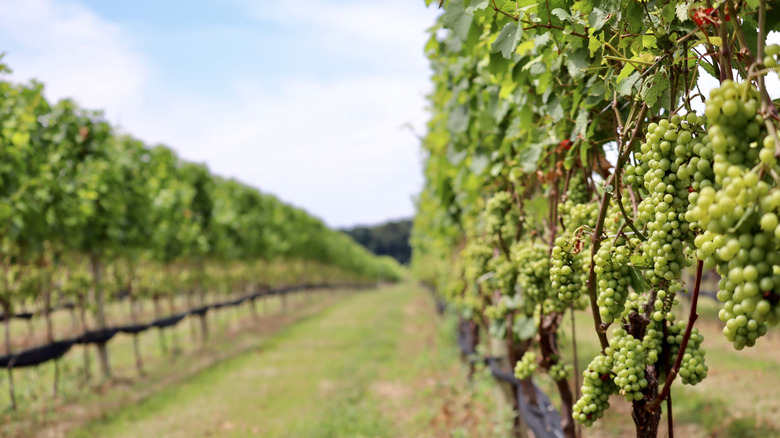
East Coast winemaking has undergone a quiet but profound evolution. What was once a patchwork of regional curiosity and uneven quality has matured into a credible fine wine culture, where producers craft site-specific wines with precision, restraint, and confidence. The best bottles now compete on merit, reflecting regional winemakers' increasing technical skills and dedication to authenticity. Wine professionals are now consistently claiming that East Coast wine is finally achieving its true potential, so we asked a few experts which wineries should be on your radar.
We spoke with four certified sommeliers: Jason Hedges, Director of Beverage at LT Hospitality; Alessio de Sensi, Senior Vice President of Operations at LDV Hospitality; Claire Paparazzo, Wine Director at Sunday Hospitality; and Daniel Bello, Beverage and Wine Director for three Japanese restaurants in Omaha, Nebraska: Yoshitomo, Ota, and Koji.
Their recommendations and rationales make it plain that visiting a winery today offers more than a tasting — it's an authentic, immersive, and educational experience. Stunning architecture, vineyard tours, knowledgeable staff, and visible sustainability combine to reveal why each wine tastes the way it does. According to Jason Hedges, the East Coast's unique climates heavily influence style. "The Finger Lakes yield high-acid, mineral-driven whites," he explains, "Long Island produces supple reds and saline whites with European finesse, and Virginia excels with ripe yet balanced Bordeaux blends." While New York may dominate this list, read on to learn more about the many East Coast wine regions worth visiting.
Macari Vineyards - Long Island, NY
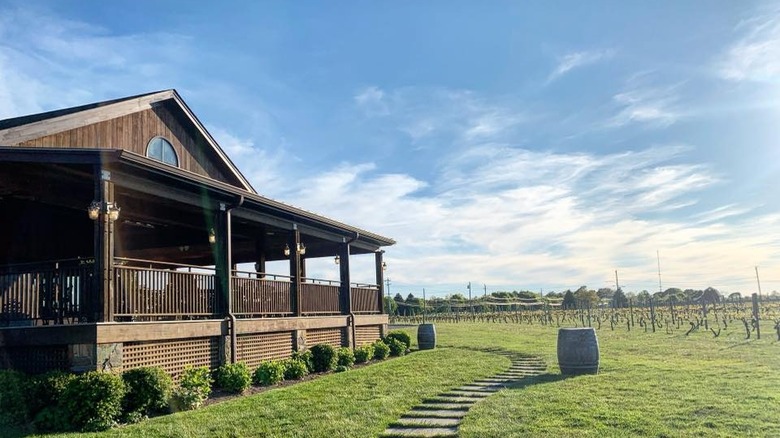
On the North Fork of Long Island, Macari Vineyards stands out as a compelling example of how a coastal climate and thoughtful farming can shape distinctive East Coast wines. Surrounded by the Atlantic Ocean and the Long Island Sound, Jason Hedges credits the region's maritime influence with creating ideal conditions for wines that favor balance over power, and notes that Macari captures this regional identity particularly well.
Beyond the region's climate, the family-run estate combines traditional stewardship with forward-thinking practices, including regenerative farming and experimentation with amphora-aged wines. These choices reflect both a respect for the land and a willingness to push stylistic boundaries. The result, according to Hedges, is "a style marked by supple, medium-bodied reds and bright, saline whites that often evoke the refinement of European counterparts rather than the intensity associated with warmer regions." Hedges goes on to note that Macari's Cabernet Franc and Sauvignon Blanc, in particular, showcase the North Fork's coastal terroir with clarity and control, offering vibrant acidity, subtle fruit, and a distinctive saline-tinged finish.
Beyond the wines themselves, the estate delivers the kind of immersive visitor experience that defines a must-visit winery. With sweeping vineyard views, thoughtful hospitality, and a clear sense of purpose rooted in place, Macari tells the story of Long Island wine through both its bottles and its setting.
Keuka Lake Vineyards - Finger Lakes, NY
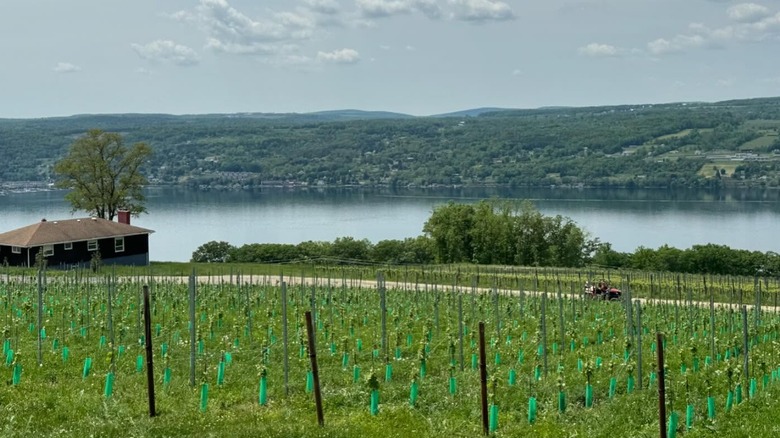
Quietly becoming one of the most exciting cool-climate wine destinations in North America, New York's Finger Lakes region has a lot to love. "The Finger Lakes continues to be one of the most exciting and still underrated regions in the country," says Alessio de Sensi, the brains behind the wine education brand VinVivoByAlessio.
The Finger Lakes' deep, glacial lakes moderate the surrounding climate, retaining summer heat and extending the growing season, creating the conditions that allow grapes like Riesling and Cabernet Franc to ripen slowly while preserving bright acidity and aromatic precision. The result is a style of wine defined by freshness, minerality, and balance.
De Sensi specifically highlights Finger Lakes' Keuka Lake Vineyards as a must-visit East Coast winery, thanks to the estate's dedication to terroir-driven wines and sustainable farming practices. Among the first producers to become a certified New York Sustainable Winegrower, Keuka Lake Vineyards has grown from just a few acres since its inception in the 1990s into the 40-acre vineyard it is today under the stewardship of its founders, Mel and Dorothee Goldman. "The passion and long-term commitment of the founding families resonate most," says de Sensi. "There is a clear sense of craft and legacy. Their authenticity, paired with thoughtful hospitality, makes the experience both personal and memorable."
Hermann J. Wiemer Vineyard - Finger Lakes, NY
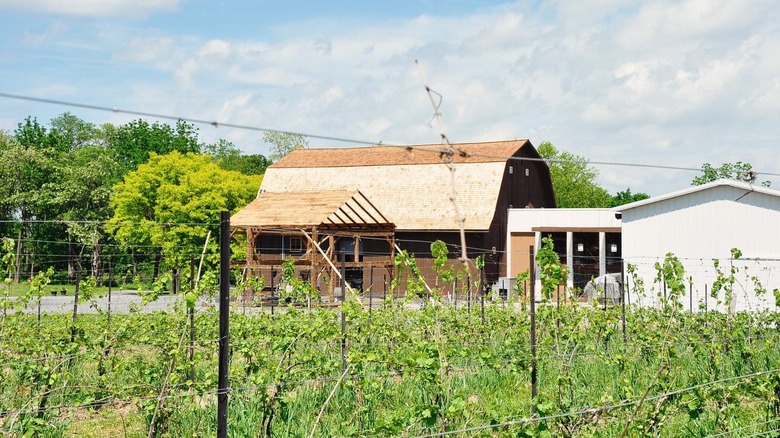
In New York's Finger Lakes, Hermann J. Wiemer Vineyard stands out as one of the region's most influential wineries and a must-visit destination for East Coast wine. Founded in 1979 along the western bank of Seneca Lake, the estate helped establish Riesling as the region's signature grape, demonstrating how the region's deep lakes and long growing season can produce wines defined by freshness, precision, and minerality.
Jason Hedges describes Wiemer as "a benchmark for cool-climate Riesling in North America, [with] wines [that] show crystalline purity, layered minerality, and longevity rarely seen outside of Europe." Hedges notes that the biodynamic principles put into practice in the vineyards, coupled with meticulous cellar work, have been a significant factor in amplifying the Finger Lakes' reputation worldwide.
The winery's portfolio highlights this precision, ranging from bone-dry Rieslings and single-vineyard bottlings to vibrant Gewürztraminer, Cabernet Franc, and sparkling wines. Biodynamic farming, indigenous-yeast fermentations, and careful hand-harvesting reinforce the estate's commitment to site expression and minimal intervention. Visiting Wiemer further deepens that story. Guests enjoy guided tastings led by knowledgeable wine educators, exploring a broad lineup that reveals subtle differences between vineyard sites and styles. The result is an experience that blends education, terroir, and hospitality — making Wiemer not just a winery, but a defining destination for Finger Lakes wine.
Farrm Wine - Long Island, NY
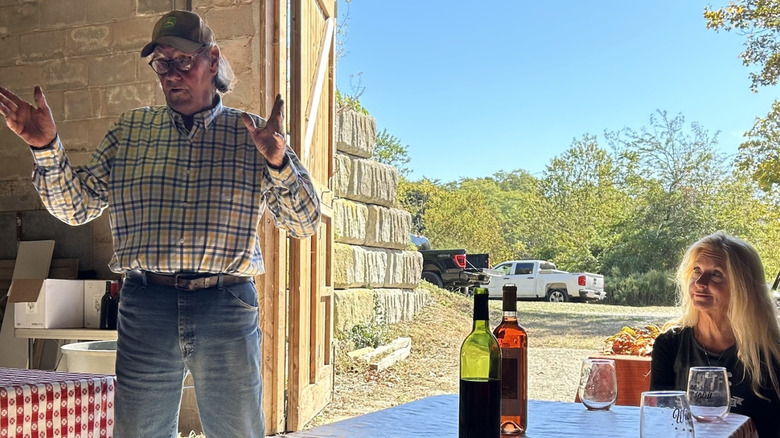
Offering one of the most intimate and thoughtful winery experiences on the East Coast, Farrm Wine on the North Fork of Long Island reflects a philosophy centered on stewardship, site expression, and deeply personal hospitality. Led by winemaker Rex Farr, the small, hands-on estate operates with an almost radical level of transparency, encouraging not so much a traditional tasting room visit as a firsthand encounter with the land and the person farming it.
Claire Paparazzo sees Farr as emblematic of the maturation of East Coast wine. "East Coast wine has grown up," she explains. "What was once experimental now feels assured. Sustainability is no longer a talking point but a practice." Paparazzo notes that Farr's vineyards, which recently received Demeter biodynamic certification, reflect that ethos, emphasizing soil health, biodiversity, and long-term guardianship.
On-site, rather than being presented with a polished, scripted tour, guests are invited to experience the rhythms of vineyard life. Paparazzo says that Farr commonly invites guests to explore the vineyards in his pickup truck, highlighting everything from the manure piles to the biodynamic preparations that support the vines. That closeness to the process creates a deeper appreciation for the wines themselves — balanced reds and quietly expressive blends that display the North Fork's maritime character. At Farrm, the on-site experience isn't curated elegance from a distance, it's a boots-on-the-ground tour of the grape's journey from vine to glass.
Early Mountain Vineyards - Virginia
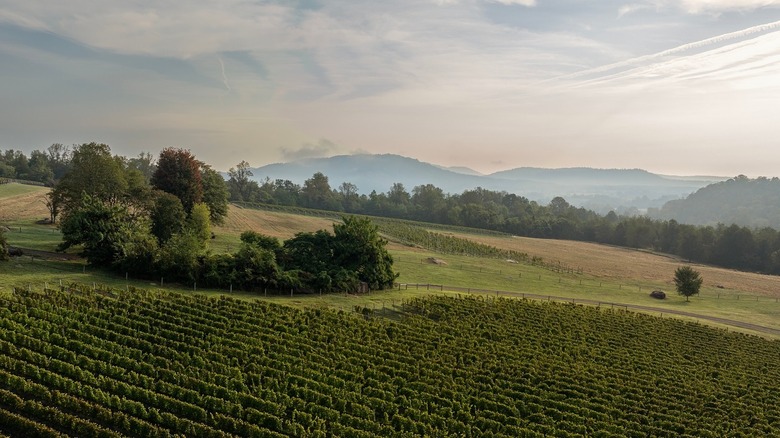
Set against the rolling foothills of the Blue Ridge Mountains, Early Mountain Vineyards has become one of the most dynamic destinations for experiencing Virginia's rapidly evolving wine scene. The region's warm days, cool mountain-influenced nights, and varied soils create conditions well suited to structured reds and vibrant whites.
Daniel Bello views Early Mountain as central to Virginia's emergence as a serious wine region, and part of why East Coast winemaking has evolved so significantly over the past decade. "Their portfolio demonstrates that Virginia can produce wines with structure, polish, and aging potential, particularly with Bordeaux varieties and Petit Manseng, which should get more cred," he says. Bello notes that besides advancements in technical skill and vineyard site selection, a generation of winemakers who trained in places like California, Germany, and Austria have now returned home with a deeper understanding of farming and how to vinify their own terroir.
Early Mountain invests heavily in quality-driven viticulture and emphasizes regional collaboration, which helps to elevate the broader Virginia wine community. For visitors, the experience is a memorable one, featuring panoramic vineyard views, a welcoming tasting room, and thoughtfully curated flights that highlight both estate bottles and standout wines from across Virginia. Together, these elements offer a vivid snapshot of a region confidently defining its identity.
Lost Mountain Vineyards - Virginia
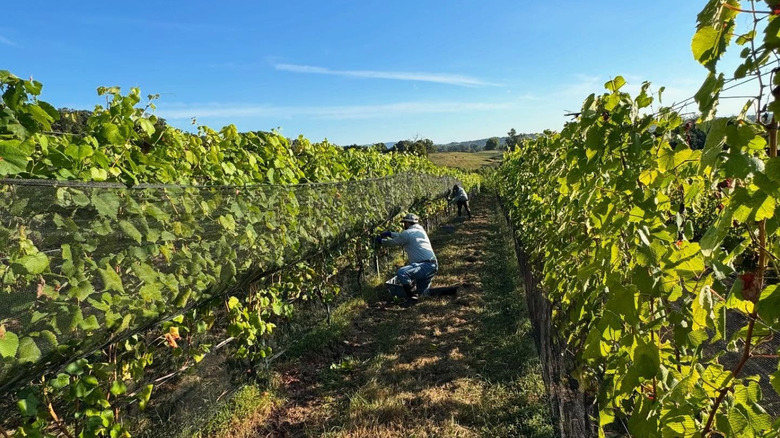
Lost Mountain Vineyards – formerly known as RdV Vineyards — is widely regarded as one of the East Coast's most ambitious wineries. Founded in 2006 by Rutger de Vink, the property was planted after extensive soil studies revealed rocky, mineral-rich slopes in Virginia's Piedmont region capable of producing world-class Bordeaux varieties. Today, the estate's meticulously farmed vineyards and tightly controlled production have helped redefine expectations for Virginia red wine.
Jason Hedges describes Lost Mountain as a regional pioneer of Bordeaux-style wine. "Warmer, humid conditions favor Bordeaux blends and Viognier, producing ripe yet balanced wines with Southern charm," he explains. Nestled in the Blue Ridge Mountains, those conditions translate into wines shaped by what Hedges calls RdV's rocky Piedmont intensity — structured Cabernet Sauvignon and Merlot-based blends with depth, power, and serious aging potential.
The visitor experience reflects that same sense of precision and ambition. Tastings are private and appointment-only, offering guests an intimate look at the vineyards, cellar philosophy, and limited-production wines. Expressing Virginia's unique terroir with uncommon focus and refinement, Hedges attests that a visit to Lost Mountain is "a luxury experience grounded in authenticity and place."
Ravines Wine Cellars - Finger Lakes, NY
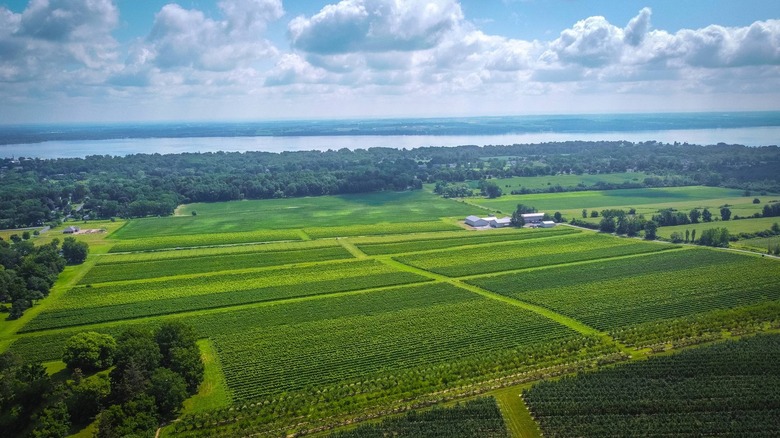
Ravines Wine Cellars is a must-visit East Coast winery with a heritage that traces back to the Old World. Founded by Morten Hallgren and his wife, Lisa, in 2000, Daniel Bello attests that Ravines is the epitome of accuracy and thoughtful intention. While the winery's success is partly due to that sense of discipline, Hallgren's pedigree likely has something to do with it, too.
The Danish-born Hallgren grew up on his family's 170-acre vineyard in the Côtes de Provence region of France. He went on to earn an advanced degree in enology and viticulture before moving to the U.S., where he made wine in Texas and North Carolina before settling in New York. In 1998, Hallgren became Chief Winemaker at Dr. Konstantin Frank Cellars, widely considered a pioneer in the Finger Lakes region when it comes to growing European grape varietals. Today, that expertise is made evident by Ravines' wide-ranging selection of terroir-driven wines.
"Their dry Rieslings and structured reds show a deep understanding of site and acid management in a cool-climate region," Bello says. He adds that Ravines' portfolio has consistently raised the Finger Lakes' profile, proving that the region is capable of producing a spectrum of expressive bottles with clarity, structure, and aging potential. Single-vineyard Rieslings are bright and layered, while Cabernet Franc, Pinot Noir, and other reds are elegant, structured, and built for aging. Through curated tastings that showcase both vineyard-specific nuances and stylistic clarity, visitors can enjoy a highly personal experience at this East Coast winery.
The Red Hook Winery - Brooklyn, NY
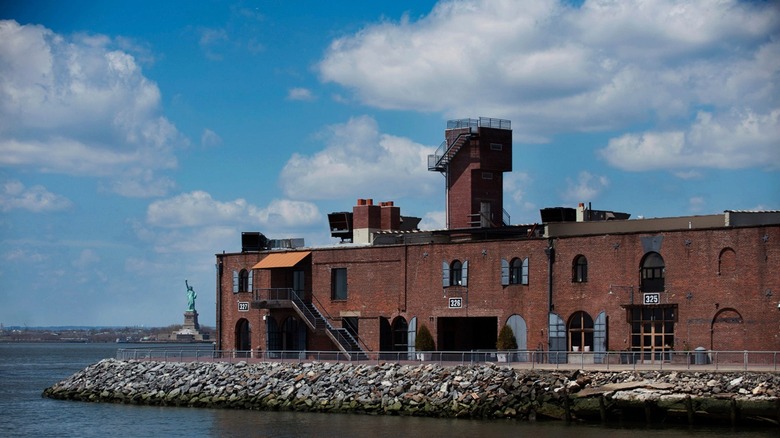
Tucked along the Brooklyn waterfront, The Red Hook Winery is an East Coast destination that's redefining what American urban winemaking can be. With a tasting room overlooking the East River, all Red Hook wine is made from grape to bottle at the winery within eyesight of the Verrazzano Bridge.
Founded by Brooklyn native Mark Snyder in 2008, the vision for his urban winery was to highlight exceptional vineyard sites from across New York State. While the winery doesn't grow its grapes locally, all fermenting, aging, and bottling happen in Brooklyn. That spirit of reinvention mirrors a broader transformation that Claire Paparazzo has witnessed firsthand. "Across the river in Brooklyn, Red Hook Winery is reshaping the narrative of New York wine, " she says. "By sourcing fruit from both Long Island and the Finger Lakes and inviting acclaimed winemakers – including experimental Napa Valley winemaker Abe Schoener – to interpret the terroir, the winery challenges preconceptions."
For East Coast wine lovers seeking discovery without a road trip upstate or a cross-country flight, Red Hook Winery delivers world-class ambition against a breathtaking Brooklyn backdrop. "Every time I visit, I get revitalized," says Paparazzo, "and so close to home, it is a must-see with beautiful coastal views."
Red Newt Cellars - Finger Lakes, NY
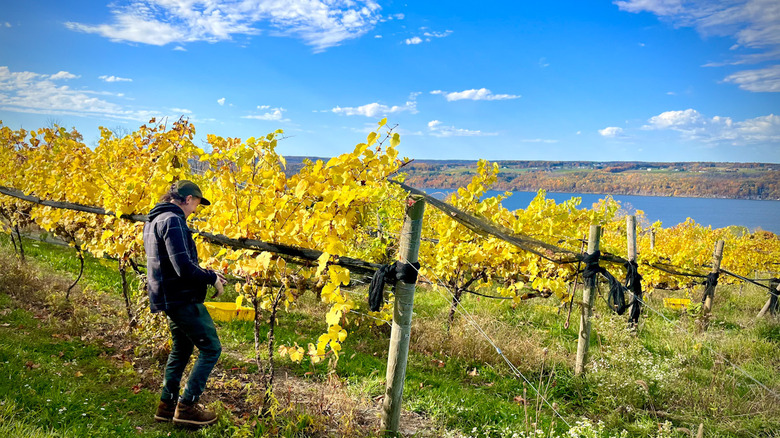
Nestled above the shimmering waters of Seneca Lake, Red Newt Cellars is among the most fully realized wineries on the entire East Coast. That's why experts who know the region best, like Claire Paparazzo, say it belongs on every serious wine lover's itinerary.
Paparazzo describes the experience as one of the most fully realized gastronomic destinations in the region. "Overlooking the dramatic landscape of Seneca Lake, the winery's connection to its bistro transforms a tasting into an Alsatian-inspired culinary event." She singles out the aromatic whites as particularly impressive — refreshing and expressive all on their own, they reach new heights when paired thoughtfully with food.
For Paparazzo, Red Newt also reflects the broader evolution reshaping East Coast winemaking. "What was once experimental now feels assured," she observes. "Sustainability is no longer a talking point but a practice." Hard work has paid off in recent years, as many East Coast wines have become sought-after expressions beloved for their complexity and balance. That trend continues with each passing vintage, and with world-class Rieslings, breathtaking lake views, and a bistro that rivals any wine-country dining experience, Red Newt Cellars represents the Finger Lakes at its absolute finest.
Wölffer Estate - Long Island, NY
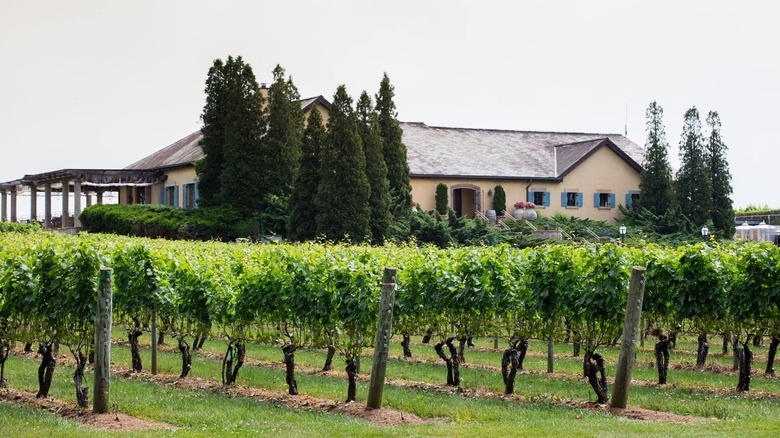
Wölffer Estate has become one of the East Coast's most celebrated wine destinations — a place where exceptional winemaking and elegant hospitality converge in equal measure. While Daniel Bello credits Long Island's maritime climate, sandy soils, and temperate ripening season as factors driving the wine region's success, he singles out Wölffer as consistently translating those conditions into bottles that overdeliver on quality.
While the estate's unique terroir is foundational to its success, what truly distinguishes Wölffer Estate, Bello argues, is how deliberately the estate has cultivated its cultural identity. From its sun-drenched tasting terraces and seasonal markets to its celebrated summer concert series, every touchpoint feels intentional. "Their hospitality experience is the most thoughtfully curated in the region," he says.
Sure to please summer sippers and wine enthusiasts alike, Bello points to the estate's rosé program as a force that has reshaped how drinkers perceive East Coast wine, demonstrating that stylistically serious wines can also achieve broad appeal. Ultimately, Wölffer is more than just a winery — it's a destination that has helped define what Long Island wine can aspire to be.