

This Cheap Pantry Item Makes Starting Sourdough Way Easier Than You Might Think
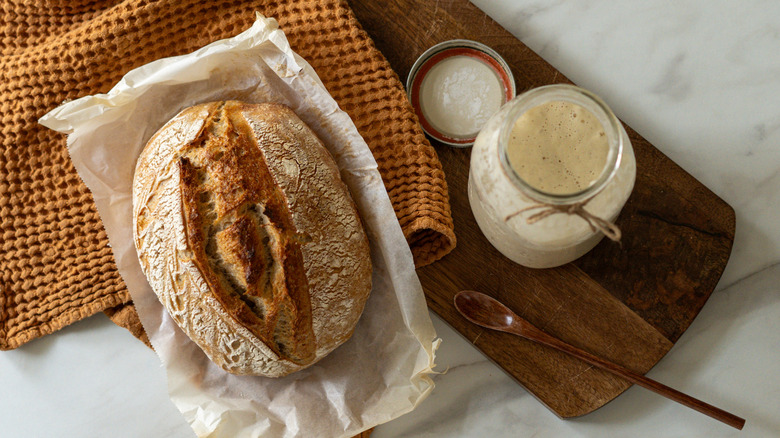
The golden age of sourdough undoubtedly began with the lockdowns that characterized the year 2020. For many, this yeasty era is still going strong, with passions for baking sourdough thriving like the very microorganism that lifts loaves. For home bakers, the labour of love required to breathe life into a wheat-based sourdough starter involves rigorous feeding and days of waiting (if you're even successful). Well, one cheap, everyday pantry ingredient offers an alternative starting point that actually seems to cause less head-scratching and heartbreak in the critical early stages of conjuring a new starter. The secret ingredient: potato flakes.
Rather than mixing wheat flour with water like most other sourdough starters, simply use potato flakes, active dry baking yeast, sugar, and water to get a sourdough starter going. This is already an established method for creating certain enriched breads; it's used in some Amish friendship bread recipes, and in general leads to slightly sweet and super-soft breads.
What makes this starter simpler than the wait-and-watch approach of traditional wheat starters is the control you gain in introducing the already active baker's yeast. There's also a handy kickstart to fermentation with an easily accessible food source for the yeast in the form of sugar, rather than waiting around for the right naturally occurring yeast to take hold with wheat flour. The potato flakes' purpose is as food for the yeast and to give the starter its structure. This starter can be used to ferment all kinds of breads, including Amish friendship bread as well as wheat-based sourdough loaves.
What can't a spud do?
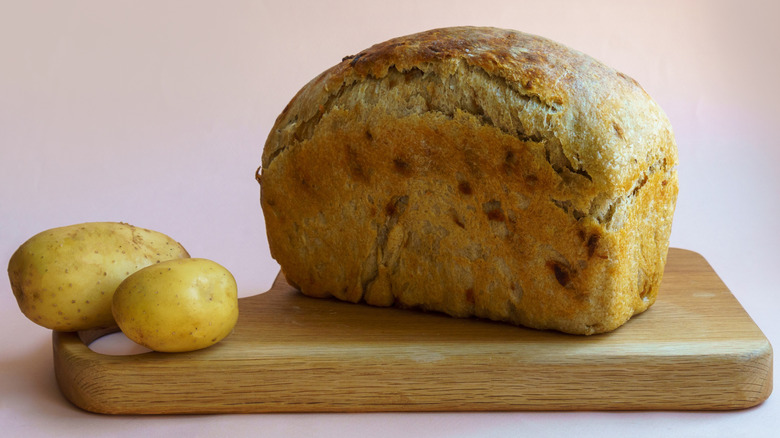
Feeding is also easier for potato flake starter than with its wheat counterpart. Whereas wheat sourdough starter requires a strict daily feeding regimen, a potato flake sourdough starter spends two days on the kitchen counter after initial mixing. This is followed by a single feeding, then eight-to-twelve hours on the counter before spending the next three to five days in the fridge. Whenever you feed your starter, you simply retain a cup's worth and add new sugar, water, and of course — potato flakes, before repeating the time on the kitchen counter and three-to-five days in the fridge. This also makes it easier to get into a weekly baking rhythm, rather than having to feed your starter every day and trying to find the ideal window of yeast readiness.
Not shockingly, potato flakes are made of only potato, meaning this starter is gluten-free, making a sourdough hobby accessible when gluten is a no-go. If you've made your sourdough starter and think, "Huh, this looks way more watery than normal sourdough starter," fear not, that's normal. You can either adjust the ratio of dry ingredients in your favorite sourdough recipe (this can take some experimentation), or for an easier process, look for a specific potato flake sourdough recipe. If this isn't reason enough to always have instant mashed potatoes in your pantry, you can even consider adding them directly to your dough, as doing so can make for a deliciously tender loaf.