

This Self-Seeding Herb Practically Grows Itself Once Established In Your Garden
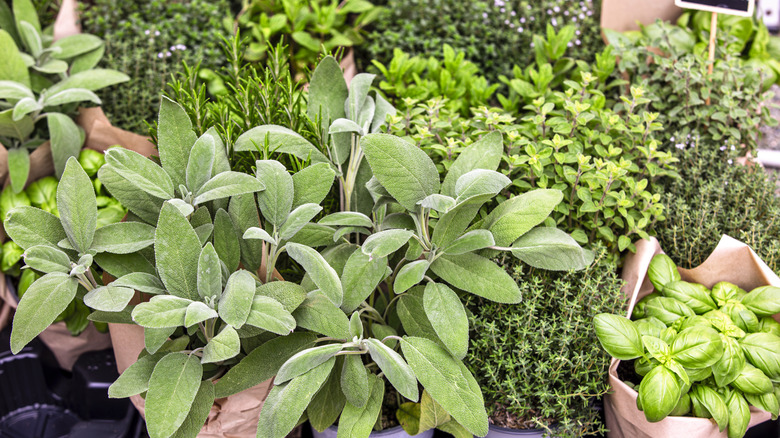
Many familiar kitchen herbs hug the ground, like thyme, creeping along the border of garden beds or, like parsley, tuck themselves neatly in manageable, bouquet-like clumps. Not angelica, also known as wild celery. No shrinking violet, this towering herb can rise six feet or more, culminating in a seed head that will scatter enough seeds to return, year after year, with almost no intervention from the gardener. For anyone who wants a cheerful and productive herb that largely manages itself, angelica is unusually generous.
Garden angelica, Angelica archangelica, belongs to the Apiaceae family, the same botanical group as carrots, celery, fennel, and parsley. Like its relatives, it produces a large, distinctively umbrella-shaped inflorescence, or flower cluster, called umbels. In its first year, the plant forms a lower mound of bright green leaves. In the second, a thick, hollow stem shoots upward and unfurls the broad green flower heads that resemble wild carrot or Queen Anne's Lace.
Each angelica plant is itself a biennial, meaning it dies after the second year's flowering and seed-setting. In a garden, though, you probably don't have to replant, because the next generation is already waiting in the soil. In the wild, angelica likes damp meadows with dappled, filtered sunlight, so if you give it consistently moist ground and partial shade, the seeds that fall tend to volunteer themselves, spreading around enthusiastically. If you want to practice culinary seed saving and be a little more intentional about where it pops up, you can always allow the flower to mature and dry, then catch the seeds in a clean, dry jar and retain them for strategic planting next year. Although potted angelica can struggle because of its long taproot, some gardeners may even choose to keep their angelica growing in a deep pot, for easy root harvesting and seed saving.
Edible from root to seed
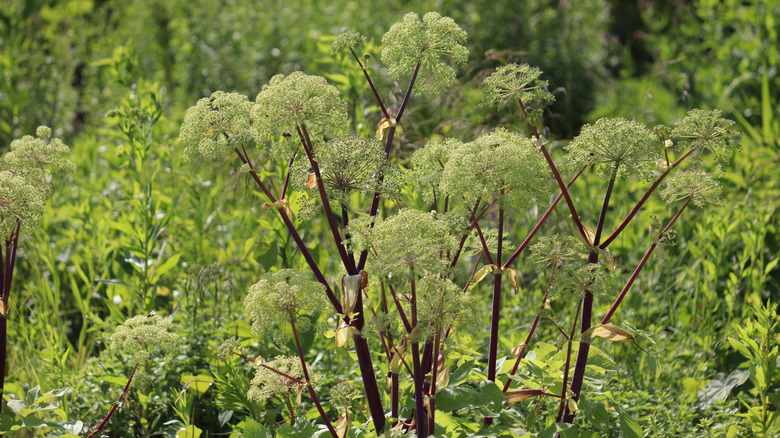
Angelica's boisterous size reflects its bountiful uses, because nearly every part of the plant is edible; people have found ways to work with the stems, leaves, seeds, and roots. The flavor is unique, aromatic, and slightly sweet, with a musky note that recalls anise or licorice.
One of the best-known preparations is candied angelica. Young stems are simmered in sugar syrup until translucent, then dried into bright green strips used to decorate cakes and pastries. Older European cookbooks advise using the plant like a vegetable, incorporating the tender spring shoots, chopped, in salads or cooked alongside tart fruits like gooseberries, or in rustic rhubarb recipes, where the herb's perfume mitigates the fruit's acidity.
Angelica plays a gentle, lesser-known but nevertheless influential role in the world of spirits, where the dried root is a classic botanical added to gin's bouquet of aromatic and bitter medicinal plants. There, it provides a sweet, earthy depth that pulls the other ingredients together. Angelica seeds and roots also appear in Nordic aquavits and herbal liqueurs like the slightly mysterious Chartreuse, which derive their strong flavors from a complex, and usually secret, blend of Alpine herbs. Much of that aroma comes from the volatile compounds such as pinene and limonene in the plant's essential oils, which readily release when the plant material is macerated, or dried and steeped in alcohol. Those same nectar-rich flower heads attract generalist pollinators, like butterflies, bees, and hoverflies, who happily visit members of the carrot family for a tasty meal.
Ancient plant medicine
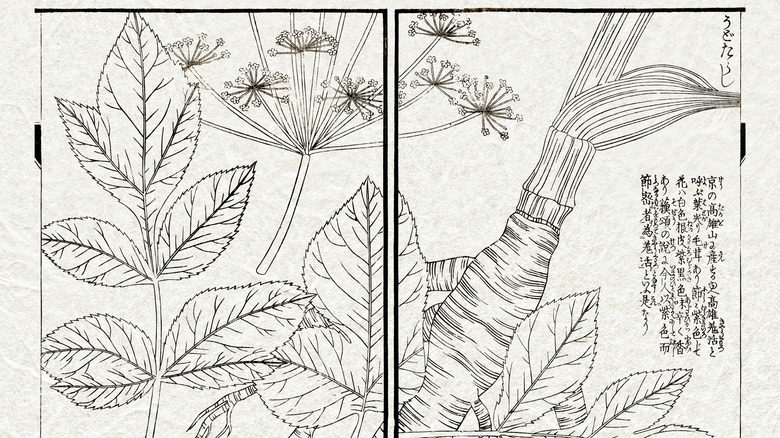
Angelica is native to the far northern regions of the globe, in today's Norway, Greenland, Russia, and Eastern Siberia, and has a long history of use as a medicinal plant in many cultures. Its name, from the Greek arkangelos, is associated with the Archangels Michael and Gabriel, and speaks of the reverence people had for it. It was also known as the 'root of the Holy Ghost,' and, according to medieval legend, an angel revealed the plant's protective powers to a monk during a plague outbreak. European herbal traditions describe it as a warming plant, used to support digestion and respiratory health, among many other ailments.
In Scandinavian regions, it was cultivated as a staple vegetable, and written accounts suggest it was eaten in Denmark as early as the Viking Age, where it was stored in fat over winter to provide vitamins and nutrients when nothing was growing under the snow. A related species, Angelica sinensis, appears in many Chinese herbal medicine formulas, where it is valued for its strong phytochemicals and called dong quai. Although it differs slightly from the European garden angelica, both plants belong to the same Apiaceae genus and have been harvested for their aromatic roots. In the kitchen, the medicine cabinet, and the distillery alike, angelica is a structural ingredient.
For gardeners and foragers, the plant also comes with a very important caution. Angelica's umbrella-shaped flowers place it in a botanical group that includes several dangerous lookalikes, including poison hemlock and giant hogweed. Accurate identification is essential before eating any wild member of the carrot family. Even cultivated angelica contains compounds that can irritate skin — fennel plants and rhubarb leaves do the same thing. With proper identification and a little care, though, this dramatic herb is a great addition to any kitchen garden.