

The Only Time You Should Be Wrapping Baked Potatoes In Foil
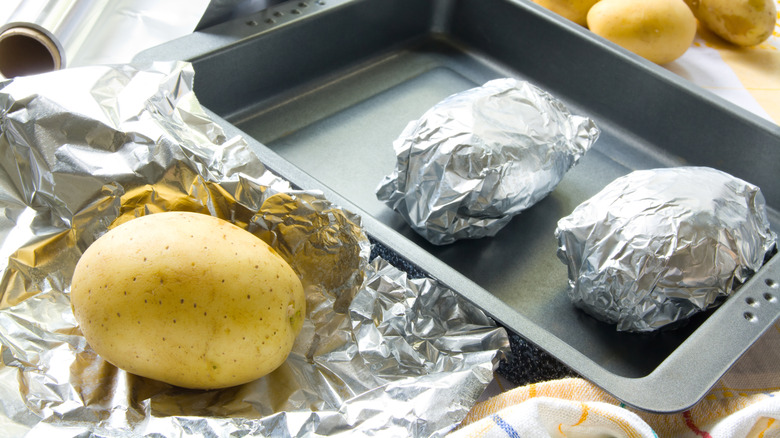
You've seen them at restaurants and food trucks: Golden baked potatoes tightly bundled in aluminum foil, steaming hot, with fresh toppings about to spill off in all directions. Sure, it photographs well, but don't bring that look home to your kitchen. When you bake potatoes, foil works against everything that makes them good. A potato is about 80% water, most of which turns to steam in a hot oven. Wrap it in foil and all that steam gets trapped, leaving your potato to steam-cook in its own juices. Instead of a fluffy, crispy spud after around 60 minutes, you end up with something more rubbery and soggy — basically mashed potato, but considerably less appetizing.
Even worse, if you don't unwrap it immediately and let it sit on the counter, moisture condenses between foil and skin, turning your potato into a breeding ground for bacteria and a genuine food safety risk. With that said, while foil is a problem in the oven, it's perfectly fine after you've baked the potato and need to keep it warm — say, if you're making a big batch for a dinner party. It'll keep the spuds nice and toasty and the skin dry. Just be sure to plate them quickly after unwrapping.
There's a time and a place for foil when it comes to baked potatoes
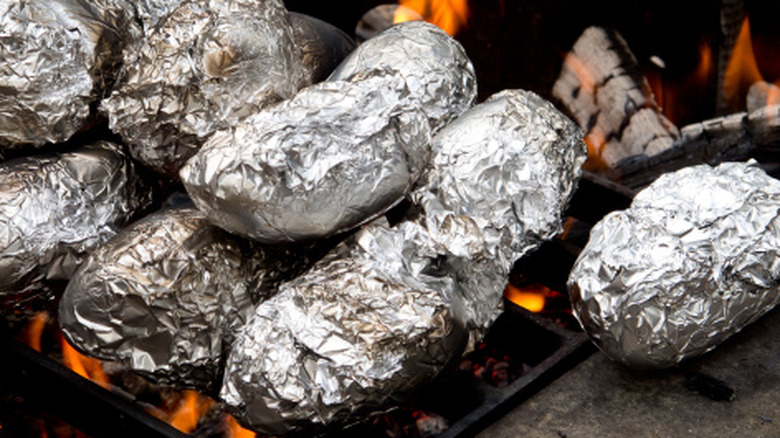
While it's not a great idea to wrap your spuds in foil when you bake them in the oven, on a grill, campfire, or a steamer, you can feel free to. In fact, in many of these cases, it's a must. When you cook your potato on the direct flame of a grill, for example, a "naked" potato will run the risk of being scorched on the outside but still raw on the inside. After coating its skin in olive oil and a few generous sprinkles of kosher salt, give it a foil wrapper before throwing it onto the grate. This will keep the spud's skin from blackening, while also giving it the time it needs to cook all the way through.
There's also value in foil if you prefer your baked potatoes steamed. Some home cooks genuinely enjoy that denser, moister texture, and foil is the easiest way to achieve it. Just be aware that you're trading that restaurant-quality crispy jacket for something closer to the potato's boiled cousin, which is totally fine if that's your preference. If you aren't doing any of the above and are just baking a potato trad-style, or twice-baked, in an oven, skip the wrapping. If your spud could speak, it'd thank you.