

A Tangy Trick To Amp Up Flavor While Watching Your Sodium
We may receive a commission on purchases made from links.
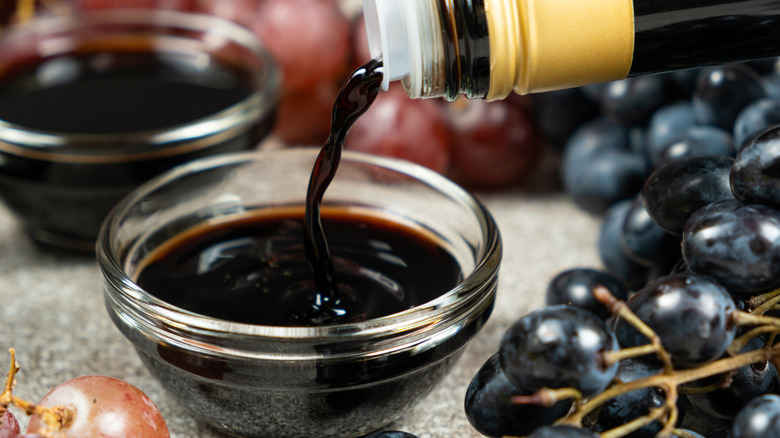
Fats, cholesterols — they're rather easy to watch out for compared to sodium. It's not without reason that Americans are eating far more sodium than is healthy, according to the American Heart Association. Sodium is simply everywhere. Sauces, condiments, and even things you normally wouldn't expect to have sodium, like sparkling water. It's even more annoying when you cook your own food and find out that things just don't taste the same without salt. Well, that we can help you with. As it turns out, balsamic vinegar is a perfect, sodium-free substitute for tons of dishes while also amping up the flavor.
A tablespoon of generic balsamic vinegar contains 3.7 milligrams of salt. That's 0.07% of a person's recommended daily sodium intake of 2,000 milligrams (WHO). In fact, it's such a minuscule amount that balsamic qualifies as sodium-free under FDA standards. But despite the lack of a savory kick, balsamic vinegar isn't at all lacking in the flavor department. You get this rich, extremely complex flavor from aged grapes. When you add it to a dish, it makes itself known with a slight sweetness and a powerful tang, and, depending on the recipe you use it with, it can add genuine dimension to every bite while (most importantly!) keeping your sodium level in check.
Dishes that can use a splash of balsamic vinegar
New to balsamic vinegar? It's perfectly natural to be wary of its potency at first. Here's a good piece of news, though: It's super versatile. You can test it out simply by adding a splash on top of some roasted vegetables. Feel free to give our Balsamic Roasted Brussels Sprouts recipe a whirl (cut out the garnishing salt if you're worried about sodium). As the sprouts roast, the vinegar caramelizes into a thick glaze that clings to each piece — it'll easily make you forget that you're supposed to be having a healthy snack.
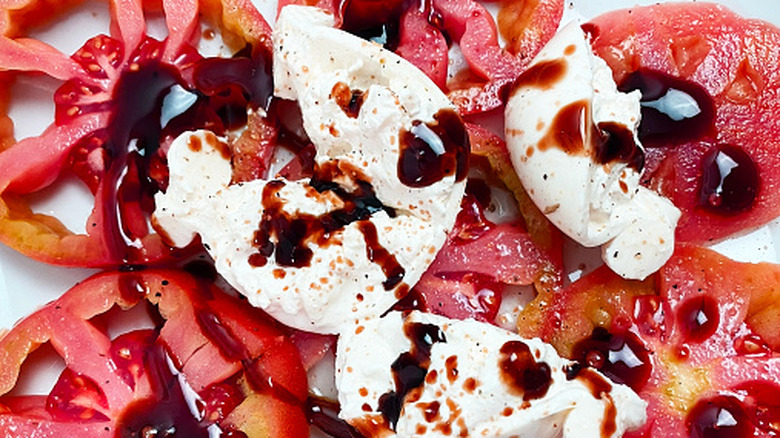
Fresh Mediterranean dishes like Caprese salad most definitely benefit from a balsamic splash. But where this condiment truly excels is in tomato-based cooking — think things like homemade bolognese sauce. Stir a few tablespoons in while it's still simmering to turn it from tasting flat to layered. This is especially effective if you're using canned sauce and need a fast upgrade.
As with everything, the key to success is tasting as you go — due to its potency, a little balsamic goes quite a distance in the way of flavor. And yes, it's pricier than most vinegars, but it'll be worth it to invest in quality balsamic (try the organic option from 365 by Whole Foods Market). A single bottle should last you a few months, even if you use it frequently. Plus, for its ability to give you full control over your sodium level while still keeping your meal plan tasty? $8 a bottle is a steal.