

Why Using Olive Oil Can Backfire When Seasoning Or Polishing Cookware
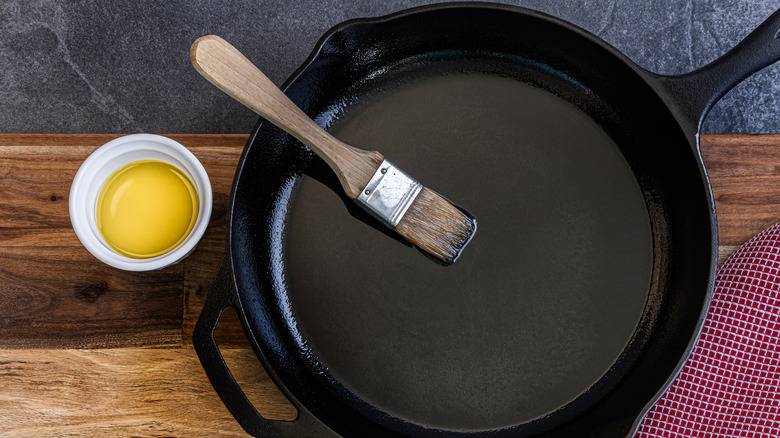
Olive oil is our best friend in the kitchen. It's flavorful, oh-so-versatile, and widely considered to have several health benefits. But when it comes to seasoning or polishing cookware, it's a friend no more. What seems like an all-natural solution can actually create sticky buildup, uneven finishes, and long-term damage on your precious cast iron and stainless steel.
Seasoning cookware is all about chemistry, particularly when it comes to cast iron, which requires oil that can polymerize properly. Polymerization happens when oil is heated past its smoke point and transformed into a hard, dark layer that bonds to your pan. That layer is essential for giving well-seasoned pans their slick, nonstick surface. Not only does this layer prevent food from sticking to your cast iron, it also forms a shield to protect against rust.
Most new pans come pre-seasoned, but if you're fixing up a vintage pan or simply need another coat, you'll need to know how to season a cast iron pan – and olive oil ain't it. Seasoning requires sustained heat at or above 400 degrees Fahrenheit, which makes canola or vegetable oil your best bet. Olive oil has a lower smoke point than other oils, which is also why you should think twice before using it to fry foods – although the USDA has recently relaxed its guidelines on this. Nevertheless, a high-quality olive oil isn't cheap, so why not save it for the actual food?
Olive oil belongs on food, not on your cookware's finish
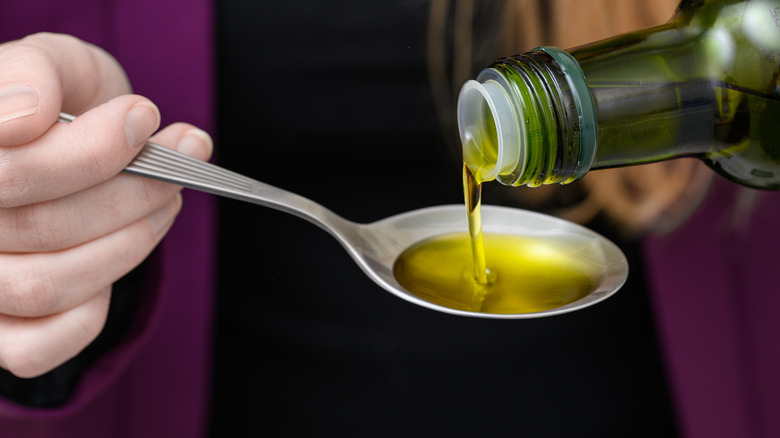
You'll run into similar issues when using olive oil to "polish" stainless steel or other cookware. On stainless steel especially, oil doesn't bond the way it does to cast iron. It just sits there, being all sticky. Dust clings to it. Heat can cause it to discolor. What started as a quick little cosmetic fix can quickly become a cleaning headache. A small amount may temporarily add shine, but over time it will leaves streaks and attract grime. Instead of looking polished and ready for service, the surface will look smeared and dull. If you really want to avoid regular cleaning products, club soda is actually excellent for getting fingerprints off stainless steel appliances.
The same thing goes for cleaning or coating your oven racks. We get it, it seems like a no-brainer to use a food-safe oil to keep your food from sticking to the grates. But once again, olive oil's lower smoke point will come back to bite you. As soon as your oven heats up to above 400 degrees Fahrenheit or more, the oil will start to break down and smoke, which isn't ideal if you're cooking dinner inside it.
At the end of the day, olive oil belongs on food, not on your cookware's finish. It excels at sautéing vegetables and finishing salads, but seasoning metal requires different chemistry. Olive oil has had so many uses throughout history, maybe it's time to let it sit this one out.