

Why 'Uncured' Meats Are Still Technically Cured
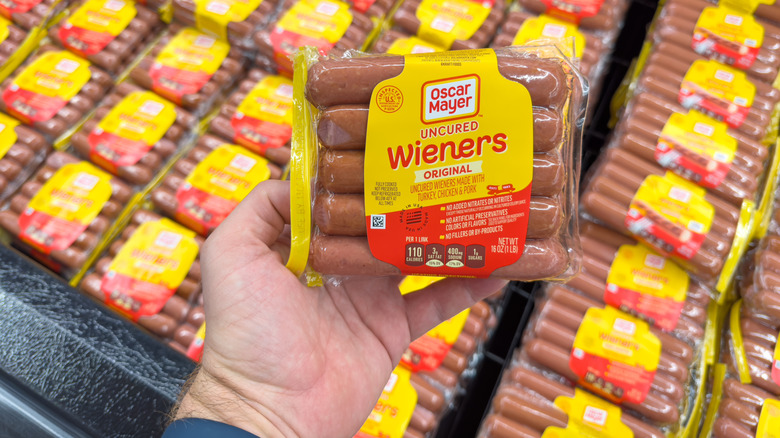
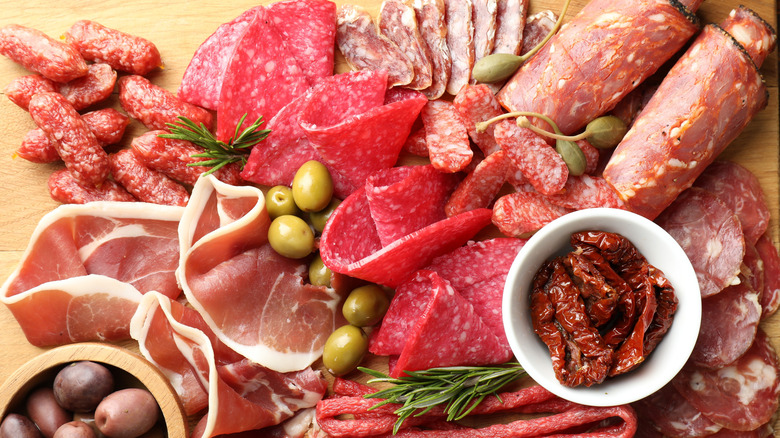
There are many wonderful types of cured meats, or meats that have been preserved using salt, nitrites, nitrates, and sugar to extend shelf life and improve texture. But plenty of studies and world health groups classify processed meats as a major carcinogen — and cured meats are nothing if not processed. It's no wonder bacon-lovers and salami enthusiasts have turned to "uncured" meats for a healthier alternative. But here's the thing. In reality, uncured meats are still technically cured; it's just in a slightly different way.
Tasting Table asked Christie Vanover, head cook and pitmaster for Girls Can Grill, and a contestant on Food Network's "BBQ Brawl," to decipher just what exactly is going on with these terms. "Meat is cured when it's introduced to sodium nitrite or nitrate," Vanover explained. "There are natural and artificial versions of this." Artificially cured meats are manufactured in a lab, where nitrite is added in precise amounts to prevent nasty bacteria like botulism from forming, as well as preserving the color and flavor. But many vegetables are high in nitrates, and it also occurs naturally in our bodies.
Vanover elaborated: "Prague Powders and pink curing salts are artificial cures that are synthetically produced. Some vegetables, like celery and beets, are naturally high in nitrates." In turn, meat can be cured naturally and still be labelled as "uncured" for simply lacking synthetic nitrites.
Most uncured meats still rely on nitrates and nitrites
"Meat can technically be cured with natural ingredients and be labeled as uncured because it doesn't include synthetic nitrites," Christie Vanover told Tasting Table. That's thanks to the U.S. Department of Agriculture, which requires that products made without synthetic sodium nitrite or nitrate be labeled as "uncured." But chemically speaking, a nitrite molecule doesn't care whether it came from celery or a lab.
The chemical result from celery is essentially the same as adding artificial sodium nitrite directly. So if your body and the meat can't tell the difference, what's the point? This labeling can be confusing for consumers who associate "uncured" meat with being fresher, safer, or healthier. Vanover agreed and said, "Meat cured with synthetic nitrites tend to be less expensive than the natural alternative. Beyond that, I'm not aware of any health or nutritional differences between the two."
If you're absolutely determined to avoid any kind of nitrites or nitrates, Vanover advised that you "look for a label that says no nitrates or nitrites added. If you see celery or beets as an ingredient, it technically is still cured." The real health conversation is about how often you're eating cured foods — not whether the nitrates are natural or synthetic. So while deli meat without nitrates is technically better for you, you're really better off limiting your intake.