

That Foam On Your Soup Isn't Harmful — But Here's Why Pati Jinich Removes It

Even the most homey of recipes sometime produce unusual byproducts people aren't sure about, and foam on your soup sure doesn't look appetizing. It's certainly a bit of a mystery to people who are new to making soup, and especially homemade stock, but even cooks who are used to skimming it off may not know exactly what it is or why they even bothering removing it. Luckily we had a chance to chat with renowned Mexican chef Pati Jinich, who is currently acting as Avocados From Mexico's culinary ambassador to spread awareness around diabetes prevention, to ask her how she handles the foam on her homemade soups.
First off, Jinich tells us the foam is a totally natural byproduct of making broth and stock. As she explains, "When you simmer meat or bones in water, tiny bits of protein and impurities rise to the surface as they cook and create that grayish or white froth. It might not look very appetizing, but it's simply part of the cooking process." Despite not being harmful, Jinich still does go through the trouble of skimming it, because it helps the visual appeal of the soup. Foam will make a broth look cloudy, and as Jinich explains, "Visually, that matters — after all, we taste with our eyes first."
"If you want a clear, refined broth, skim it off. It keeps the flavor clean and the appearance bright," Jinich shares. She does note that for more thick, rustic stews this isn't really necessary, but for most broths (which tend to have a thinner consistency), she recommends removing foam.
The foam on your soup can alter textures and flavors
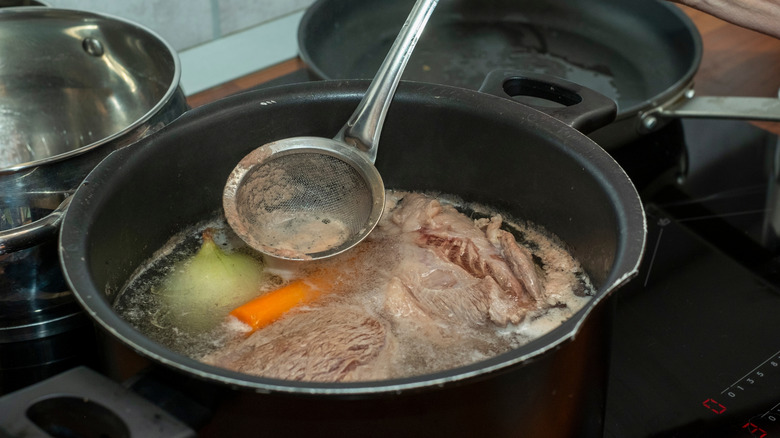
While soup foam won't hurt, a comprised appearance isn't nothing; but it's not the only thing the foam can affect. Jinich also says that it can give broth a slightly heavier taste. According to the chef, "When you skim it off early in the cooking process, the soup feels lighter and more refined. The flavors of the chicken, vegetables, or herbs come through more clearly, and the texture of the broth stays smooth instead of a little murky." That can be the difference between your best soup recipes ending up good or great.
As for getting rid of the foam on your soup, Jinich says the classic skimming method is still the most effective. Her biggest tip: "Do it early, when the foam first rises to the top." She recommends keeping your soup at a gentle simmer, as a harder boil will cause the impurities to get stirred back into the broth. Then just use a fine mesh strainer and skim around the surface, gently lifting the foam off and dumping in the trash or sink. Jinich does add that if you want a really clean finish you can pour your broth through a strainer with a cheesecloth once cooking is done, but says, "Most of the time, steady heat and a few minutes of patient skimming at the beginning are all you need." It may not be strictly necessary, but skimming the foam off of your soup is a small step with meaningful rewards.