

These 4 Deli Meats Belong On Your Italian Subs
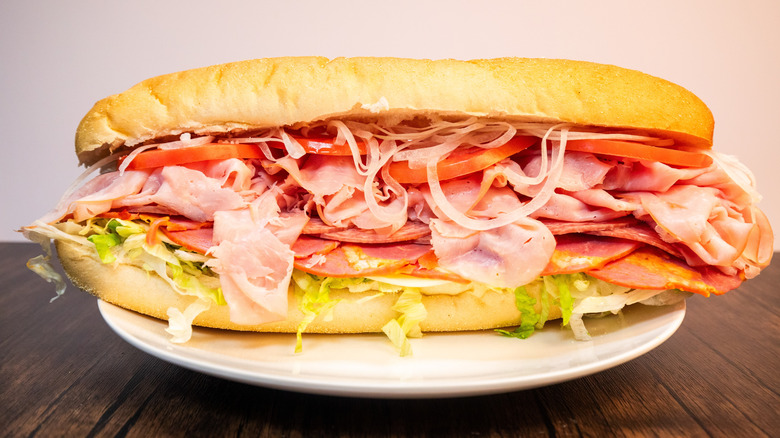
There is an overwhelming number of Italian deli meats available at a neighborhood Italian deli these days. That's also true of specialty grocers or large supermarkets, making it difficult to know where to start or exactly what you need to craft the perfect sub. Your best bet for acquiring all these beautiful meats is to head straight to an Italian deli. There, you'll want to have them freshly slice all the meats as thinly as humanly possible (which any classic deli worth its salt likely already does), because thin, freshly sliced meat is part of the unbreakable meat rule for Italian cold cuts.
Alternatively, you could go to a specialty store like Eataly, which has a wide array of beautiful, thinly sliced deli meats prepackaged and ready for purchase. It's never a bad idea to get a little more than you need for snacking later. Everyone's dream Italian sub will differ in terms of toppings, but some ingredients are non-negotiables, like thinly sliced provolone cheese, shredded iceberg lettuce, and oil and vinegar.
The beauty of building an Italian sub is that you can customize it however you like (within reason, of course). Start with our Italian sub sandwich recipe and make it your own. Pickled peppers or chopped spicy giardiniera, sliced tomatoes and white onions, and any other condiments or garnishes you may add are up to personal preference. But the key building blocks of a great Italian sub are the perfect meats to layer and pile high on a soft loaf of bread. Here are four choices you ought to consider.
Coppa
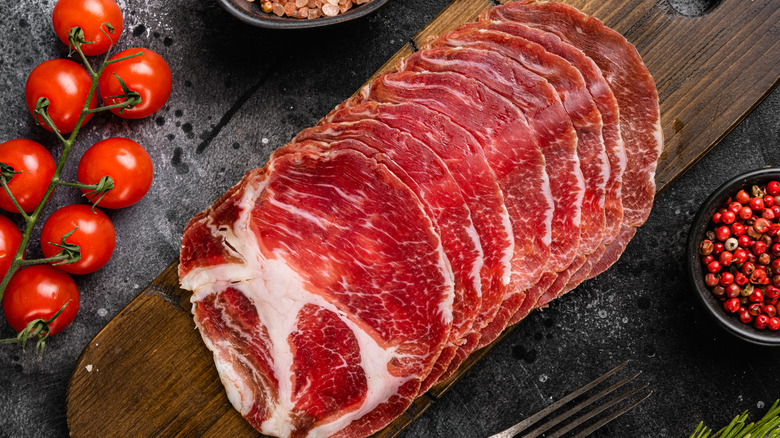
Coppa comes from both the shoulder and neck of a pig, making it whole-muscle salumi. While you may have heard it call by different names, like capicola, capocollo, and even gabagool, it all typically refers to the same cured meat, named for the Italian words for head (capo) and neck (collo). Capicola is cured rather than cooked, and sports deep red coloring with striations of white as opposed to a smaller speckled mosaic of meat and fat and spices. This is because it's a whole muscle rather than ground meat that's piped into an exterior casing.
Stop overlooking coppa at the butcher shop, in particular the cured version rather than the cooked, as the texture is more similar to cured prosciutto than cooked ham. Coppa belongs on your Italian sub because it has a bit more depth of flavor than widely popular prosciutto, while still bringing a bit of natural sweetness from the cured pork. It also contains delicious pockets and stripes of fat.
When searching for the delectable Italian meat, be sure to look for the deep ruby-red kind that's cured as opposed to a more opaque, pink-ish version capocollo cotto, which is cooked with heat rather than cured over time. Not to say that capocollo cotto isn't also delicious on its own, but for a stellar Italian sub sandwich, use the cured version.
Prosciutto cotto
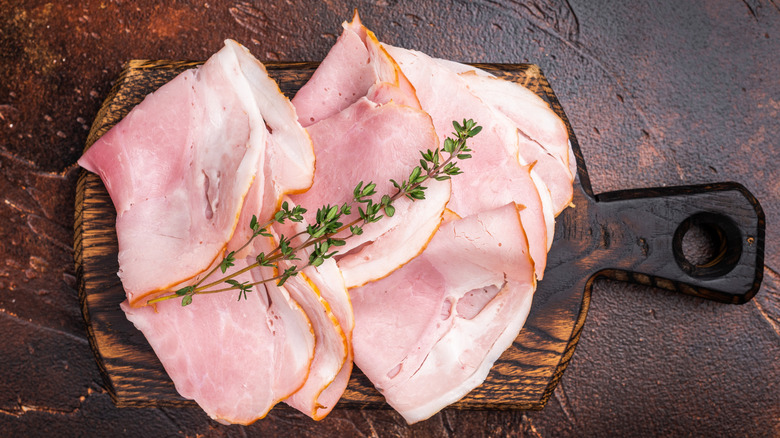
When most picture Italian prosciutto, they envision the cured version rather than the cooked. There is a difference between prosciutto crudo and prosciutto cotto, and that involves how the meat is either salt-cured or cooked with heat. Cotto means cooked in Italian, which means that prosciutto cotto is just a cooked ham leg. You can tell the difference between the two types because the cotto will be a solid, light pink color rather than a less opaque, deeper reddish pink.
While we won't try to dissuade you from using prosciutto crudo on your ideal Italian deli sandwich, we suggest the cotto version instead, especially when paired with another cured whole-muscle salame like coppa. Prosciutto cotto is also significantly less salty than its salt-cured crudo counterpart, making it a perfect addition to your Italian sub that likely already has plenty of saltiness from the other cured meats you're using.
As you're searching for ham (especially if your only option is a regular grocery store or supermarket brand) be sure to avoid any flavored sorts if you're not able to find prosciutto cotto. The ham used on your Italian deli sub should be a neutral ham rather than a smoked or sweet variety. That also includes varieties that have had their natural flavor tinkered with, like honey or maple ham. If you can't find Italian prosciutto cotto specifically, a French cooked ham will suffice.
A salami of your choosing
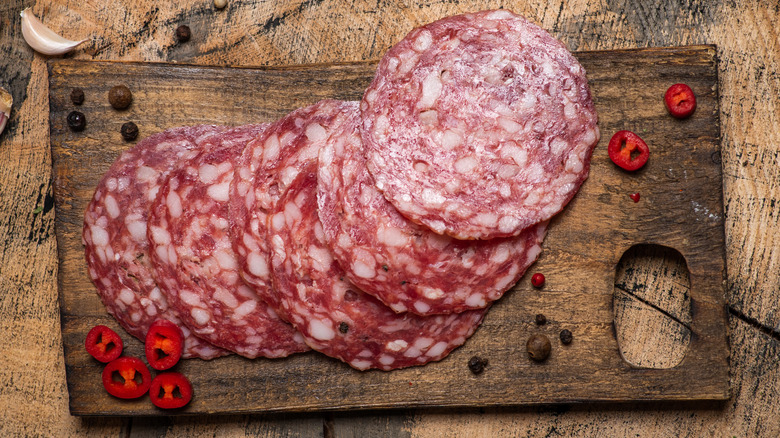
Salami is a broad term, and the options are almost endless. While we suggest getting freshly sliced meats from an Italian deli or specialty shop, we know that's not always an option for everyone, so feel free to use any of our best-ranked salami brands. When it comes to selecting the right salame for your dream Italian sub, it's really a choose your own adventure situation.
Genoa salami is usually milder and fattier, flavored with garlic and other spices like black and white peppercorns. It's also one of the types most commonly found in grocery stores. Finocchiona is another excellent choice if you prefer a more mild or delicate salame, as it's a mild pork sausage seasoned with fennel that lends a depth of flavor without leaning too far into licorice or anise territory.
If you prefer things a bit spicier, a spicy sopressata is a wonderful option, usually cured with Calabrian peppers as well as black peppercorns for a spicier flavor. Calabrese is another great spicy salame option for your Italian sub and gets its name from the hot Calabrian peppers used to impart its heat. While some may suggest that pepperoni is an ideal salame for an Italian sandwich, pepperoni is actually an American invention best suited as a pizza topping rather than adorning your sub.
Mortadella
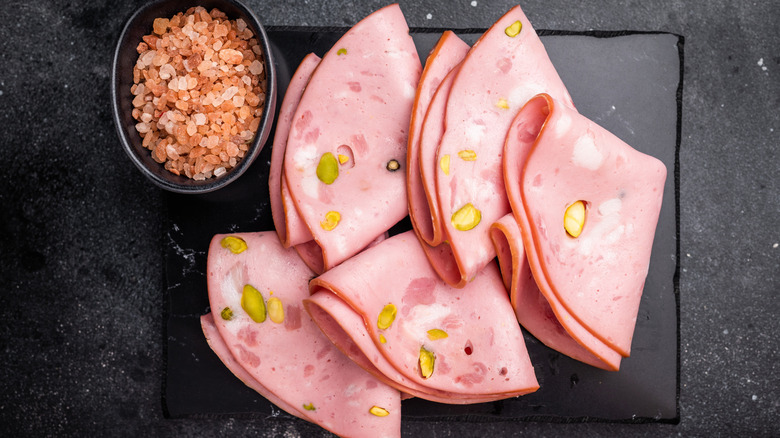
Let's get one thing straight: mortadella is nothing like bologna, otherwise known as baloney. A prized cultural icon with old origins in Bologna, it's nothing like the sad, thick, and rubbery processed deli meat you may have been forced to eat as a child. True Italian mortadella is made from emulsified pork and is studded with small, white pockets of fat. Some kinds of mortadella will have pistachios and black peppercorns spread in the large sausage, along with other spices depending on the producer. Unlike most other types of Italian salami, which are usually cured, mortadella is cooked over low heat or steamed to gently cook the meat without compromising its texture.
Mortadella has become an Italian cultural phenomenon, and its popularity has long made its way to the United States. Finding imported mortadella from Italy is a necessity, ideally those imported with pale green pistachios. This particular meat is essential to an Italian sub because of its delicate flavor that's somehow still incredibly rich even when sliced thinly. Along with its decadent porky flavor, mortadella also imparts a slight sweetness to an Italian sub without being cloying or overpoweringly sweet. It's the perfect contrast to the more intensely flavored meats and tangy vinegar on your Italian sub.