

Saucy Often Means Soggy, Unless You Layer Your Dish Like This To Keep The Crunch
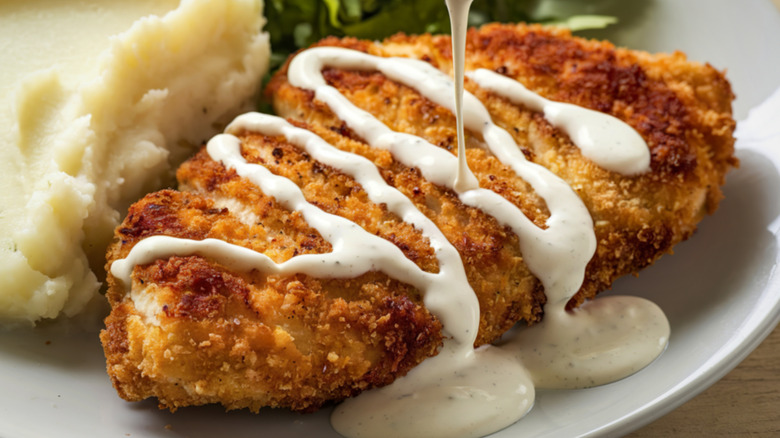
Putting a truly restaurant-quality dish on the table requires a certain amount of craft, not only in the production, but also in the timing and arrangement of how it is plated before reaching its hungry recipient. With all the work that goes into the curation of textures and flavors, it is a shame that a simple mistake can result in a soggy main. A good sauce boosts the flavor in any meal, but you need to know how to apply it. Fortunately, we have the advice of not one, but two chefs to help with the intricacies of properly saucing a dish. Chef Matthew Cutolo of Gargiulos Italian restaurant and Chef Chris Valdes both weighed in with advice on how to keep crunch in your saucy dishes.
"The biggest mistake people make," Valdes says, "is combining everything too early. Crispy elements and sauce should come together right before serving." The moment that the crispy elements of the dish come into contact with the sauces, they begin the path toward sogginess, so the timing of plating and serving is of paramount importance in perfecting your meal. Cutolo notes that in a professional kitchen, chefs wait until the last possible moment to add sauces to a plate. "The crunch stays intact," he says, "and you still get that contrast between a crisp crust and a rich sauce."
Cooking at home, however, it is not always quite so simple to plate each dish to serve. Getting a meal on the table for the whole family comes with plenty of chaos already before you start worrying about making sure the sauce hasn't turned things soggy before it arrives.
A buffer layer can prevent soggy food
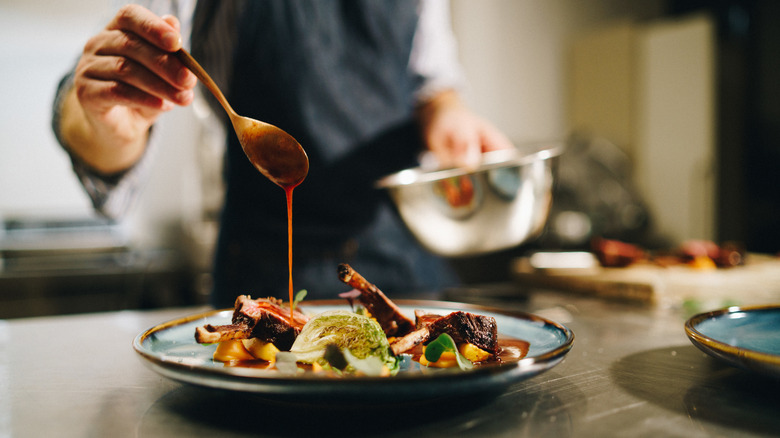
"Once sauce touches a crispy food, the clock starts ticking," Cutolo says, "You usually have about three to five minutes before the moisture begins softening the crust." If you can get everyone at the table to dig in within that time frame, that's excellent, but that may be a stretch. If not, a bit of knowledge and preparation can help extend the window and ensure that the meal you've prepared is served with all the crunch you've worked so hard to create.
The first step is simply preparing things to perfection. "If your fried element is properly drained and hot," Valdes explains, "and your sauce isn't overly thin or watery, you're already ahead." Achieving the proper starting consistency of both components gives you a bit more time, but so does choosing the right sauces and applying them judiciously. Valdes suggests that, when possible, you should drizzle with sauce rather than drench. A small quantity of a robust sauce will add plenty of flavor, and the less moisture you pour over the top, the better. Additionally, thicker sauces will cling to food rather than soak into it, providing plenty of flavor without turning it into a soggy mess. But, if these tricks don't work for your dish, adding a buffer layer is your ace in the hole
"A swipe of purée, a layer of refried beans, a slaw, or even shredded lettuce can act as insulation between sauce and crunch," Valdes suggests. The crispiness of that fried component will begin to degrade immediately when the sauce comes into play, but adding a middle layer of something with a lower moisture content can allow a seamless combination of ingredients that might otherwise be texturally at odds.
How you apply your sauce affects the crunch in the dish
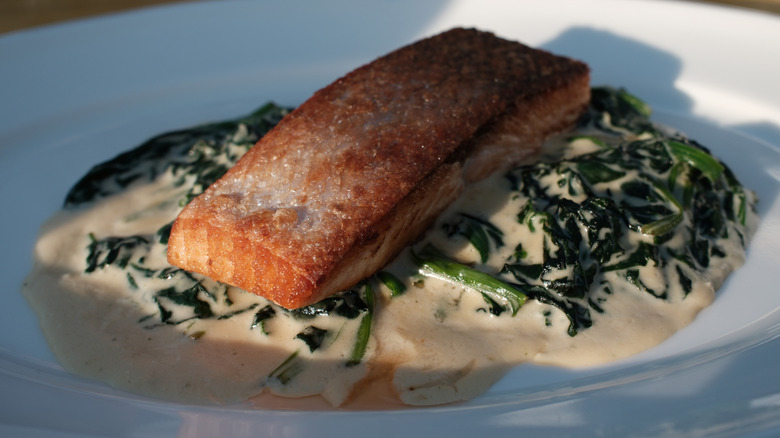
There is, of course, another way to do all of this. If buffer layers don't fit with your meal — and you can't be responsible for a restaurant-style plating of sauces — the order and orientation in which components are added can save your (crispy) skin. "In many cases," Cutolo adds, "serving the sauce underneath or on the side is ideal because it preserves the crispness while still delivering flavor." Beyond that, he notes, this style of service allows diners to customize their plate.
"It also gives diners control over the sauce-to-food ratio, Cutolo notes, "and highlights the beautifully seared or crispy exterior rather than covering it up." However, another option for controlling sauce contact is to play with the verticality of the plate. "Elevating or stacking elements instead of laying everything flat also reduces surface contact with moisture," Valdes notes. A small mound of mashed potatoes beneath a pork cutlet will keep it out of the sauce on the plate while also adding an intriguing geometry to the dish, allowing for some truly artistic plates.
There is an undeniable savor to crisp fried elements paired with rich sauces, but there is another problem. "Once sauce hits something crispy, moisture immediately begins softening it," Valdes says. "That's just science." Clearly, however, there is more than one way to overcome this problem and polish your unique cooking style, whether it is perfecting the consistency of your sauces, including clever buffer layers in your dishes, or finding a way to stack the components with style.