

The Biggest Myth About Mexican Food You Need To Unlearn
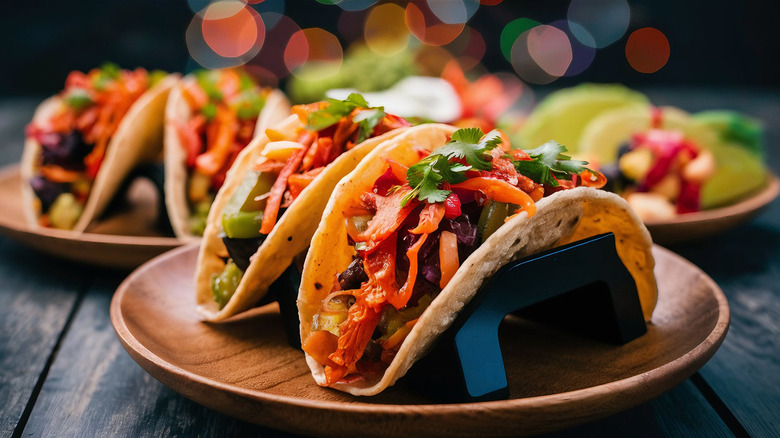
There are many descriptors associated with Mexican food that are undeniable — hearty, flavor-packed, and cozy, just to name a few. However, unhealthy is an unfair adjective that's attached to the cuisine far too often. It may seem accurate on the surface, but one expert explains why the misnomer doesn't describe Mexican food.
To Maycoll Calderón, Executive Chef at Cuna, labeling an entire country's food as unhealthy shows a misunderstanding of the fare. "The idea that Mexican food is inherently unhealthy is a major oversimplification," he says. "What many Americans associate with 'Mexican food' is often a Tex-Mex adaptation, heavy cheese, sour cream, oversized portions, and deep-fried items." We love Texas-Mexican fusion restaurants as much as the next person, but they hardly cover the vastness that's south of the border. "While those dishes can be delicious, they don't represent the depth or diversity of traditional Mexican cuisine," Calderón explains.
"The misconception comes from commercialization and from a narrow exposure to one style of Mexican-American food, rather than the true regional cuisines of Mexico." In reality, what makes Tex-Mex different from Mexican cuisine is the type of ingredients used. While the former often uses powdered or canned versions of staples, Calderón emphasizes the freshness of Mexican cooking with ingredients like fruits, vegetables, and protein. Additionally, the preparation looks different from the fried, Dorito-dusted taco shells you encounter in the U.S. "Many traditional dishes are grilled, steamed, braised, or roasted rather than fried," the chef says.
What does authentic Mexican cuisine look like?
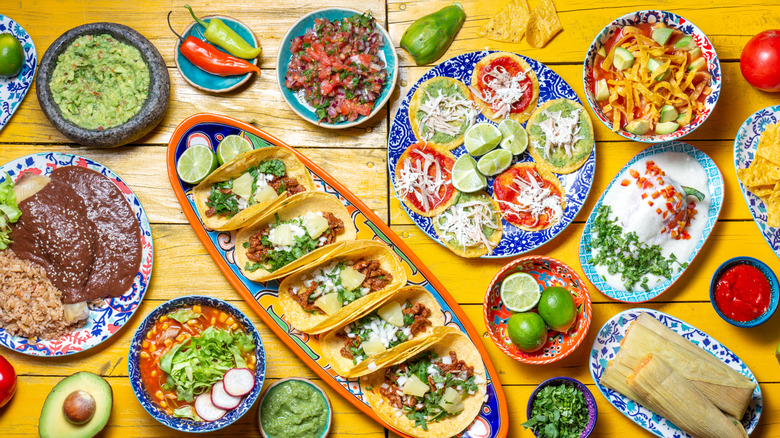
It's hard to pinpoint a distinct cooking style in such a large country, but Calderón says there are a few staples that are shared throughout Mexico. "At its core, Mexican cooking is built on corn, beans, chilies, herbs, vegetables, fruits, seafood, and responsibly raised meats. The foundation is incredibly nutrient-dense and plant-forward," he says. Many of the ingredients are present in Tex-Mex food, though they differ in how they're made. "Techniques like nixtamalization actually increase the nutritional value of corn," Calderón says of the process that boosts the nutrients and shelf life of corn.
Other foods and ingredients that aren't as prominent in the U.S., like nopales, squash blossoms, or aguachiles, are also staples across Mexico. However, things get more varied when you dive into the country's seven different culinary regions. "Coastal regions like Baja California, Nayarit, and parts of Veracruz tend to highlight seafood, citrus, chilies, and fresh vegetables in lighter preparations," says Calderón. As you move deeper into the country, things get a little heartier. "Central Mexican home cooking is also very balanced, [with] stews built on legumes, herbs, and vegetables," he explains.
The marriage of two food cultures is often beautiful, but Calderón hopes to see an accurate representation of the cooking. "Traditional Mexican cuisine across the country is rooted in whole ingredients and balance. The issue isn't the cuisine — it's how it's adapted or portioned."