

Bye, Seafood: Expect To Spot This Tinned Food All Over In 2026
The trajectory of canned foods has been something of a roller coaster. When they first arrived on the scene, canned goods were a technological marvel. The initial intent may have been largely about sustaining armies on the move, but there was a secondary effect that forever changed the way we eat. Now that foods could be safely preserved for such long periods of time in something resembling their natural form, our desires started expanding to encompass out-of-season foods and tastes from faraway lands. Foods that were once exclusively seasonal or regional could now be had anytime, anywhere.
Eventually, canned foods largely fell out of style, with consumer focus shifting toward fresh ingredients and other methods of food preservation — like refrigeration — taking over. But seafood is somewhat unique in that the culture of "conservas" is not only still active, but actually quite chic. These are the perfected tins of seafood in Spain and Portugal that are served in wine bars; delightful cans of mackerel fillets in olive oil and squid in ink that truly celebrate the food, and bear little resemblance to the mushy sardines you might find on the shelves of your local grocer. Interestingly, one of the predicted food trends of 2026 is that what you find in these stylish, colorful tins will expand beyond seafood to the realm of artisanal tinned vegetables.
It may sound hard to imagine at first. Emptying any can of vegetables in the pantry right now is likely to expose contents that are drab in color and dull in flavor — aside from an overabundance of salt — when compared to the fresh alternative. But, if you've ever tasted conservas beside budget canned sardines, you know that there is more than one way to tin food.
Artisanal tinned vegetables may be the next big thing
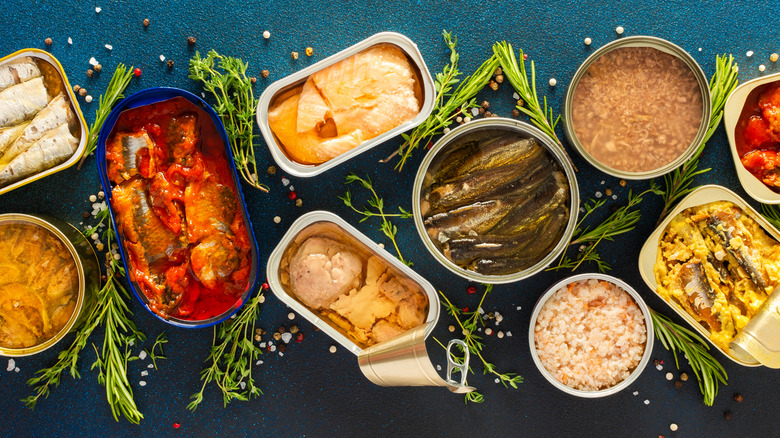
The goal of the early entrants to this market is clearly to erase the collective memory of mediocre canned vegetables and replace it with a product that can fill the same role on the aperitivo table that might currently be filled by a can of Spanish mussels. Row 7 Seed Company is currently garnering attention for its line of three such products: Sweet Prince Tomatoes, Badger Flame Beets, and Sweet Garleek.
Each of these tins contains flavor-first vegetable variants organically grown, picked at the height of the season, and carefully packed with complementary ingredients to create a delicious dish straight out of the tin. Between the three, customers will find slow roasted tomatoes swimming in extra virgin olive oil and red wine vinegar, tender and mild golden beets packed in a white balsamic vinaigrette, and garlic-leek hybrids cooked confit-style with a touch of Dijon mustard and white balsamic to cut through the richness. Spooned onto a crisp crostini with a cold glass of white wine, it is not hard to see how these could make a perfect aperitivo.
If there is one problem with this product, however, it is the price. Consumers who enjoy their conservas may be used to shelling out $20 to 30 for a fabulous tin of fish, but paying $10 for a 4-ounce can of even exquisitely-prepared vegetables may be hard for some customers to swallow. The trend is certainly on the rise, however, with artisanal jars and tins of vegetables, beans, and olives earning higher prices all the time. Perhaps the era of luxury canned vegetables has arrived.