

The 'Oyster Capital Of The East Coast' Isn't The State You Might Expect
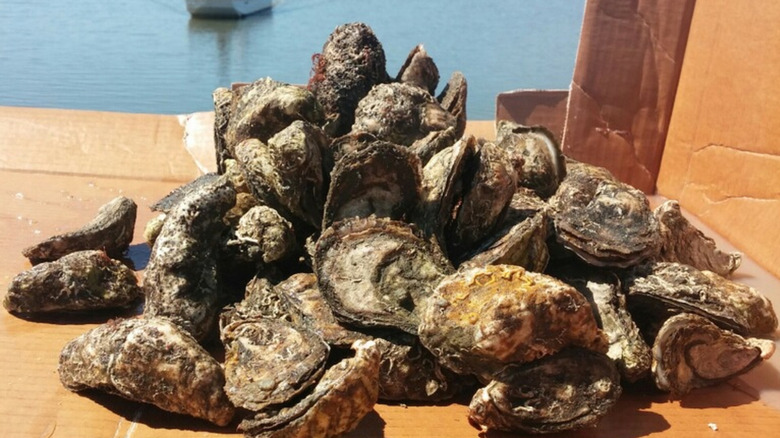
East Coast oysters are known and loved over the world for the clean minerality and distinctive salinity, which is reflective of the cold Atlantic waters where they come from. Although Maine and Maryland get a lot of credit, oysters are present along the continent's entire eastern coast, as far north as Canada's Prince Edward Island all the way down to South Florida. In fact, the state that calls itself the oyster capital of the East Coast is actually the state that's for lovers: Virginia.
Virginia sits along the Chesapeake Bay, the largest estuary in the United States, where saltwater from the Atlantic meets freshwater from inland rivers. That brackish mix varies in saltiness depending on location, season, precipitation, and geographical features that allow rivers to contribute more fresh water and dilute the salty ocean waters. Oysters (like wine grapes, coffee beans, or any other ingredient) have a terroir, meaning that their flavors reflect the where they come from. An oyster grown in one area will taste different from another; a briny, mineral-heavy bivalve from the coast won't taste like one pulled from a sweeter, muddier inlet. Growers lean into those differences, often naming their oysters after the rivers, inlets, or regions they grow in.
Oysters have been central to Virginia's coastal economy for centuries, with early Colonial accounts describing Chesapeake Bay oyster reefs as being so dense that they created navigational hazards for ships. During the 1880s, an incredible half of the eating oysters in the world came from Virginia, and the oyster harvesting industry supported entire coastal towns, with fleets working the bay and shucking houses lining the docks, and canneries shipping product up and down the coast.
Managing and restoring
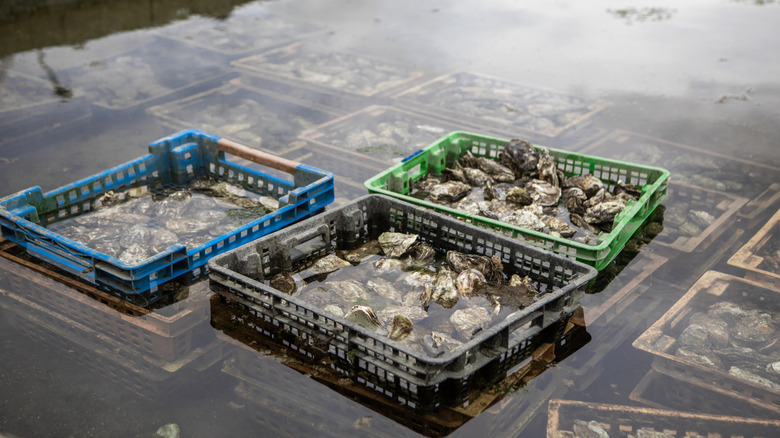
That abundance didn't last forever. Disease outbreaks, water contamination from pollutants, and dredge-style harvesting reduced native oyster populations dramatically in the 1900s. As the oyster beds depleted, so did their contribution to water filtration, leading to progressively dirtier and less hospitable waters, and subsequently, a less biodiverse marine ecosystem. But the modern industry looks different. The waters are now carefully managed, with disease monitoring and the formation of oyster sanctuaries. As the population increases, so does the water filtration, moving the area's marine ecosystem restoration forward.
Aquaculture now drives growth, putting Virginia at number one on the East Coast for oyster cultivation, with thousands of acres of public, leased water dedicated to oyster farming. That strategic farming ensures a steady supply of healthy, year-round product that's predictable in size and flavor, an investment which has helped Virginia rebuild its reputation in raw bars all over the world. Instead of ripping up wild reefs, farmed oysters are raised in managed beds or floating cages, which is also more sustainable. Virginia's growers cultivate different varieties that thrive in particular salinity levels and growing conditions, although they are, like all food-growers on the planet, at the mercy of climate changes, with heavy and unpredictable rains influencing salinity and flavor.
Virginia has also organized its oyster regions in a way that makes them feel like sampling wine. The Virginia Oyster Trail maps out different coastal areas, encouraging visitors to try oysters from multiple water regions. In combination with geography and history, the commitment to sustainable seafood cultivation is why Virginia holds the claim as oyster capital of the East Coast.