

The Single Cleaner That Gives Pots And Pans A Martha Stewart-Level Sparkle

We may receive a commission on purchases made from links.
Cookware made from materials like stainless steel can quickly get stained and discolored, especially if it's washed in the dishwasher. Although this doesn't affect the performance or safety of the items, it can make them less aesthetically pleasing. If you've noticed water spots, brown or black marks, rainbow-like stains, or a dull or cloudy appearance on your stainless steel pots and pans, Martha Stewart has the perfect solution. She recommends using one simple household cleaning product to restore stainless steel cookware to like-new condition.
In a January 5, 2026 Instagram post, Stewart said that the best way to clean stainless steel cookware is with CLR Calcium, Lime, and Rust Remover. This inexpensive product can be purchased at Walmart, Amazon, and other retailers for around $5. Stewart says that the product removes mineral deposits from pots and pans quickly, leaving them looking like new.
CLR works so well because it gets rid of calcium, lime, and rust deposits on metal surfaces, and also erases ugly cooking stains and discoloration. It's easy to use and doesn't require a lot of scrubbing either. Another benefit of CLR is that it's safer than many other popular all-purpose kitchen cleaners, as it contains no phosphates, is formulated with 80% plant-based ingredients, uses sustainable packaging, and is eco-friendly.
CLR isn't safe for all kitchen surfaces
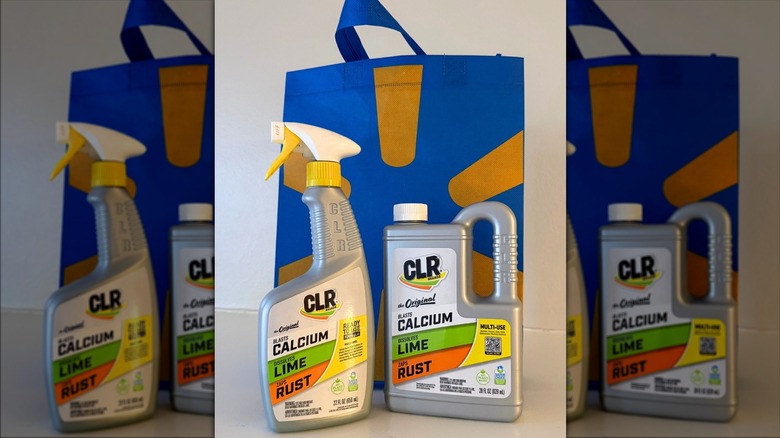
While CLR can be used on stainless steel and other surfaces, it isn't safe to use everywhere in your kitchen. You can use it on stainless steel pots, pans, cookware, bakeware, sinks, and countertops, as well as drinking glasses, dishwashers, some brands of coffee makers, and chrome or porcelain faucets and handles.
However, you should avoid using it on cast iron, wood, wallpaper, carpeting, brass, copper, aluminum, nickel, bronze, leaded crystal, galvanized metals, clothing, and natural stone — including marble, granite, and quartzite countertops (luckily, Martha Stewart has another foolproof method for easing stubborn marks on marble or natural stone countertops). If you use it on brass, copper, and aluminum pots and pans, it may dissolve the finish or cause pitting. It can also damage older or cracked porcelain sinks, tubs, and tiles. CLR can ruin painted, coated, or sealed surfaces, including laminate, Formica, and Corian countertops as well.
If you're unsure, you should spot-test a small section of the material to make sure it doesn't damage the finish. To clean your pots and pans, pour a small amount of CLR into the item and gently rotate it to coat the bottom surface. Then add a cup of warm water and let it sit for no longer than two minutes. For stubborn stains or marks, or if you have overheated your stainless steel pan and it has burnt-on food residue, put on a pair of rubber gloves and gently scrub at the marks with a kitchen sponge. Then immediately rinse everything with cool tap water and wash it as usual. If the stains aren't gone, you can repeat the process again.