

Why Charcuterie Sandwiches Are Perfect For Your Next Picnic
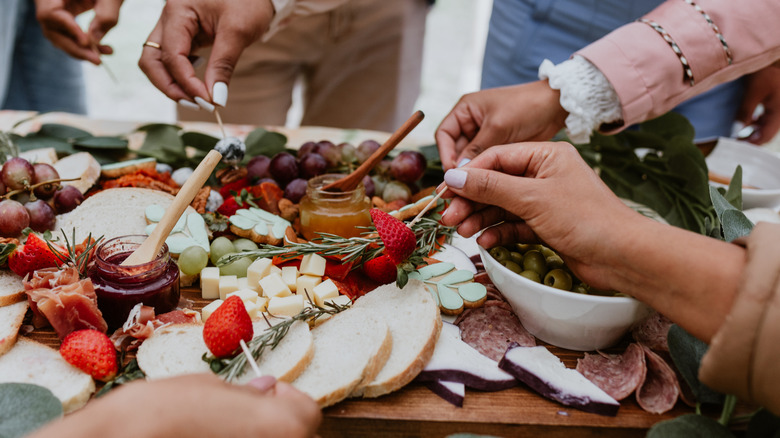
Charcuterie boards are interactive and edible choose-your-own adventures. Not only can you construct the board based on your (and your guests') preferences by constructing a plant-based board, a kid-approved rendition, or a keto-friendly one stacked with cheese and meat galore, but you can also play with different heights, arrangements, and colors to create a selection that looks as good as it tastes. Creating one is just as much of an art as it is an exploration into culinary creativity.
While you may have already mastered everything you need to know about assembling a charcuterie board, you may have one lingering question: What the heck do you do with all those leftovers? Snacking boards aren't cheap, especially if you're investing in premium meats, pricey spreads, and fancy cheeses, so you'll want to put all of your leftovers to good use. The easiest way to do so, without requiring any additional ingredients (in most cases), is to make sandwiches out of the scraps.
Charcuterie boards are often filled with standard sandwich ingredients — spreads like hummus and jam, pickled veggies, cheese, meat, and bread or crackers. You can purchase a pre-made charcuterie board and take it with you to a picnic; once you arrive, crack open a bottle of wine and tuck your favorite snacking bites between pieces of baguette or crostini slices. Or, after all of your guests have descended on your board like vultures, enjoy a post-event snack with a hodgepodge of meats and cheese.
How to make the most of your charcuterie leftovers
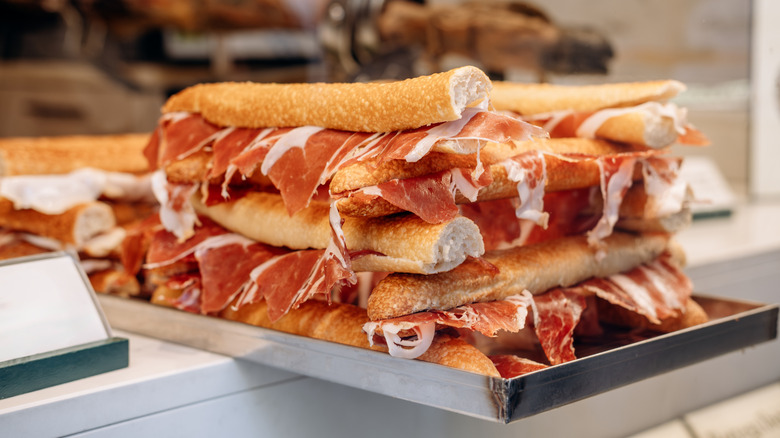
There are many charcuterie staples worth adding to your sandwiches. Think first of flavors that work well together: prosciutto, fig jam, and Brie; soppressata, cornichons, and whole-grain mustard; or hummus, greens, and pickled red onions. You should also pick a bready base that is sturdy and large enough to handle your sandwich fillings; a thin rice cracker can't compare to a crusty, sizable slice of French or Italian bread. If you only have small crackers left, try creating charcuterie sliders; this is a great way to get a complete bite, while still making use of scraps and small leftover portions.
Speaking of leftovers, it's important to keep the classic food safety spiel in mind. You should not be eating charcuterie leftovers that have been left out for more than two hours (or one hour on a 90 degree Fahrenheit day). Bacteria and foodborne illness colonize food quickly, so be sure to tuck your leftovers into the fridge once your guests have finished snacking.