

Why Grade B Eggs Are Rarely Sold At Grocery Stores
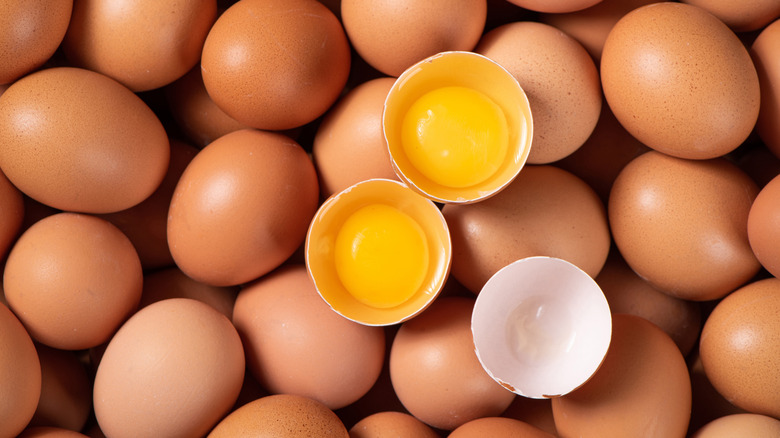
It seems that all eggs are more or less equal when sitting on plates, whether they're scrambled, poached, or sunny side up. But when we're buying eggs, for many of us it matters if the chickens roamed freely or lived without antibiotics. What should also be on your radar is what grade was assigned to those eggs as they left the coops. There's a very particular USDA grading process marking eggs from AA down to B. And while you might look to buy AA or A category eggs, grade B eggs will almost never end up in your shopping cart.
There's a very good reason grade B eggs don't make the cut for being sold individually as whole eggs. It's because, unlike higher grades, edible grade B eggs are allowed to be considered "abnormal," meaning they have a certain degree of limited defects. Most shoppers wouldn't appreciate buying these imperfect eggs.
Egg grades are all about quality as assigned by a trained grader, who places them in categories based on things like flawless exteriors, shapes, and importantly, the egg's interior — which is gauged by a lighting technique known as candling to confirm defined qualities for the egg's yolk, white, and air cells. Unlike in grades AA and A, it's okay for grade B eggs to have light exterior staining and uneven shapes. Their whites may be watery, cells can be more wiggly or bubbly, and the yolks flatter, wider, and darker. All these things are collectively why grade B eggs rarely make a presence in cartons of grocery-store eggs.
Why consumers are likely still eating grade B eggs
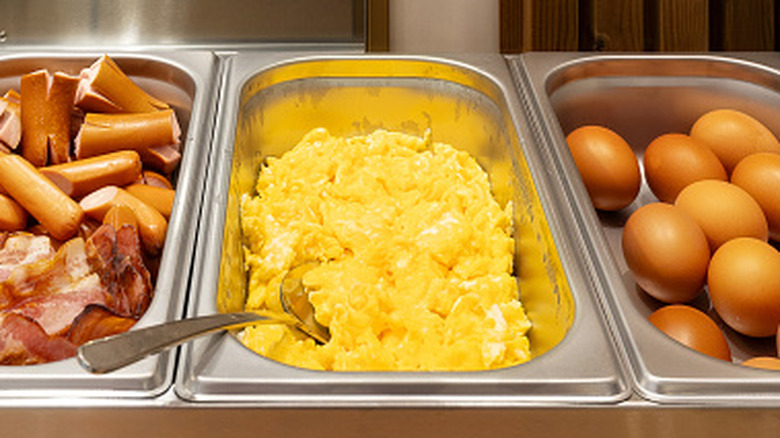
Grade B eggs may not be pretty and perfect, but they're still edible. In fact, you've likely consumed them in unexpected ways, typically in the form of egg products. That category includes frozen egg products, such as scrambled eggs, omelettes, and frittatas, as well as pre-prepared versions from grocery-store delis, buffets, or restaurant meals. Grade Bs could well be comprising the bulk of cartoned liquid eggs, liquid egg whites, as well as dried or dehydrated ones. They also appear in a vast array of packaged meals containing egg as just one of many other ingredients.
What's known as powdered eggs are particularly mysterious, often presenting in the purvey of school or group-living lunchrooms. We explored this category of egg products in our look at 14 myths about powdered eggs you need to stop believing. Consulted experts reveal that not all powdered eggs are the same, and it comes down to the same grading techniques used when eggs are sold in whole, fresh form.
Many spray-dried powdered eggs are made from grade B eggs; likewise the eggs in freeze-dried egg powders. Since that grade allows less-firm egg whites, it potentially affects the quality of the egg powder, which matters when texture is important to the dish you're making. So, even if you're not getting whole grade B eggs at the store, it's important to check labels on powdered egg products, choosing grade AA or A, if available.