

Always Follow This Step First When You Use Beef Tallow More Than Once
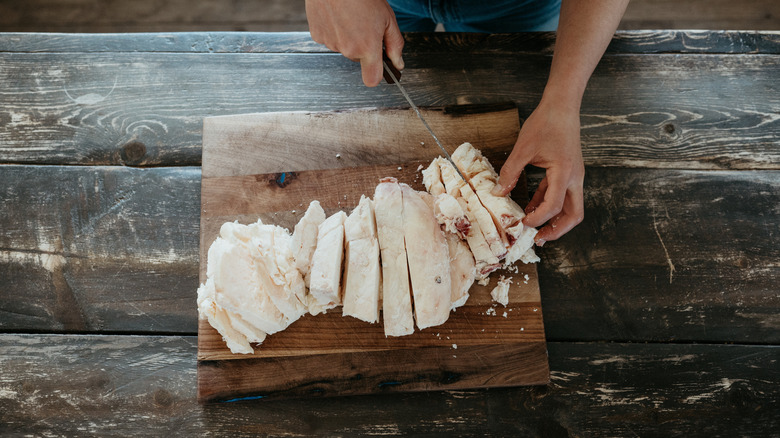
In recent years, beef tallow has made quite the comeback in home kitchens — and for good reason. It has a clean, richly satisfying savory flavor, and its high smoke point means it is relatively stable, making it perfectly suited for long exposure to heat, like frying and roasting. Because it is largely composed of saturated fat, beef tallow is more resistant to oxidation than many vegetable oils. It is a useful and inexpensive byproduct of an animal that has already been processed, making it nose-to-tail friendly. Properly handled, you can absolutely cook with the same beef tallow more than once.
What breaks tallow down, making it go rancid, is often what gets left behind in it after one cook through. When you cook food in an oil medium, like when you fry potatoes, or sear a steak, tiny bits of food, the protein, the flakes of seasoning, the bits of breading all break loose and remain suspended in the hot fat. Those chunks continue to cook after you turn off the heat, burning even if your meat comes out with the perfect crust. The fragments darken, going from caramelized to carbonized, and gradually imparting bitter, burnt flavors to the fat. Any leftover moisture from the food bits can also accelerate spoilage. If you simply cool the tallow and reheat it without addressing those leftovers, they will sink to the bottom, but your tallow won't taste fresh. Rather, it will taste like yesterday's compounded debris. There are a few pro tips to cooking with beef tallow, but a crucial step before reusing tallow again is cleaning it first.
Rub-a-dub-dub, beef tallow in the tub
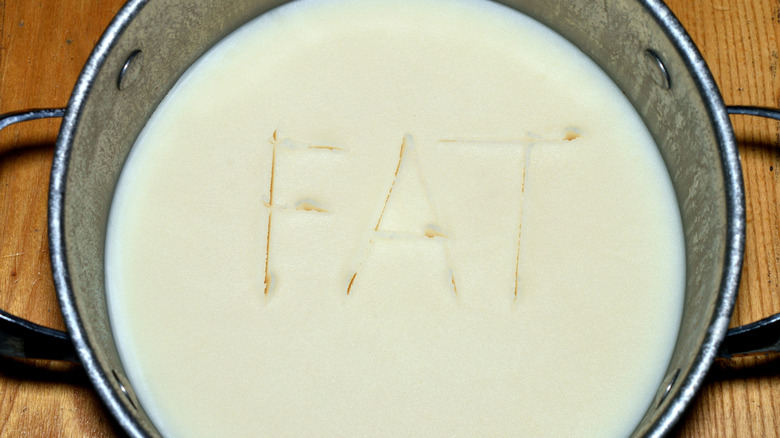
Put away your scrub brush and detergent, because cleaning the tallow is very simple. You just need to strain it. Once the fat has cooled slightly but is still liquid, pour it carefully through a layer of cheesecloth, a nut milk bag, or a coffee filter, into a clean container. You could use a metal strainer or a chinoise, if you must, but the finer the mesh, the cleaner the tallow. The mesh material will catch the even the tiniest grains of scorched grit, leaving behind a browned sediment which would otherwise continue to burn with each new application of heat, imparting acrid flavors to your food, and effectively lowering the smoke point and the usefulness of the fat.
Straining resets the playing field. It takes what is best and leaves the rest, making the tallow new again, for the most part, preserving the flavor and extending the life of the fat. After straining, store the tallow in an airtight jar in the refrigerator or another cool, dark place. Before using it again, perform the sniff test — good-to-use tallow should have a neutral, lightly beefy scent. With good storage and and good strainage, beef tallow is a lovely cooking fat that can be reused multiple times without sacrificing quality.