

Not Every Grass-Fed Steak Cut Is Worth Buying — These Are Your Best Bets
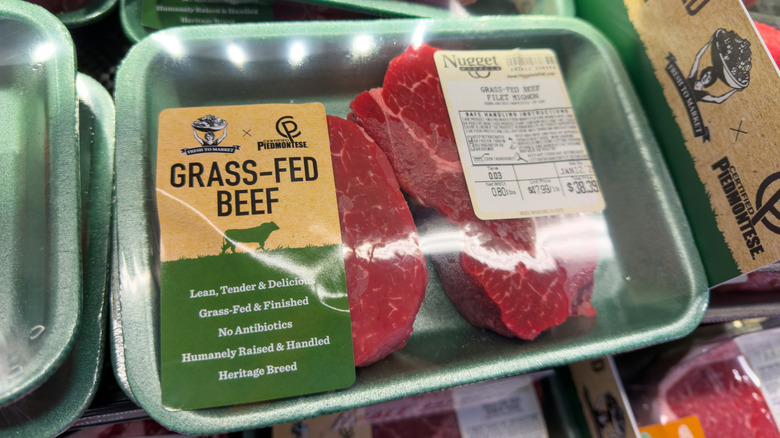
Grass fed beef is typically lower in fat and calories and contains higher levels of vitamins A and E, antioxidants, and omega-3 fatty acids, making it a healthy choice for many meat eaters. While some find the flavor to be richer and more gamey, it is cited as one of the best ways to ensure sustainable and ethical meat consumption. No wonder many consider it better than regular beef.
Unfortunately, that also means that grass-fed is more expensive, so there are a few things to consider before paying more. First, while the U.S. Department of Agriculture (USDA) regulates the use of the term "grass-fed," it only requires that the animal maintain a minimum of 50% grass-fed diet. Animals may feed on grain, hay, or other food, especially during colder months. If you are committed to only consuming grass-fed beef, you should consider choosing meat products with labels that specify 100% grass-fed or grass-finished beef. (Grass-finished means that the cattle ate only grass or forage from the time it was weaned from its mother's milk to the time it was harvested for beef.)
Shoppers should also consider the cut of beef. As with any popular type of steak, some grass-fed cuts are better than others, with quality cuts being more tender, flavorful, or versatile. The best bets for choosing a premium cut of grass-fed beef are filet mignon, ribeye, flat iron, porterhouse, and New York strip. We'll take a look at each one and offer some tips on how to choose a quality cut.
Filet mignon
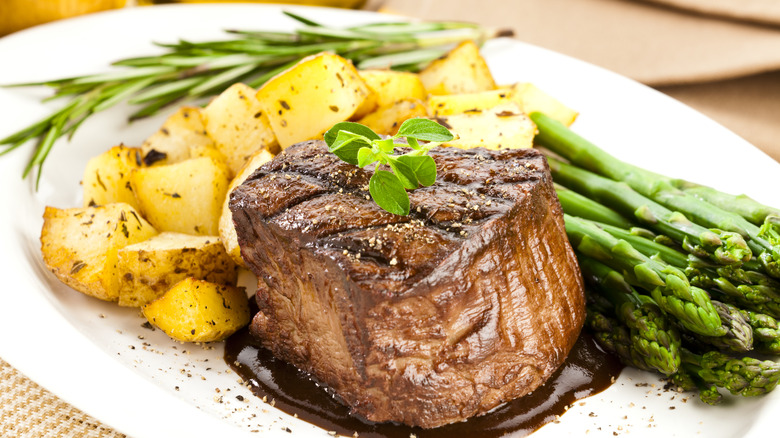
Filet mignon is one of the most expensive cuts of beef for a reason — and if you buy grass-fed, it will set you back even more. But the extra cost is worth it for elevated taste and tender, velvety texture. For a better filet mignon, opt for grass-fed. When you buy from a quality brand or vendor, your cut will be lower in saturated fat and will have a higher content of vitamins and nutrients, including the aforementioned vitamins, fatty acids, and conjugated linoleic acid.
Filet mignon originates from the center of the tenderloin, or the long muscle that runs along the spine. To pick the perfect grass-fed filet mignon at your local grocery store or butcher shop, pay attention to the thickness, color, consistency, and texture. Look for a piece that is 1 ½ to 2 inches thick and feels firm. It should have a deep, dark red color, and the fat may have a slightly yellow or golden hue that indicates it has a high level of vitamin E and beta-carotene. Choose a piece with marbling, or flecks of white fat throughout, as this results in a more flavorful steak. Just stay away from cuts that have silvery skin.
Ribeye
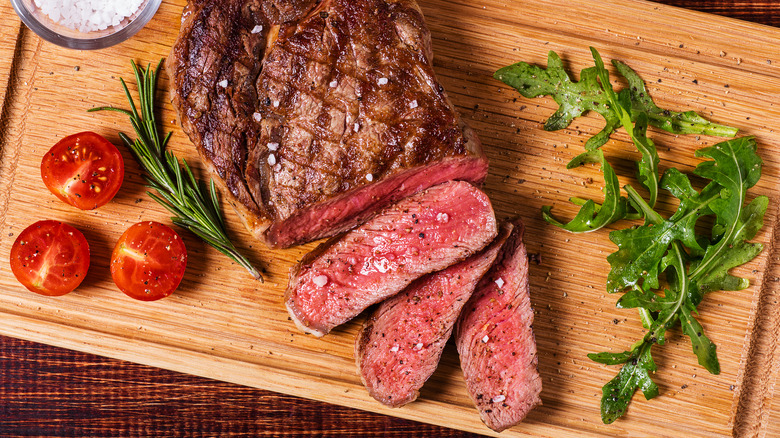
Ribeye, which is a great alternative to the pricier New York strip, comes from (you guessed it) the rib section of the cow. What makes grass-fed ribeye unique is its marbling. These flecks of white fat contribute heavily to its buttery flavor. It's also more delicate and more widely distributed in grass-fed ribeye than in traditional ribeye. As you cook the steak, the fat melts, making the meat more tender and flavorful without getting greasy.
Grass-fed ribeye is also high in omega-3 fatty acids, which can improve heart health, and it contains higher levels of vitamins and antioxidants than traditional ribeye steaks. To pick the best grass-fed ribeye steak, look for a cut that is firm and slightly moist, one with heavy marbling and a bright red color. The fat may have a slight yellow or golden tint. Choosing a steak that is at least 1 ½ inches thick will help you achieve the perfect sear on the outside of the steak without risking overcooking it.
Flat iron
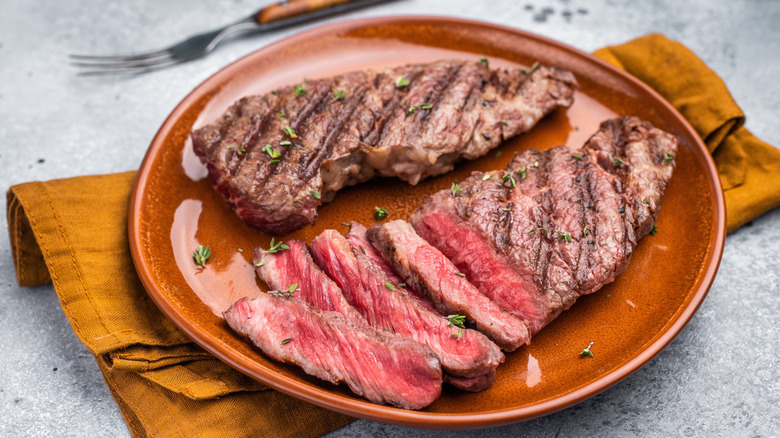
Flat iron steaks are harvested from the upper muscle of the shoulder blade. This steak looks vaguely like the old-fashioned version of the eponymous household appliance, with a long, flat, tapered shape. While it's still considered a premium cut, it's typically less expensive than other options. It still offers the same tenderness and rich flavor as other luxury cuts of beef and is actually the second-most tender cut after filet mignon.
When you pay a little extra for grass-fed flat iron, you're reaping even more benefits. They are not only healthier, but they typically taste better too. Some consider the taste of grass-fed beef to be superior to that of grain-fed and note that they can tell the difference between the two. Grass-fed flat iron, for instance, may have a richer, deeper, and cleaner flavor, as well as a more appealing texture that isn't in danger of getting tough or gristly.
To make sure you get a good cut of beef, choose one that is dark red in color and that has a uniform texture and thickness. The fat on grass-fed flat iron may appear more orange or yellow, however. The meat should not have any silver skin or gristle but rather flecks of white marbling.
Porterhouse
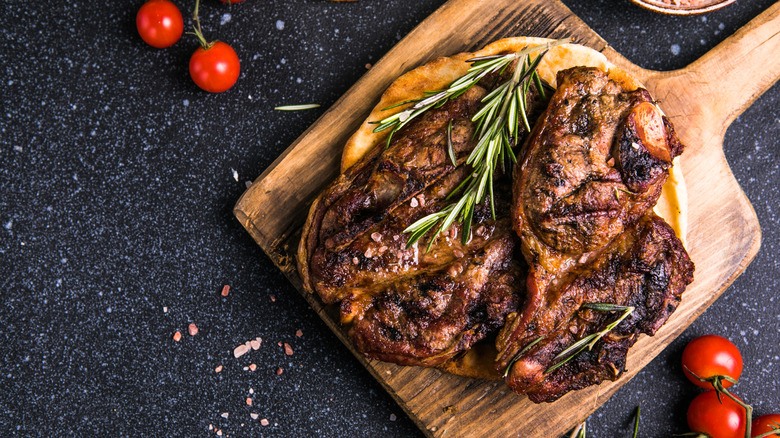
A porterhouse steak makes a great alternative to a T-bone and is harvested from the rear end of the cow's loin. It's actually two cuts of beef in one: a filet mignon (or tenderloin) and a New York strip. This cut typically boasts a rich flavor and firmer texture along the strip side, and a more tender, buttery flavor on the filet side. Grass-fed porterhouse steak is healthier than its grain-fed counterpart because it is lower in calories and fat. It also contains higher levels of antioxidants and omega-3 fatty acids. It may taste leaner and offer a gamey or nutty flavor.
When looking for the perfect porterhouse, be sure the tenderloin section is at least 1 ½ inches wide. To get the most bang for your buck, choose a large cut that is deep red in color and has intense marbling. The fat on the meat may have a slight amber or yellow color if it is grass-fed but avoid selecting meat with a heavy gristle or a visible, thick grain running through the filet.
New York strip
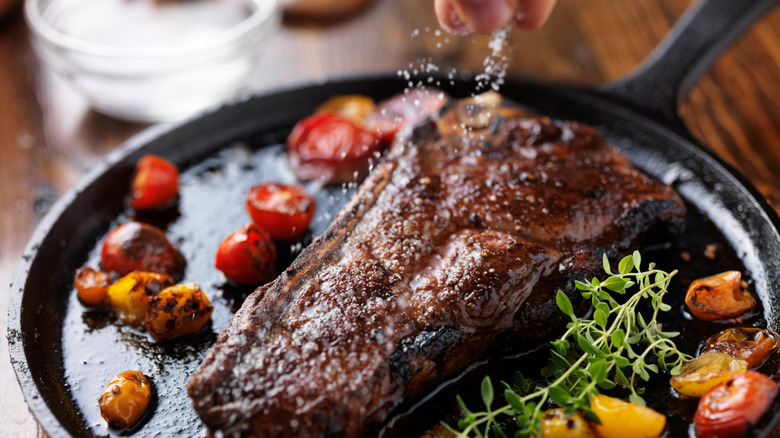
The New York strip is another premium cut known for its tenderness and flavor. Harvested from the short loin of the cow, behind the ribs, it has a fine, firm texture and a long strip of fat along one side. This creates a nice balance of fat and lean meat, making the New York strip one of Jacques Pépin's preferred cuts of steak. Unlike grain-fed New York strips, grass-fed beef is leaner and may have a bolder flavor. Its texture may be firmer, and you may taste hints of grass or minerals. You'll also be getting higher levels of essential vitamins and beneficial fats, with lower monounsaturated fat and calories compared to grain-fed beef.
When selecting your steak, look for a bright, cherry red color (though the fat may appear slightly yellowish in grass-fed beef due to higher beta-carotene levels) with generous marbling throughout. Opt for a thick cut, preferably at least 1 ½ inches to avoid any potential overcooking. Additionally, don't choose a cut that has a thick white strip along the side, as this tendon will turn tough and gristly as the meat cooks.