

Jeff Mauro Uses This Simple Ingredient To Help Whipped Cream Stay Stable Longer

Whipped cream is a must-have companion to many desserts. Something about its soft, airy texture paired with an intensely creamy mouthfeel can take even the best sweet treat to the next level. The only issue we have with whipped cream is its instability. It tends to collapse shortly after it's whipped to perfection, making things tricky when you're prepping dessert ahead of time, especially if it's for a bigger crowd.
Jeff Mauro recently partnered with Bayer Aspirin to raise awareness about heart health, so we caught up with the chef and picked his brain about stabilizing whipped cream. "A little cream of tartar goes a long way," he told us. The ingredient surely sounds familiar, but you'll probably never guess what cream of tartar actually is — it's an acidic byproduct of winemaking (scientifically called potassium bitartrate) that has been used as a leavening agent since the early 19th century.
When asked how much cream of tartar we should add to a cup of whipped cream, Mauro was hesitant to answer definitively but did advise using caution and adding a small amount. "Like a quarter of a teaspoon, I think. Eighth to a quarter of a teaspoon?" he said, before quickly retracting, "Don't quote me on that, though. I don't want to screw people's whipped cream up." He's not wrong — too much cream of tartar can cause a sour taste in whipped cream, so you might want to make a few test batches to find the right dose for your desired amount of cream.
Homemade whipped cream is finicky, requiring several things done well to ensure stability
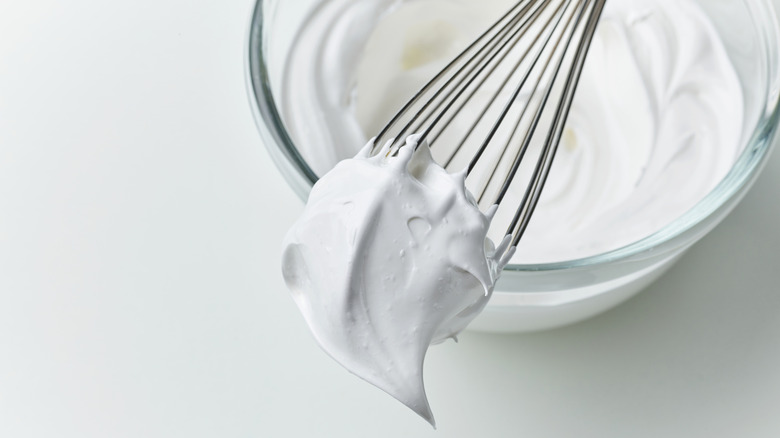
Mauro's tips on stable whipped cream extend beyond the addition of cream of tartar, though that's a great place to start. According to the chef, the material and temperature of the bowl you're using for whipping can make a big difference in stability. The process starts with "making sure you have a clean, cold bowl," Mauro says. A cold bowl will keep the cream stiffer, which is why the material of the bowl matters as well. "I believe a glass bowl holds it better than a metal, reactive bowl," he said, explaining that "even though glass isn't great, it's not conductive." In other words, a glass bowl will stay cold longer than a metal one.
The absolute best method for whipping cream is to initially underwhisk it, Mauro said. "By the time service comes or when you need to plate your whipped cream, you give it a quick whisk. If you get it perfect and then you go back and you rewhisk it, you're going to break it," he clarified. Yup, it's possible to overbeat whipped cream, so if you're making it in advance, look for medium peaks rather than firm, stiff peaks. When it's time to put the whipped cream aside until you need it, "don't leave anything in the bowl. Like, don't leave a whisk in it. And keep it in the fridge," Mauro warns.