

What To Know Before Substituting Chocolate Chips For Baking Chocolate
We may receive a commission on purchases made from links.
Chocolate is an ingredient that all bakers should have on hand. But did you know that there are many different kinds of chocolate to choose from? And, to make things more complicated, not all of these varieties behave the same way or should be used for the same recipes.
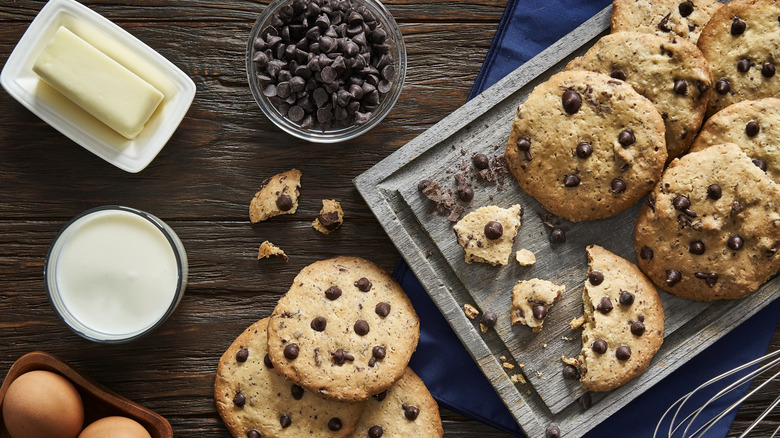
To get the scoop on the nuances of baking chocolate, we spoke with Nicole Patel, the founder of Delysia Chocolatier. The first kind of chocolate she shares is one that cookie lovers will be familiar with: chocolate chips. "They contain less cocoa butter and often added stabilizers, which are frequently wheat-based, and that's what prevents them from melting smoothly," she says. As such, when you bake chocolate chips into your favorite cookie or brownie recipe, you're not going to have to worry about them losing their shape or absorbing into the batter.
On the other hand, baking chocolate, which is often sold in bar form, is designed to melt. "It's more functional than chips, but it's still not optimized for shine, fluidity, or nuanced flavor," Patel says. Therefore, when substituting these two chocolates for one another, it's important to know that while their flavors might be similar, their composition and qualities make substituting them one for one difficult. Understanding the shortcomings and applications for each will help guide your decision on which one is right for your recipe.
When to use chocolate chips versus baking chocolate
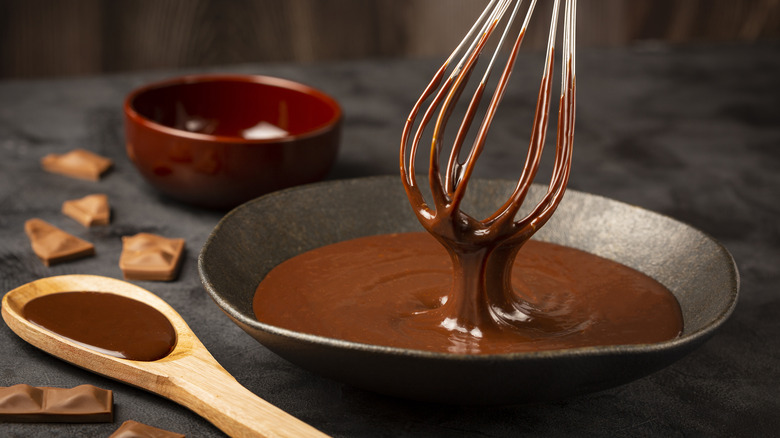
Since chocolate chips and baking chocolate have different properties, they are not always suitable for the same things. Chocolate chips are designed to hold their shape, which means melting them isn't just a pain; it can also alter the consistency of your recipe. "That structure works beautifully in cookies, but it also means they don't behave like true chocolate in recipes that rely on a fluid melt, like ganache, sauces, or glazes," Patel explains. If you do try to melt them, Patel explains that you may end up with a thicker consistency and flatter finish. "This makes them a poor choice for things like ganache, truffles, chocolate coatings, dipping, molding, or decorative drizzle, where you want chocolate to melt evenly, set with shine, and feel silky on the palate," she says. For these instances, you may want to turn to a high-quality baking chocolate, which will melt smoothly and not leave behind a weird mouthfeel.
Although there are some places where you shouldn't use chocolate chips, there are also many instances where chocolate chips are preferable to chopped baking chocolate. "In no-bake or low-heat treats like trail mix, snack bars, granola clusters, rice cereal treats, and energy bites, [chocolate chips] stay intact and provide a satisfying crunch without becoming greasy or messy," she says. They can also be left whole — like as a garnish for cupcakes, topping for pancakes or waffles, or mix-in for ice cream.
The 'gold standard' of chocolate
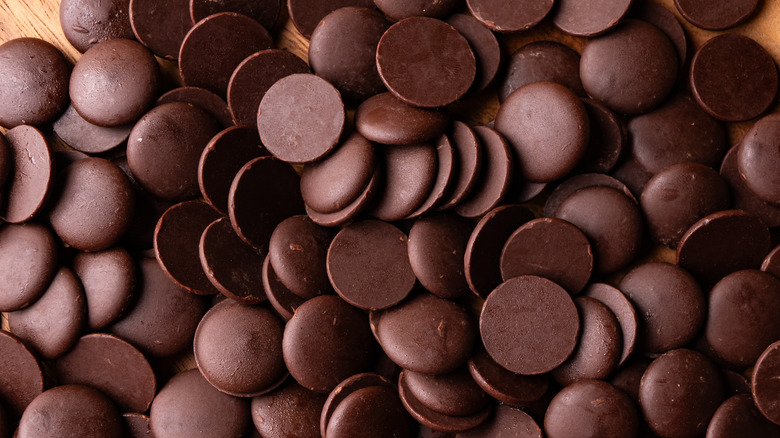
Nicole Patel explains that there's a third class of chocolate worth trying: couverture. It's especially helpful if you're looking for a smooth melt and beautiful presentation. "Couverture chocolate is the gold standard," she says. "It contains more cocoa butter, is ground more finely, and melts smoothly and evenly." She says that because this chocolate contains a higher cocoa butter content, it will give you a far better mouthfeel, flavor complexity, and melt than baking chocolate. As such, it's the ideal kind of chocolate for tempering and one that you'll want to use for chocolate dips. "If chocolate is a key component of the recipe, I always recommend using a high-quality couverture," Patel says.
One of the misconceptions about couverture is that you need to fork over a lot of money for it. But rest assured that it is not the case (and besides, it's an investment worth making). "It will almost always produce a better result and surprisingly, it's often comparable in price to what's sitting in the baking aisle at the supermarket," Patel says. You can find couverture chocolate sold by retailers like Amazon; it lists this 1-pound bag of Cambie dark couverture chocolate for under $30. High-quality chocolate brand Valhrona also sells this chocolate direct-to-consumer on its website.