

Why Gin And Tonic Go So Well Together
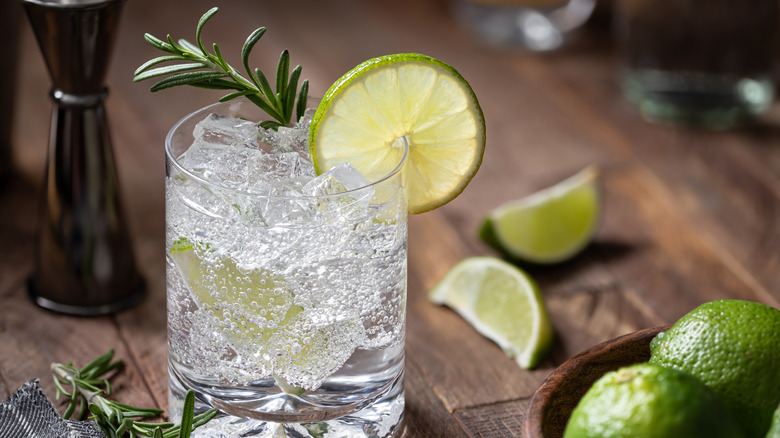
Gin and tonic is a simple drink with a mind-bogglingly complex blend of flavors. But why do they go so well together? According to "Ottawa's top bartender" Cody Nicoll, a sommelier, mixologist, and the co-owner of Bar Ocelli and managing partner of Ember Live Fire Kitchen, the classic cocktail's history may shed some light onto the winning combination of flavors. "Believe it or not, the origins of the gin and tonic didn't actually come from a place of the flavor pairing match made in heaven that it is recognized for today," Nicoll explains.
In fact, gin and tonic initially had a much more medicinal purpose. A little known fact about gin is that it was originally prescribed as an elixir to treat heartburn and gout in the 1600s. However, when gin and tonic was created, it happened to be the only spirit available for British sailors to mix with quinine to make it palatable. Indeed, Nicoll adds that, "Quinine was originally prescribed as a tincture to ward off scurvy and malaria." Centuries later, gin and tonic went from an antimalarial concoction to a global sensation.
While the added sugars in modern tonics help balance its bitterness, Nicoll adds that "the bitter and sweet notes of the tonic have the ability to elevate the botanical flavors of gin." Furthermore, brands of gin and tonic waters have proliferated, offering a panoply of different flavors. According to the expert, this is what "makes this cocktail a lot of fun for bartenders to play with, providing the opportunity to plug and play with different palates."
Pairing gin and tonic, plus seasonal and addition ingredient twists
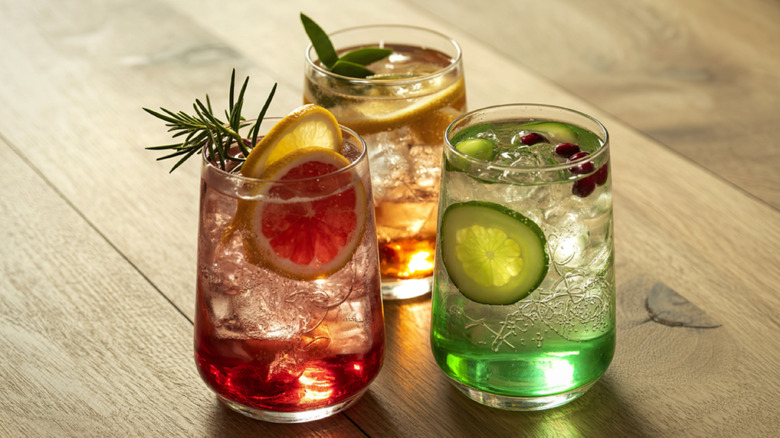
A gin and tonic is a simple, two-ingredient cocktail with limitless potential. "Today, we see the gin and tonic making a comeback with the emergence of a diversified gin category," Nicoll adds, "as well as premium tonic companies providing consumers with many new styles of tonic to choose from." He also notes that "new styles of gin [feature] new flavors and botanical notes that make the gin and tonic much more exciting today."
We've counted 15 popular gin brands, but there are countless more, not to mention nuanced creations like a pink gin made with a rose foundation. According to another expert we consulted, Hendrick's is the best type of gin to use for a gin and tonic. The top tip you need for properly matching gin and tonic is to pair old gin brands with old tonic brands and new gin brands with new tonic brands. You can also upgrade gin and tonic with other ingredients to enhance its botanical flavors like elderflower liqueur or bitters.
"I currently feature a gin and tonic menu," Nicoll adds, "where we rotate about six different gin and tonic variations to pair with the seasonality of ingredients and weather." Bring a fruity and summery element to gin and tonic by replacing ice cubes with frozen berries. For a winter-inspired gin and tonic, you can swap lime juice and lime slices with grapefruit or orange juice. Our bold gin and tonic recipe, for instance, adds lime slices, lime balm, and whole juniper berries to infuse the cocktail with more floral, citric, and botanical flavors.