

Arby's Bread No Longer Contains A 'Yoga Mat Chemical' Banned From Food In Multiple Countries
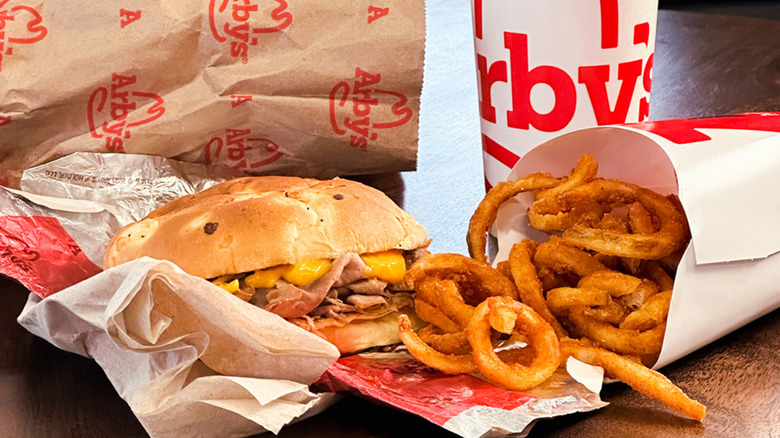
Food additives have been a concern for consumers for a long time now. Scandals relating to dangerous chemicals in our food go back decades, and even today you can look at the ingredient list on something as simple as a loaf of bread and be completely perplexed by the number of unpronounceable additives listed there. Many of those ingredients are perfectly safe and come from natural sources, but some are more controversial. That was the case with azodicarbonamide, a chemical additive found in some bread products, which was banned in many countries. Arby's was using it until 2026.
Also called ADA, azodicarbonamide strengthens gluten bonds in bread. It makes the final product rise higher and have a fluffier texture. However, research has shown that it breaks down during cooking into other compounds, including semicarbazide, a known carcinogen that may increase cancer risk based on animal studies. This link has not been proven, but the potential risk is still being researched. The FDA approves its use up to 45 parts per million in flour, but Australia, the U.K., and the European Union have banned it as a precautionary measure.
When Arby's made the switch away from ADA, blogger Food Babe said, "Last year we called out Arby's for still using azodicarbonamide. This is the same 'yoga mat chemical' that we successfully petitioned Subway to remove from their bread 12 years ago." You see, ADA is also used in plastics manufacturing to make tiny bubbles in material so it becomes soft and spongy, which is what earned it the nickname "the yoga mat chemical." In 2014, Subway eliminated ADA from its bread.
Don't dread Arby's bread
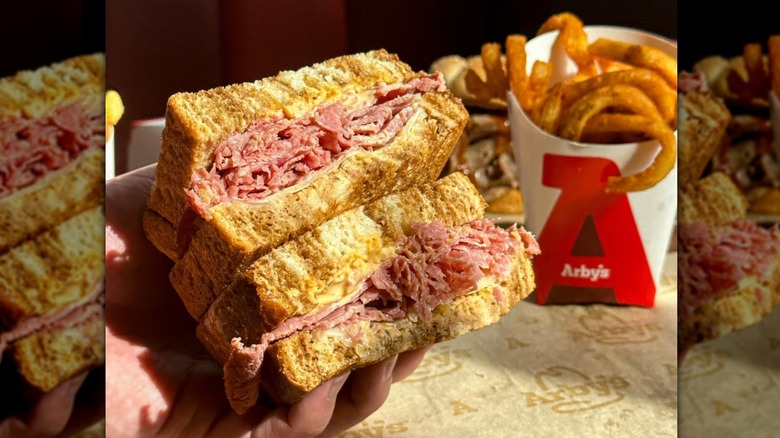
It's not clear if Food Babe scored another victory with Arby's, or if something else inspired the change, but as of 2026, azodicarbonamide is no longer listed in Arby's ingredients. This change comes despite ADA being present in published lists as late as 2025.
Previously, the additive had been present in both Arby's croissants and sourdough breakfast bread. This means that while most of Arby's sandwiches didn't use ADA, some did. Updated ingredient lists show that little else changed in 2026. The use of artificial flavor in the croissants ended, and there was a bit of ingredient reordering. The 2026 sourdough breakfast bread also switched from bleached to unbleached flour and removed high-fructose corn syrup. The most significant change to the sourdough breakfast bread involved dough improvers, of which ADA was one. The updated 2026 sourdough breakfast bread ingredients also removed DATEM, calcium sulfate, L-cysteine, and potassium iodate. But these ingredients still appear in other products. The new sourdough list, however, is much simpler and appears more natural thanks to the reduced number of additives.
We covered Arby's use of the ADA chemical in a list of Arby's facts worth knowing in 2025. At least now this issue is no longer a factor, and you can rest a little easier eating bread products at Arby's. Even though azodicarbonamide is still one of the questionable additives the FDA allows, it joined a list of other chemicals under review in August 2025. The safety of ADA had been established back in 1965, and after United Nations officials withdrew support for it, the FDA chose to take another look to determine if it needs to change its position in the future.