

Switching From Coffee To Tea May Not Make That Big Of A Health Difference, According To Research
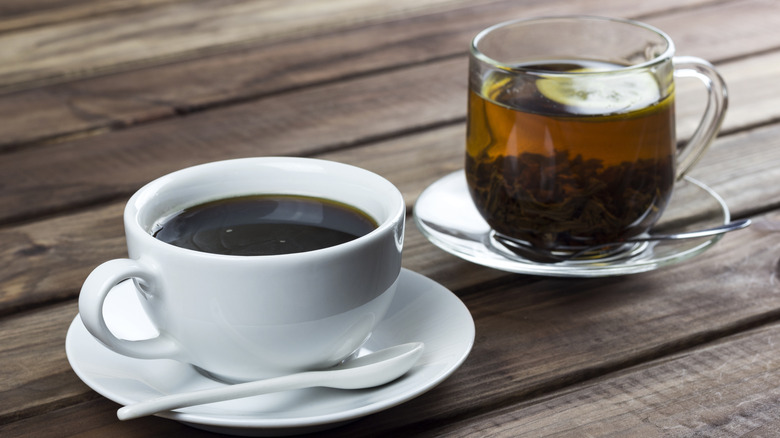
Much wellness advice out there will tell you that for a healthier lifestyle, cut out the coffee and switch to tea instead. Reasons for the change often include fewer jitters and more calm. But in terms of holistic wellness, research tells us that making the beverage swap won't necessarily make that big of a health difference, generally speaking. "From a health standpoint, there is no reason to change from coffee to tea," wrote Howard E. LeWine, M.D., Chief Medical Editor at Harvard Health Publishing, in a 2025 article, explaining that both coffee and tea have intrinsic beneficial qualities.
To support this stance, LeWine points to research that suggests caffeine can have positive effects associated with increased energy, focus, metabolism, and mood. Despite the common belief that high levels of caffeine in coffee are bad for you, the health expert references research that indicates caffeine can even help reduce some health conditions, like diabetes. This includes caffeine levels found in a cup or two of coffee.
The Harvard piece further suggests that while a cup of coffee typically has more caffeine than tea (80 to 100 milligrams compared to 40 to 70 milligrams in higher caffeine teas), that difference doesn't always counteract coffee's health benefits, like high antioxidant content, including polyphenols, and possible associated anti-inflammatory impacts. (Though both coffee and tea are generally high in antioxidants.) So, before ruling coffee out altogether because it has more caffeine than tea, consider the big picture and what's right for you personally.
Like most good things, coffee is best in moderation

Giving yourself the choice between coffee and tea reduces the tendency for all-or-nothing thinking. Unless factors like coffee's comparatively high acidity to tea don't sit well with you, you can experiment with different styles and quantities of both drinks. Then, see what works for you, your daily schedule, and your own unique needs. For instance, if you like the taste of espresso but a strong cappuccino makes you jump off the walls, try ordering your drink "half-caf." That way, you can cut back on the caffeine but still enjoy the taste of coffee. If you're prone to lying awake at night after an afternoon cup of joe, listen to your body and limit your consumption to the morning or before lunch.
You might find that tea is quite the soothing choice for an afternoon beverage anyway. Different teas contain varying levels of caffeine, but many typically contain a compound called L-theanine, known for its calming and focus effects, which can help balance and complement the energetic effects of caffeine. For fun tea drinks from the cafe or barista-style homemade beverages, try a matcha latte or a London fog latte made with Earl Grey and bergamot. Or try a juice for something refreshing. Overall, feel free to get creative and add other exciting beverages to the mix — without the need to necessarily cut out coffee. As LeWine says, it's not really about changing from one drink to another.