

Make Steak Sauce Taste Way More Expensive With This Boozy Addition
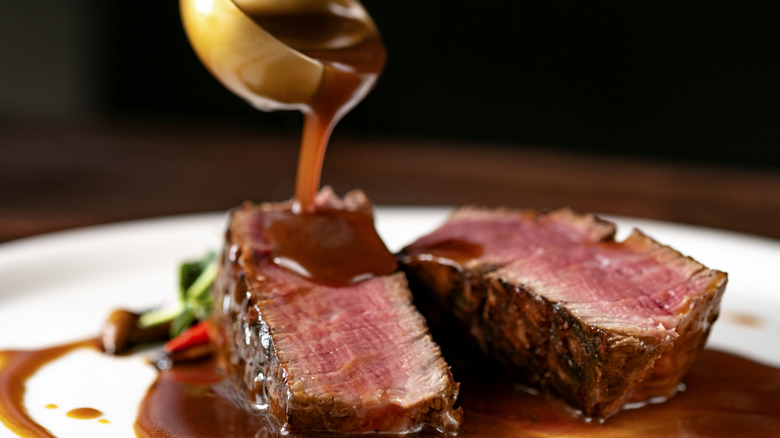
If you have a bottle of vermouth gathering dust in your liquor cabinet that only gets brought out when someone is in the mood for a martini, you might not be aware of just how versatile and impactful of an ingredient it can be in the kitchen. This can be easily demonstrated by incorporating vermouth into a simple, delicious, and undeniably elegant steak sauce.
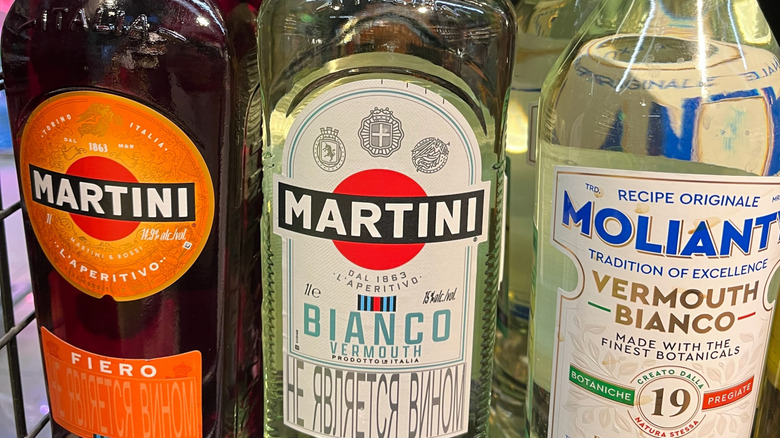
A fortified wine aromatized with botanicals, European regulations require that vermouth be flavored with artemisia (wormwood); U.S. law is less stringent, defining vermouth as "having the taste, aroma, and characteristics generally attributed to vermouth" as per Difford's Guide. So, if you want to imbue your sauce with the bitter, herbal notes that vermouth is known for, it's worth getting a bottle of the authentic European variety. Despite its distinctive taste, what makes vermouth so suited for sauces is how readily it can act as a substitute for other kinds of wine when deglazing. Generally, a good rule for cooking with vermouth is that dry white versions lend themselves well to more savory recipes, while red vermouths tend to be best in sweeter preparations. Also, as vermouth isn't particularly strong, it's unlikely to be overpowering — it could balance decadent and savory flavors.
To make a rich sauce that'll level-up your next steak, set aside your filet after frying and remove most of the remaining fat in the pan. Over low heat, add butter and finely chopped garlic, taking care not to burn either. Once the garlic has become fragrant, add a splash of dry white vermouth, deglazing the pan and mixing in all that delicious fond. After the sauce has somewhat reduced, add for a few dashes of Worcestershire sauce for a kick of umami.
Vermouth can also elevate this retro steak sauce
If you're feeling more ambitious (and perhaps a little retro), vermouth is also a welcome addition to the sauce of the luxuriously classic steak Diane, which also includes butter, garlic, and Worcestershire sauce, but also mushrooms, shallots, Dijon mustard, cream, Cognac, and lemon juice. The brandy is the defining and most non-negotiable alcoholic element of steak Diane's preparation, as the steak — usually, a filet mignon — is traditionally flambéed. After this stage (if you are brave enough to attempt a flambé and you still have your eyebrows afterwards) would be the ideal point to employ a splash of vermouth, deglazing the pan further before adding the cream and letting the sauce thicken and coalesce, letting the vermouth add further complexity to its richness.
Whatever kind of vermouth-boosted sauce you serve with your steak, consider side dishes that will both complement and contrast with its unique flavor. Some balsamic roasted Brussels sprouts would bring some gentle acidity and sweetness to the plate, while Cajun-spiced fried potatoes would introduce a bit of heat, while also being excellent for soaking up all that sauce — after all, you wouldn't want to waste any.