

We Finally Know Why It's So Hard To Master Restaurant-Worthy Sauce At Home
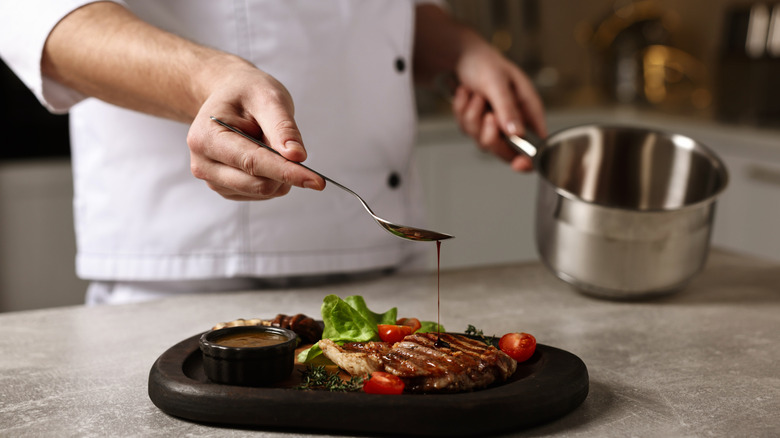
Sometimes even the most perfectly cooked steak or beautifully roasted whole chicken can be a bit lackluster without a delicious sauce to accompany the meat, but many store-bought sauce options just don't satisfy the same way that sauces you get in a restaurant do. While some sauces are easily made at home, like whisking a packet of gravy powder into a liquid and simmering on the stove for a bit, the best sauces usually take a lot of time and effort, and are something that most home cooks don't have the luxury of making. Of all the hardest cooking techniques to master, making restaurant-worthy sauces ranks among the most difficult.
The term sauce is broad and all-encompassing, as it could refer to one of the five French mother sauces, a rich, traditional Mexican sauce like mole, or a fiery Szechuan sauce. Some sauces can come together in just a few minutes with nothing more than a few ingredients, a bowl, and a whisk, while others are incredibly complex and require an abundance of steps and careful tinkering. Some common sauces used to lacquer on or pour over cooked meat, like a glace or demi-glace, need to reduce for hours to a small percentage of the original liquid volume, and can also be expensive to make given all the bones and meat needed to build the sauces.
Even the best chefs can get flustered by tempermental sauces
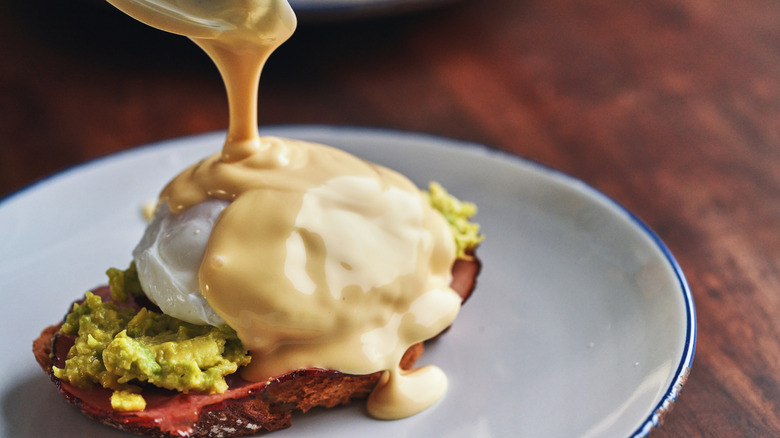
One of the hardest parts about successfully executing a sauce, either in a restaurant or at home, is ensuring that a sauce won't break. This can happen to even the most high caliber chefs with decades of experience, as sometimes ingredients that don't want to emulsify together can just split apart, giving your sauce a "broken" texture. If this happens on a regular weeknight in your home kitchen, it's not the end of the world, but in a fine-dining restaurant on a busy night, the stakes are much higher and a broken sauce is a real pain to adjust and fix on the fly.
Take hollandaise sauce, for example. Its ingredient list is simple, mostly just egg yolks, butter, and lemon juice; but the egg yolks must be whisked over a double boiler to lightly cook them without scrambling or curdling, then butter needs to be slowly whisked in, followed by lemon juice and seasoning. The hollandaise sauce then needs to be kept at a warm temperature, as well as whisked frequently to keep it smooth and fluffy.
Time and temperature are factors that are sometimes difficult for restaurant chefs to manage, let along a home cook. But as with most things in cooking (and life in general, for that matter), making great sauces takes practice — and there aren't any good hacks or shortcuts for practice and patience, unfortunately. However, with time and dedication, you could be making restaurant-worthy sauces at home, too.