

For Crispy Fried Fish Like Captain D's, Add One Pantry Staple To Your Batter
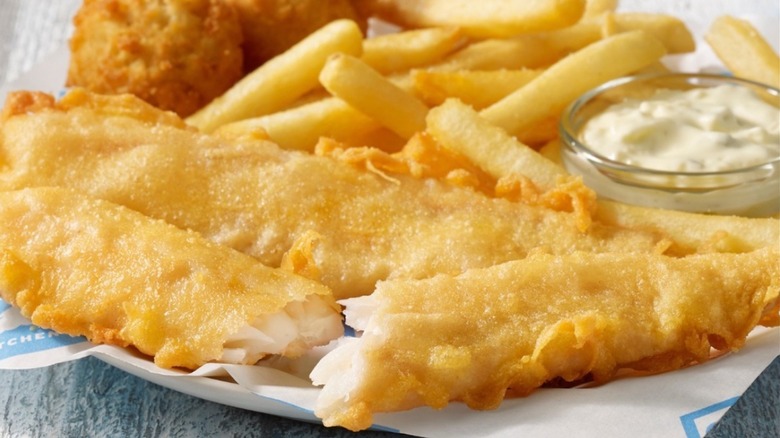
Despite its prominent association with British cuisine, fish and chips can actually be traced to 16th-century Portugal and Spain, when refugees from those countries brought their tradition of coating fish in flour and frying it to England. The recipe evolved from there into the crispy delicacy we enjoy today. Few places do it better than Captain D's, which has been called the best fish and chips in America. It's so popular that you can find numerous copycat recipes online to try making that crispy, flavorful batter at home. The secret ingredient in nearly every one is cornstarch.
Cornstarch has long been used in Asian cuisine for frying food. Because of the way it pulls moisture from the food it coats and how it expands in heat, it becomes crispier more easily than a coating made with flour. You also need much less of it. This means you get a thinner coating, which has a crispier texture when you bite it. To balance thickness, flavor, and crunch, some of the best batters mix flour and cornstarch, as many Captain D's copycat recipes do.
It's worth noting that Captain D's provides nutrition and allergen information about its menu, but not a full list of ingredients. For that reason, we don't know exactly how the restaurant makes its batter so crispy. We also can't confirm if cornstarch is actually an ingredient. Really, it's just a guess based on the texture and that most recipes include it.
Cornstarch is key
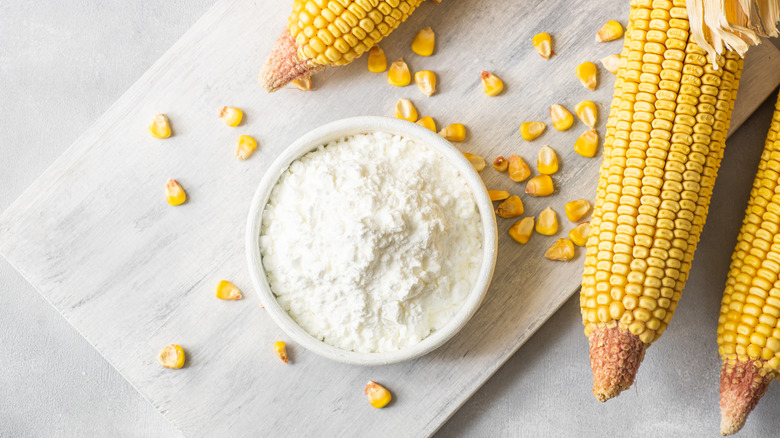
Tasting Table has a great recipe for a beer-battered fish sandwich, which includes cornstarch. This version calls for a four-to-one ratio of flour to cornstarch. Other recipes might call for a three-to-one or even two-to-one ratio to really bring a light, extra crispy texture. Those who copycat Captain D's recipe usually use a three-to-one ratio.
The reason cornstarch is key to mimicking the crispy crunch of Captain D's gets a little scientific, but it's good to keep in mind if you want that texture. When water meets wheat flour, it forms gluten, which is a chewy network of protein. Cornstarch prevents as much gluten from forming in the dough or batter. So instead of a thicker, breadier coating, the batter is lighter overall.
While some recipes will use significantly more cornstarch than others, if you want a tasty final product that mimics Captain D's, you don't want to go overboard. Too much cornstarch will reduce the density of your batter and make it brittle. When the batter is too thin, it can't hold as much seasoning and flavor, so you'll have all texture and no taste. It also won't brown as nicely as a batter mixed with flour, so you'll end up with pale fish that doesn't look as appetizing.
If you can't get to Captain D's to try the fish yourself, at least now you know the secret to that crispy coating. Also, you might want to compare it to Captain D's chicken, which is pretty tasty in its own right. Don't have cornstarch handy? We detail how you can also make a crispy batter with rice flour and tapioca flour here.