

This Is The Money-Draining Thing That Happens If You Never Clean The Rubber Seal On Your Refrigerator Door
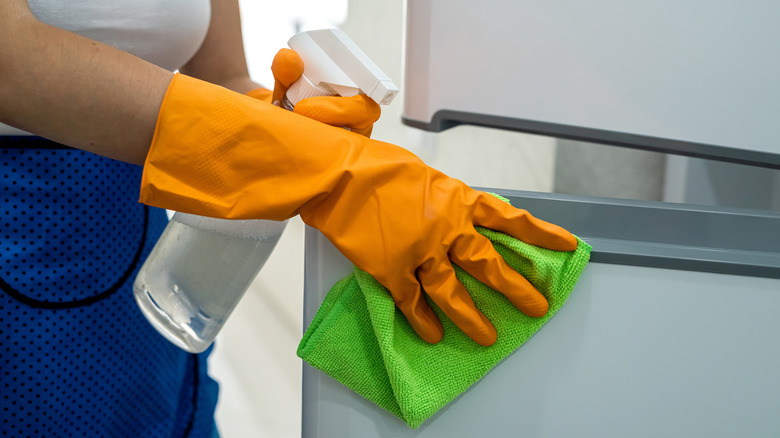
Cleaning the refrigerator isn't many people's idea of a good time, so once you've tossed the wilting produce and wiped out the shelves, you're likely going to pat yourself on the back for a job well done. While stopping at this point might be sufficient for basic hygiene, it's not for the maintenance of the appliance — you need to take the time to wipe the rubber seal too. The gasket that runs around the refrigerator door is what creates an airtight seal, but it won't work correctly when it's dirty.
When your refrigerator is leaking air, the motor needs to work harder to keep the temperature down. In the short term, this is going to spike your power bills as all that cold air escapes along with your money. In the long term, it can be even more costly, as an overworked compressor will have a much shorter lifespan. Cleaning is a simple fix and a valuable energy saving tip in the kitchen. It can also save you from food waste.
To safely prevent the growth of bacteria, food should be stored below 40 degrees Fahrenheit. Maintaining this temperature with a leaking gasket can be difficult, especially for food stored in the warmest place in the fridge. Speaking of food safety, failing to clean the seal can have some knock-on effects beyond just leaking air. Crumbs or spills that end up between those rubber pleats can quickly turn to mold and spread bacteria to other parts of the fridge.
Cleaning and maintaining the gasket in your fridge
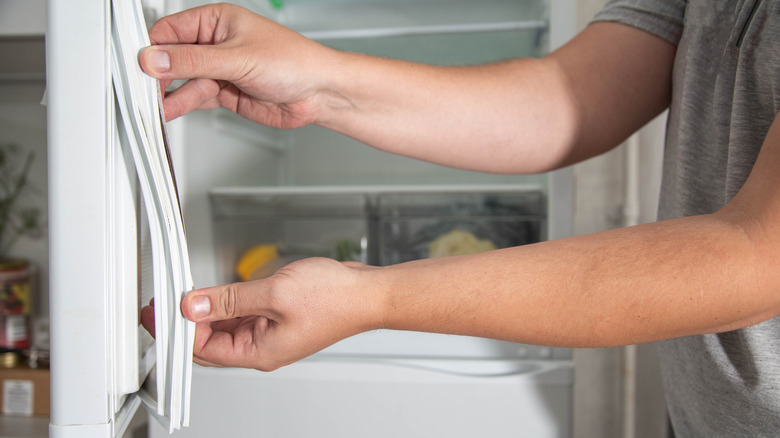
Cleaning the rubber seal might be an additional task you didn't want on your chore list, but it's quick and easy. All it takes is a wipe down once a week with a soft, damp cloth to ensure it's clear of food particles. If you do have a spill, or if it's been a while between cleans, then a deeper clean will be in order, but even then, it should be done gently. Harsh chemicals and abrasive scrubbers can damage the integrity of the rubber, which will prevent it from sealing correctly. A mild detergent should do the trick, but for stubborn stains, try a paste of baking soda and water, leaving it to sit for a few minutes. To prevent mold, a 1:1 solution of vinegar and water can be safely used.
Even with regular cleaning, your gasket does have a limited lifespan, and knowing when to replace it can help keep those power costs down. A gasket should last five to 10 years, but it's worth checking if it's leaking air once a month. One way of doing this is to close a piece of paper in the door and pull it out. If it comes out with little or no resistance, your gasket isn't creating a tight seal. Another option is to use a flashlight to check for leaking air. The good news is that, if it is leaking, replacing a rubber seal doesn't require an expert. If you know the model or dimensions of your fridge, you can buy a replacement and install the gasket yourself.