

The Shellfish Red Flag We Just Can't Ignore At Seafood Restaurants

The pleasure of having others cook for and serve you is one of life's little luxuries, allowing you to take your mind off of kitchen-related tasks for the evening. While it's ideal to just relax and unwind, it's still important to keep your wits about you when it comes to food safety. When dining out at a seafood restaurant, there are a few red flags you should keep an eye (or a nose) out for, with the biggest warning being if raw shellfish is not on ice.
Raw bar displays are normally housed on a large bed of ice, as the uncooked seafood needs to be kept as cold as possible, especially if the items are out in the open. Naturally, there's a reason why most establishments serve oysters on the half shell and other raw shellfish on ice. According to the U.S. Department of Health & Human Services, illness-causing bacteria grows once the seafood reaches a temperature beyond 40 degrees Fahrenheit, so keeping everything chilled up until you eat it is crucial to keep items out of this "danger zone." Nestling shellfish, and other small dishes that contain raw or chilled seafood, in ice is one of the easiest and most effective ways to keep harmful bacteria at bay.
Cold temperatures are essential
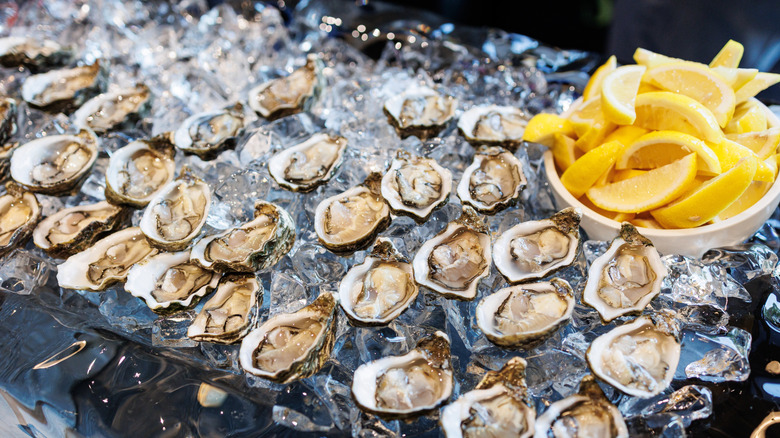
My first restaurant job was interning at Gramercy Tavern in New York City, where my responsibilities included all things oysters. I would collect the cleaned and scrubbed oysters from the walk-in, carry them in a bucket filled with ice to my station upstairs, then transfer them to a compartment filled with more ice, which was next to another section filled with pebble ice for plating the oysters as I shucked them. In this whole process, the oyster were kept on ice the entire time to ensure quality and safety.
Seasonality is another factor to be kept in mind when eating seafood at a restaurant. If you see something like spiny lobster in the summer, that's a red flag, as California spiny lobster season runs from mid-fall into early spring, so any spiny lobster offering made outside that window has either been caught illegally or may not be exactly what the menu claims. Additionally, while modern day technology allows oysters to be available year-round, you should still exercise caution and select oysters that come from colder northern waters in the summer for the freshest bite, as opposed to oysters from warm-water habitats.
If you enter a seafood establishment and it smells fishy in an off-putting way, this may also be an indication that the fish isn't being kept cold enough, or worse, that it's already growing bacteria and the seafood is no longer fresh. For those who'd prefer to be more in control of food safety factors and put the responsibility in their own hands, we have some great tips for how to create the ultimate seafood tower at home.