

13 Foods Eaten By Astronauts In Outer Space
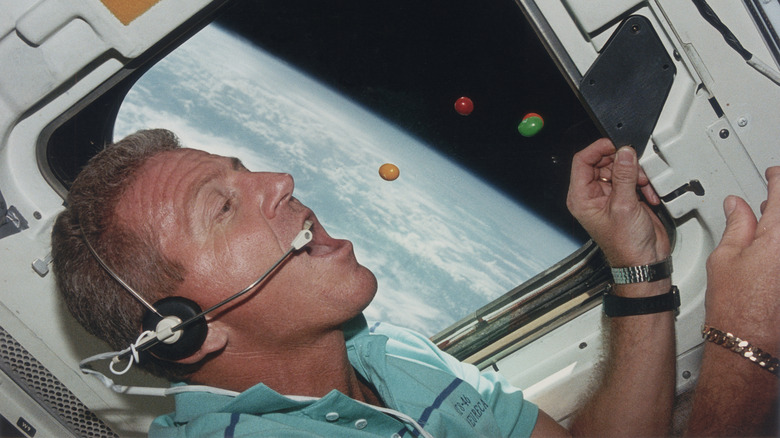
Humankind has been fascinated with space travel for quite some time. The 1960s were the height of our obsession, when the U.S. and Russia competed for the stars, children dreamed of becoming astronauts, and a televised robot famously said, "Danger, Will Robinson!" Our collective love for everything space-related naturally included the types of foods eaten by astronauts. It was a period of food innovation, from Astronaut Ice Cream and dehydrated potato salad to the bright, powdery orange drink TANG.
Space food has certainly come a long way since then, and today is divided into three categories: rehydratable foods, thermostabilized foods, and foods in their natural form. While space travel doesn't inspire the awe it once did, the food is more diverse and delicious than ever, composed of cuisines from around the world. With the announcement of NASA's Artemis II mission, the first trip to the moon since 1972's Apollo 17 mission, what better time than now to dive into the rich and varied world of space food?
Space Food Stick
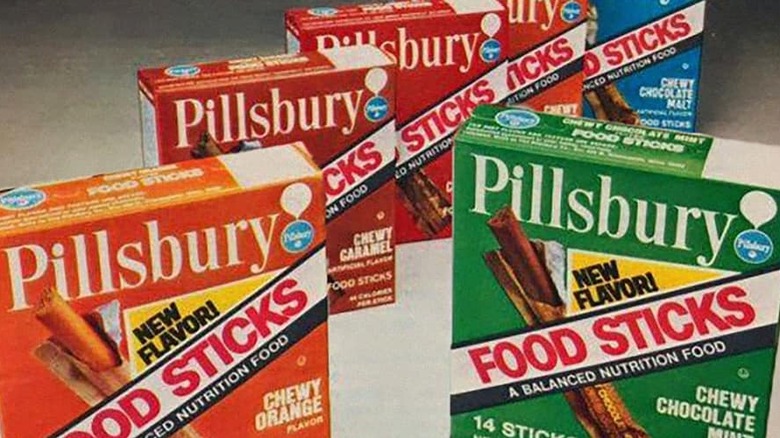
One of the first snacks to leave Earth's orbit was Space Food Sticks. In 1969, Pillsbury's team, led by chief food technology expert Howard Bauman, invented two varieties of the snack, one made for astronauts and another for regular Americans. NASA required that they be nutritionally-balanced, crumb-free, and easy for astronauts to consume with their helmets on. The result was a rod-shaped energy bar with 44 calories. Space Food Sticks were sold individually wrapped in packs of 15, and because of NASA and Pillsbury's combined marketing push, they became very popular among children who dreamed of going to space.
Several flavors were developed for both astronauts and consumers, including chocolate, peanut butter, and caramel. However, Pillsbury discontinued them in the 1980s after the space race hype died down. Space Food Sticks were the precursor to modern energy bars, but despite their ubiquity, few people still remember them. Ultimately, the Pillsbury team created some of the first solid foods for space and helped establish the Hazard Analysis and Critical Control Points (HACCP) regulations, which are guidelines now used by the FDA to ensure food is safe for consumption.
Pineapple fruitcake
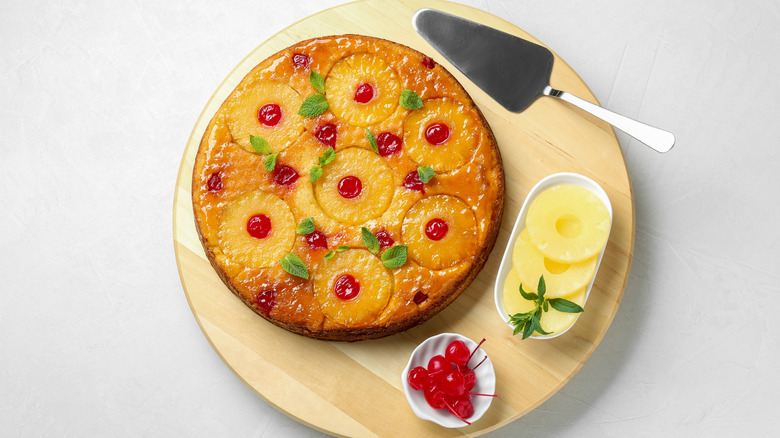
One of the first desserts eaten in space that didn't require a toothpaste tube was pineapple fruitcake. It was created for the famed 1969 Apollo 11 mission, which carried commander Neil Armstrong, command module pilot Michael Collins, and lunar module pilot Edwin "Buzz" Aldrin to the moon, where Armstrong took "one small step for a man" and "one giant leap for mankind" while an estimated 650 million people tuned in.
Rather than a tube, the pineapple fruitcake was put in a space food package made of 4-ply, laminated film coating that protected it from flavor loss, moisture, and spoilage. Astronauts could open and eat it directly from the package. It was part of a meal plan that included three meals per day and provided 2,800 calories. Lucky for us, it was never eaten and can now be viewed on the Smithsonian's National Air and Space Museum website.
Shrimp cocktail
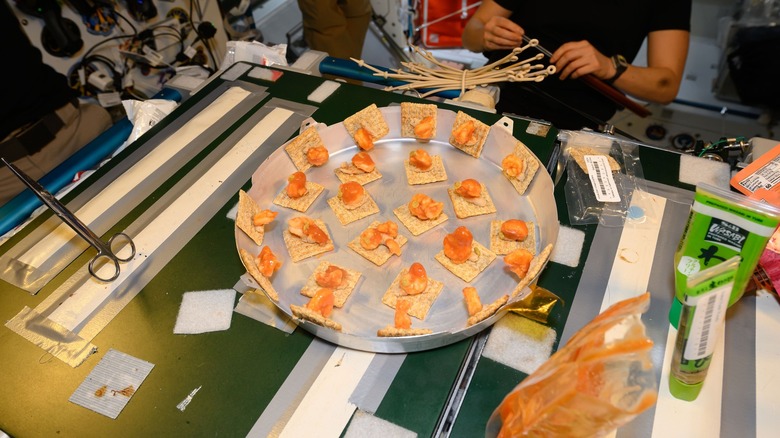
Shrimp cocktails are surprisingly popular on the International Space Station, particularly due to their spiciness. When space travel first began during the 1960s, astronauts discovered that reduced gravity alters our sense of taste. The phenomenon is called "fluid shift," and whereas Earth's gravity pulls bodily fluids to our legs, in space, the fluids distribute equally throughout our body. Upon their arrival in space, astronauts develop a puffy face from fluid build-up, which feels sort of like a stuffy nose. Their inability to properly smell subsequently impacts their taste receptors.
Living within the confines of the space station can also dull taste, as odors from various foods blend over time. To counteract this perceived tastelessness, astronauts will eat spicy foods like shrimp cocktails or flavor their meals with hot sauces or condiments.
Borscht
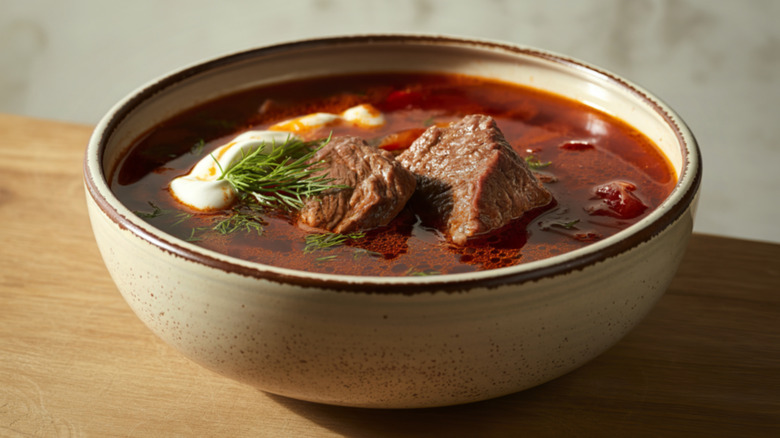
When Soviet Union cosmonaut Yuri Gagarin made history in 1961 as the first human to enter space, he took with him the first-ever space food, consisting of toothpaste tubes filled with puréed beef and liver and chocolate pudding. In the years that followed, the Research Institute for Special Food Technologies in Moscow would develop hundreds of recipes for space, including borscht, Ukraine's national soup made from beetroot.
American astronauts first sampled Russian space food in 1975 during the Apollo-Soyuz Test Project, the first international partnership in space. One of the most memorable moments during the test project came when Soviet Commander Aleksei A. Leonov pranked astronauts Thomas P. Stafford and Donald K. "Deke" Slayton during a food exchange. Leonov gave them tubes labeled as vodka that were actually filled with borscht. There's even a famous picture of Stafford and Slayton holding up the prank tubes.
Thanksgiving dinner
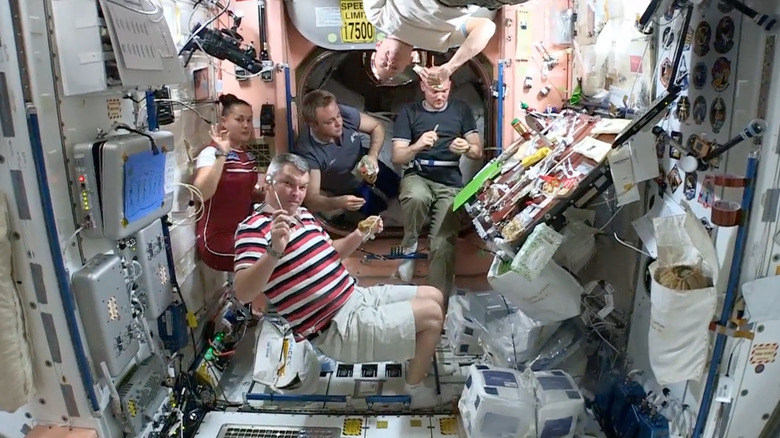
Astronauts aboard the International Space Station are usually given the day off for Thanksgiving when they're able to film a heartfelt Thanksgiving message for Earth. Though it's an American holiday, it's a celebration that crew members from each country participate in, and an annual tradition. NASA provides a Holiday Bulk Overwrapped Bag (BOB) for the occasion, filled with staple Thanksgiving foods like turkey and mashed potatoes, along with a variety of options like oysters, clams, crab meat, quail, smoked salmon, and more.
All of the foods, of course, come wrapped in special mess-free packaging to prevent floating crumbs. And since it's a day off, sometimes guests from visiting spacecrafts are invited to join in on the holiday festivities.
Moong dal halwa
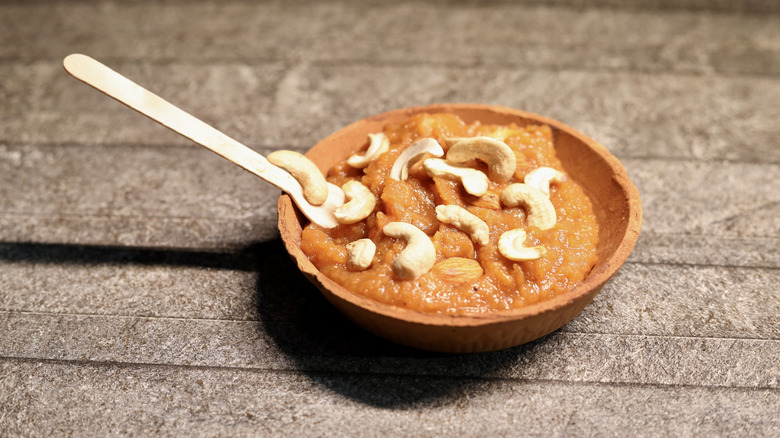
On June 25th, 2025, the Indian Space Research Organization (ISRO) successfully kicked off the Axiom Mission 4, which included Captain Shubhanshu Shukla, the first Indian astronaut to visit the International Space Station. On his trip to the stars, Shukla decided to take with him several Indian foods, among them moong dal halwa, which is a traditional Indian dessert made with moong dal lentils fried in ghee, cooked in milk, then sweetened with sugar and flavored with cardamom powder and saffron. He also brought along Indian rice, mango nectar, and gajar (carrot) halwa.
Fun Fact: While America refers to these space travelers as astronauts and Russia as cosmonauts, in India, the ISRO calls them gaganyatri, which in the Kannada language means "a person trained to undertake relatively long journeys in space."
Instant ramen
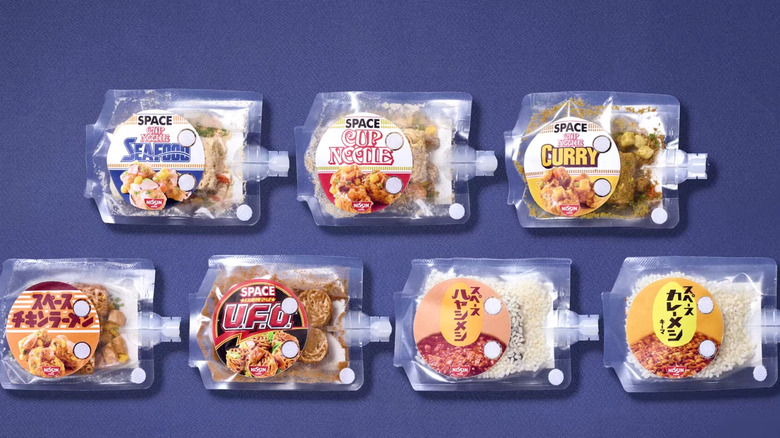
If not for its brittle, breakable consistency and broth, instant ramen would be perfect for space travel. Thanks to a few adjustments made by Nissin Food Products, the company founded by the man who invented instant ramen, it's one of many popular foods now available to astronauts. The Japanese Aerospace Exploration Agency worked with Shirasawa Tsutomu, the brand manager of the company, to create a special version for space.
To prevent dehydrated noodles from scattering about, food scientists placed them inside a vacuum-sealed pouch and thickened the broth so it would stick to the noodles instead of floating around. Space-ready ramen noodles were introduced in 2005. There are now seven flavor varieties, from chicken and seafood to curry, soy sauce, and more, including yakisoba fried noodles.
Kimchi
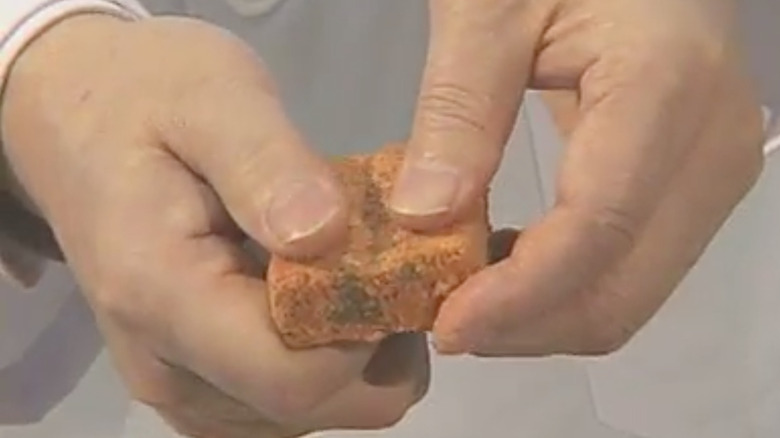
It may seem like gravity plays a big part in our ability to digest food, but on the contrary, it's actually a result of peristalsis, a type of involuntary muscle movement in our digestive system that contracts in a wave-like motion. Gravity helps speed up the process, but astronauts can still digest food just fine without it. That said, it helps to have foods that contribute to gut health, like classic kimchi, which made its outer space debut in 2008 when astronaut Yi Soyeon became the first South Korean citizen to visit the International Space Station.
It took a team of food scientists from the Korea Food Research Institute two years to develop kimchi for space travel. To make kimchi space-stable, they irradiated and par-cooked the traditional variety to lower its bacteria. They then froze and dehydrated it, and cut it into cubes that could be stored in vacuum-sealed packaging. All astronauts have to do is add water and enjoy.
Yi shared kimchi, along with other traditional foods, with her crewmates on April 12, which in Russia is known as Cosmonautics Day, commemorating the day that cosmonaut Yuri Gagarin went into space. Kimchi, along with fermented soybean curd soup, may have been some of the first fermented foods eaten by astronauts in outer space.
Barbecue Chicken
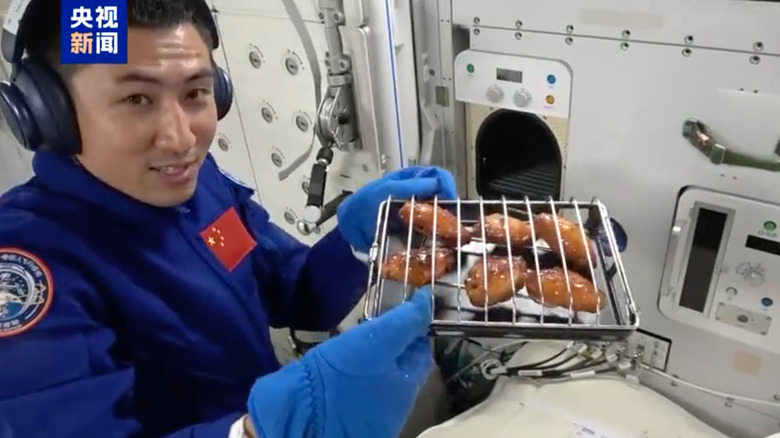
History was made in 2025 when Chinese astronauts aboard the Tiangong space station roasted the first-ever barbecue chicken in space. Crew members of the Shenzhou-20 mission prepared the chicken to celebrate the arrival of the Shenzhou-21 crew, who were scheduled to take over operations. The chicken was cooked with a microwave oven for 28 minutes at 180 degrees Celsius, using a caged pan that prevented the wings from floating around. After making the chicken wings, the crew cooked fresh steak.
The microwave oven was brought aboard during the Shenzhou-12 mission in 2021. At the time, it was the country's first crewed liftoff in 5 years, carrying 6.8 tons of supplies, including a core module named Tianhe, or Harmony of Heavens. The module was furnished with a dining area, fridge, foldable tables, and the aforementioned microwave oven. It also stored over 120 different foods and beverages.
Some of the many dishes brought aboard during the Shenzhou-12 mission include kung pao chicken, congee with osmanthus, vegetable beef soup, spicy tuna, stir-fried rice with meat and vegetables, and traditional Chinese rice pudding.
Freeze-dried eggs and Spam
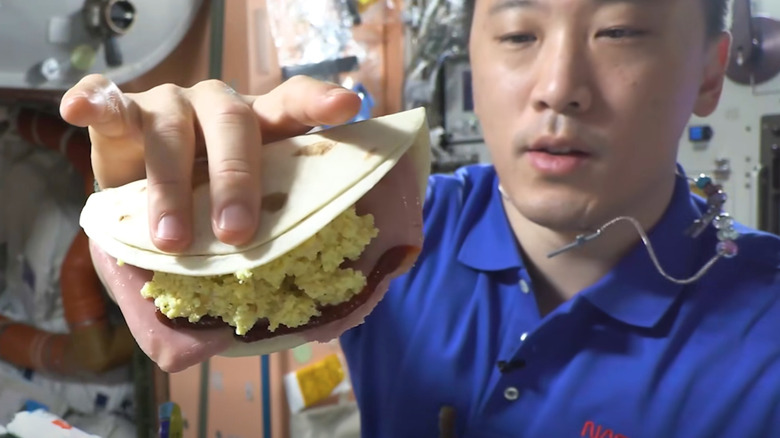
In a video shared to his Instagram account, NASA astronaut Jonny Kim prepared a fun meal to illustrate how important proper nutrition was to the performance, health, and morale of crewmates on the International Space Station. Kim's meal consisted of freeze-dried eggs and Spam, which he specially requested, and said was one of his favorite things to make for his kids back home.
In order to rehydrate the eggs, Kim used the space station's portable water dispenser (PWD), which filters 25 to 250 milliliters of either ambient or hot water into the packages containing food and beverages. He explained that the space station has a reclamation system that recycles condensation, sweat, and even urine, which is used for the dispenser and drinking water. After he filled the package of eggs with water, he squeezed it around with his hands and then placed it inside the food warmer beside the Spam. Once heated and ready, he made a simple sandwich with a tortilla, flavored with sweet and savory gochujang paste.
Fluffernutter sandwiches
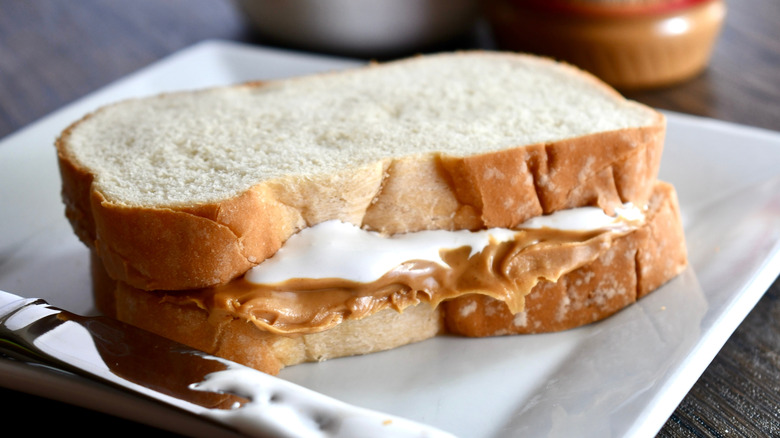
The International Space Station's kitchen, a galley that looks more like a laboratory with food-stuffed bags fastened to an insulated wall, is filled with cuisine from around the world. Astronauts can spend up to six months in outer space, so sometimes, instead of enjoying food from another country, the best meal is one that invokes a particular core memory. Sunita L. Williams, for example, who has completed more spacewalk time of any woman astronaut, would eat Fluffernutter sandwiches like she did growing up, except she used a tortilla instead of bread because it didn't crumble.
If you're unfamiliar with Fluffernutter sandwiches, they're a combination of marshmallow fluff and peanut butter on bread popularized during the 1960s. Two types of menus are available on the International Space Station: a standard menu and one for personal requests. Marshmallow fluff was likely personally requested by astronaut Williams.
Strawberry lavender superseed cereal
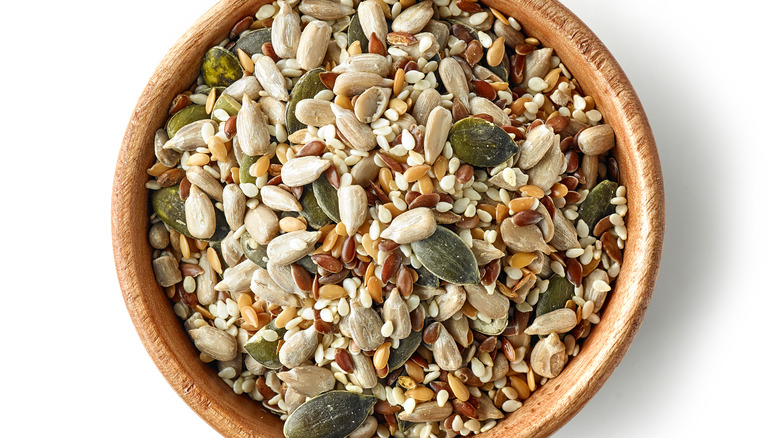
The Artemis II Mission will take the first-ever Canadian astronaut, Jeremy Hansen, around the moon. For the long-awaited trip, the Canadian Space Agency (CSA) was allowed to add five hometown food products to the menu, one being strawberry lavender superseed cereal made with chia seeds, pumpkin seeds, buckwheat, and hemp.
Unlike the commercial version, which would no doubt cause quite a mess in zero gravity, it'll be contained in a package that can be connected to the water dispenser. After water is filtered in, astronauts can knead the ingredients into a mushy, easily edible cereal blend. Some of the Canadian Space Agency's other menu additions include shrimp curry and rice with real shrimp, ready-to-eat smoked salmon, and maple cream cookies.
Michelin-star French cuisine
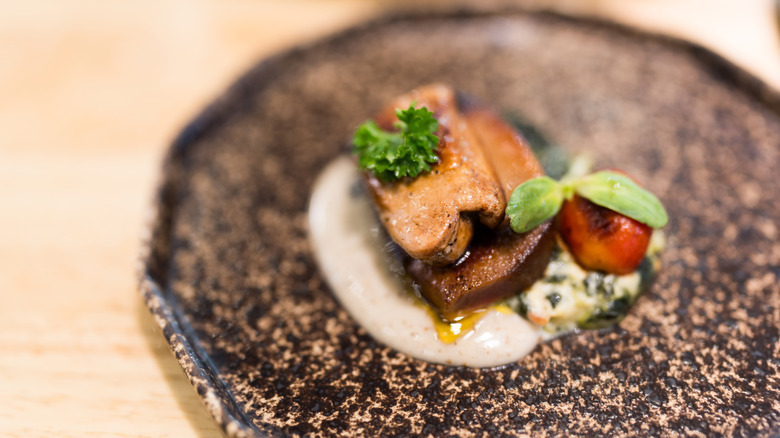
Sophie Adenot, who will be only the second French woman to enter space when the SpaceX Dragon spacecraft takes its 13th flight, is bringing some of her country's most prized dishes along for the ride. The milestone occasion will be extra special, because unlike the usual vacuum-sealed and tube-filled variations of popular foods that astronauts typically carry aboard, these dishes will be prepared by Anne-Sophie Pic, owner of Maison Pic, a three-Michelin-starred restaurant in Valence, France.
Adenot's menu will consist of foie gras, parsnip and haddock velouté, lobster bisque, chicken with tonka beans, onion soup, creamy polenta, and shredded braised beef with black garlic. And for dessert, coconut and smoked vanilla pudding, along with chocolate cream with hazelnut cazette flower.