

Rice And Wheat Have Natural Fiber, But America Removes It — Here's Why
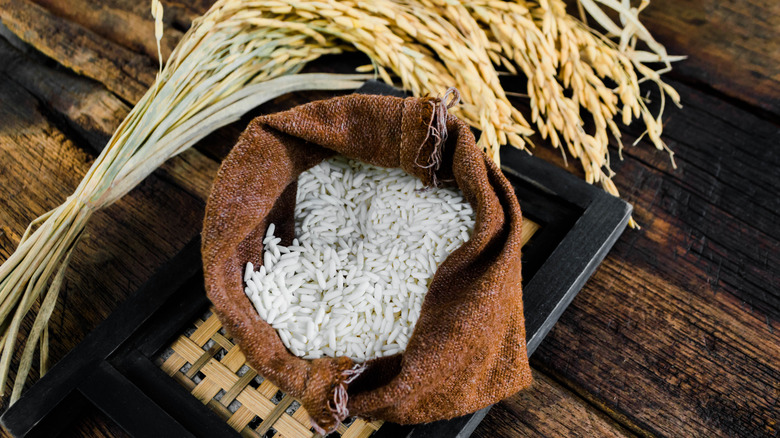
There's absolutely nothing inspiring about fiber. It's just the flavorless plant material that's so tough even our digestive tract can't fully break it down. While the negative heart health effects of refined grains have been debated over the last few years, it's well-known that fiber is essential for stabilizing gut health, easing digestion, regulating bowel movements, and staggering the absorption of carbohydrate sugars into the bloodstream. By slowing down the "glycemic load" of these sugars flooding our bloodstreams, we can even reduce the risk of developing type 2 diabetes. The thing is — much of the rice and wheat we consume daily already contains fiber, but in America, it often gets stripped away.
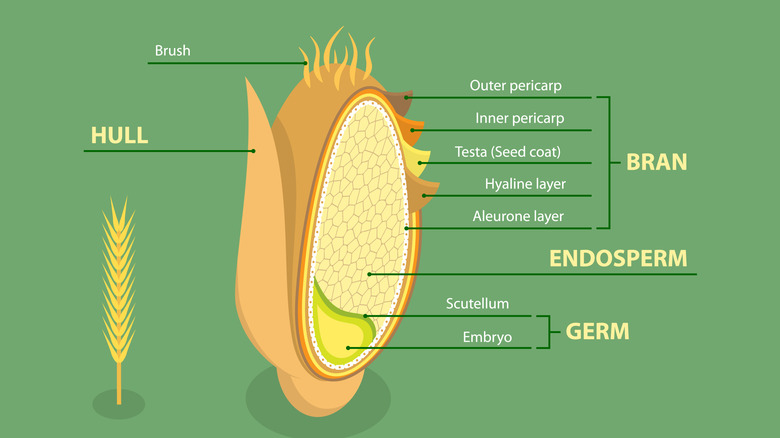
In their natural form these grains come as a carbohydrate-rich endosperm, encased in a fibrous outer layer of bran and holding a nutrient-dense core called the germ. Through milling and processing, the bran is pulled away and the germ removed. The germ actually contains some fat, so removing it extends the processed grain's shelf-life. This process also homogenizes the grains, making rice uniform or preparing wheat to be ground into flour.
Chasing the fiber
The trouble is that all the milling and processing designed to preserve the carbohydrates in these grains makes it hard to hit the recommended daily intake of dietary fiber. The average American adult only consumes between 15 and 16 grams of dietary fiber a day, which is roughly half of the recommended amount.
Talking about transitioning from refined grains to a high-fiber diet can feel like swapping out sweet, soft, white bread for unappetizing, boring grains. So what can we do to up our fiber intake? You can still find high-fiber versions of breads, flours, and cereals, typically whole grain options. Three grams of fiber per serving is a good starting point to aim for, and making sure that whole grains have first billing on the ingredients list is also a good indicator that the manufacturers have left the fiber where it's meant to be.
There is also a wealth of food options that are high in fiber and aren't grain-based, which can help you make up for the fiber your white bread lacks. Fruits and vegetables with the skin still on such as apples and potatoes are great options, and you can also integrate more beans into your meals. Dried fruit, berries, and even air-popped popcorn are also higher fiber options to rotate through your snack roster.