

Make Cabbage 10X Better With A Simple Confit Technique
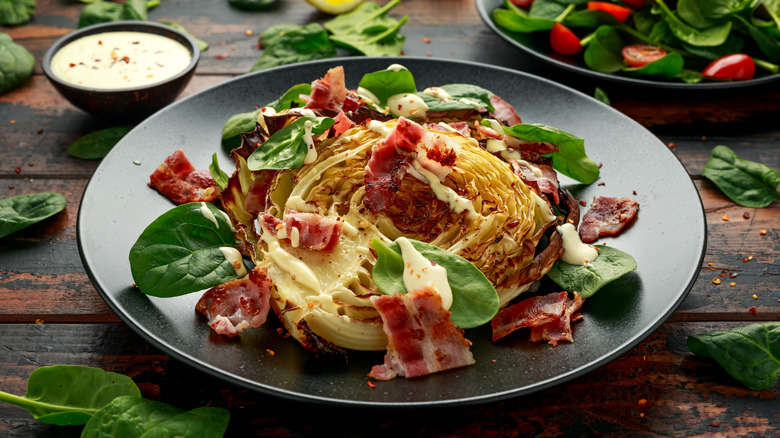
There's no question cabbage is having a moment — it was named the hottest vegetable of 2026 by Pinterest, after all. But cabbage is much more than a trending veggie; it's a versatile classic. But to make cabbage 10X better than your typically grilled, roasted, or steamed variety, we suggest you try a simple confit method. You might instantly associate "confit" with duck confit on French fine dining menus. However, there are a variety of foods that work best for the confit process. Luckily, the same French culinary technique that makes poultry infamously tender and flavor-rich also works wonders to create perfectly cooked cabbage with a robust taste.
The historic origins of confit trace back to preserving foods by cooking them in liquid (usually lots of cooking fat) and storing them aseptically. In practice, today, making cabbage confit involves low cooking temps and ample amounts of butter or oil for a delicious veggie main or side sure to impress. But you can also put your own signature twist on the classic culinary method and add in flavorful liquids like wine, citrus, or vinaigrette. Either way, the technique can be carried out slowly in a saucepan on the stovetop until the flavorful, rich cooking liquid is reduced. Or for a more hands-off approach, you can also confit cabbage in the oven, until the veggie becomes tender — often a tenderness unmatched by other cooking methods.
Creative variations on cabbage confit
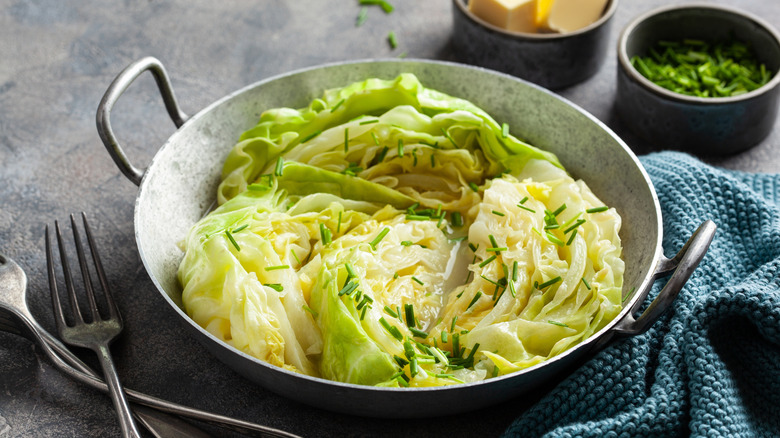
Besides the choice of whether to confit cabbage in a saucepan or in the oven, there are numerous ways to get creative with your confit recipe. First, choose whatever head of cabbage suits your fancy — from hearty green cabbage wedges to sliced peppery red cabbage to cauliflower florets. Some chefs like to marinate their cabbage confit in vinegar before cooking it for even more flavor and tenderness. If you go this route, just make sure to add some sugar or honey to balance the tartness and fat from the butter or oil you'll cook the veggie in.
When you're ready to confit, sauté or sear cabbage wedges for a nice exterior textural contrast before fully cooking until soft and delicate in fat. You can also sauté onions or finely sliced or chopped root veggies in butter at this stage. Or toss in chopped garlic for an aromatic touch. Then, add olive oil or a few generous pats of butter and melt it in the saucepan, and submerge the veggies in the fat as it cooks. At this point, you can slowly cook the cabbage in the liquid on low, or place the pan's lid on and transfer the oven-proof pan to finish cooking for up to an hour and a half in the oven. Either way, make sure to spoon the liquid over the veggies throughout the process for the most flavor distribution and flair.