

This Retro Kitchen Heating Feature Solves The Cold-Floor Problem
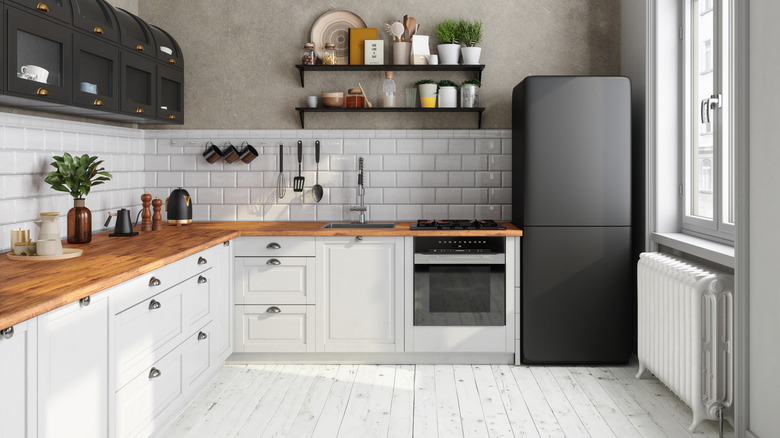
Walking into the kitchen first thing in the morning to make coffee, only to be met with freezing floors, is never an ideal start to the day. But you don't need to undergo an expensive full remodel to remedy this issue. Instead of jumping onto the latest kitchen floor trends of 2026, you can steer clear of underfloor heating and turn to plinth heaters instead.
While underfloor heating is an excellent way to keep your kitchen warm, it's far from being the most cost-effective or easy-to-install method. Plinth heaters, however, save space and don't require you to rip up your flooring. Instead, they are a money-saving option for your kitchen floors because they go under your cabinets or low along the walls. This allows the heaters to gently blow warm air across your kitchen floors rather than radiating up through them.
But just as you would carefully weigh the pros and cons of different flooring materials for your kitchen, there are considerations to be made when choosing plinth heaters. There are two different styles of plinth heaters, hydronic and electric, each with its own advantages and disadvantages.
What to consider when choosing between hydronic and electric plinth heaters
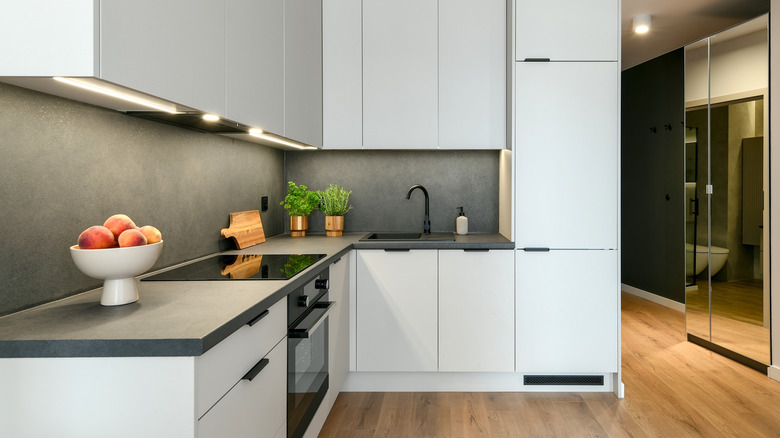
While plinth heaters are a great alternative to underfloor heating, you'll want to consider which option is best for your kitchen and what would be necessary to install them. Hydronic plinth heaters require a slightly more complicated installation process because they must be connected directly to your central heating unit. The good news is that these heaters tend to be cheaper in the long run because they are more energy efficient — they also do a better job of warming larger spaces. This is a great option for those who are remodeling their kitchen or redoing their cabinets or floors, but who do not want to splurge on underfloor heating.
Electric plinth heaters, however, are the opposite. These are easy to install as you simply have to plug them into your main electricity source. Another advantage of this type of plinth heater is that they don't require any of the plumbing work that can be necessary for hydronic plinths or underfloor heating. Because this type of heater is connected to your electricity, it is more expensive to run. This is best for those who want the lowest initial cost and an easy installation process that can be completed during a revamp of kitchen cabinets.